That appearance is relevant to the question posed by the headline. It shows that the story did not end after his first fashion-week debut. More than a decade after the mugshot went viral, he was still appearing in fashion-related settings.
It is tempting to describe his journey as a complete transformation from criminal to celebrity, but that language can make the story sound simpler than it is. A person’s life is not divided neatly into two photographs. The years between them include consequences, setbacks, decisions, relationships, and opportunities.
Meeks’s own comments suggest that he recognizes how unusual the path has been. In 2025, he said that he had never imagined becoming an actor or model when he was younger. He also expressed interest in creating more work behind the camera, including writing and directing.
Those ambitions suggest that he is still looking for ways to expand his professional identity. He may have first become famous because of his face, but he has spoken about wanting to do more than pose for photographs.
For someone who was once known almost entirely through a single image, that is an important distinction.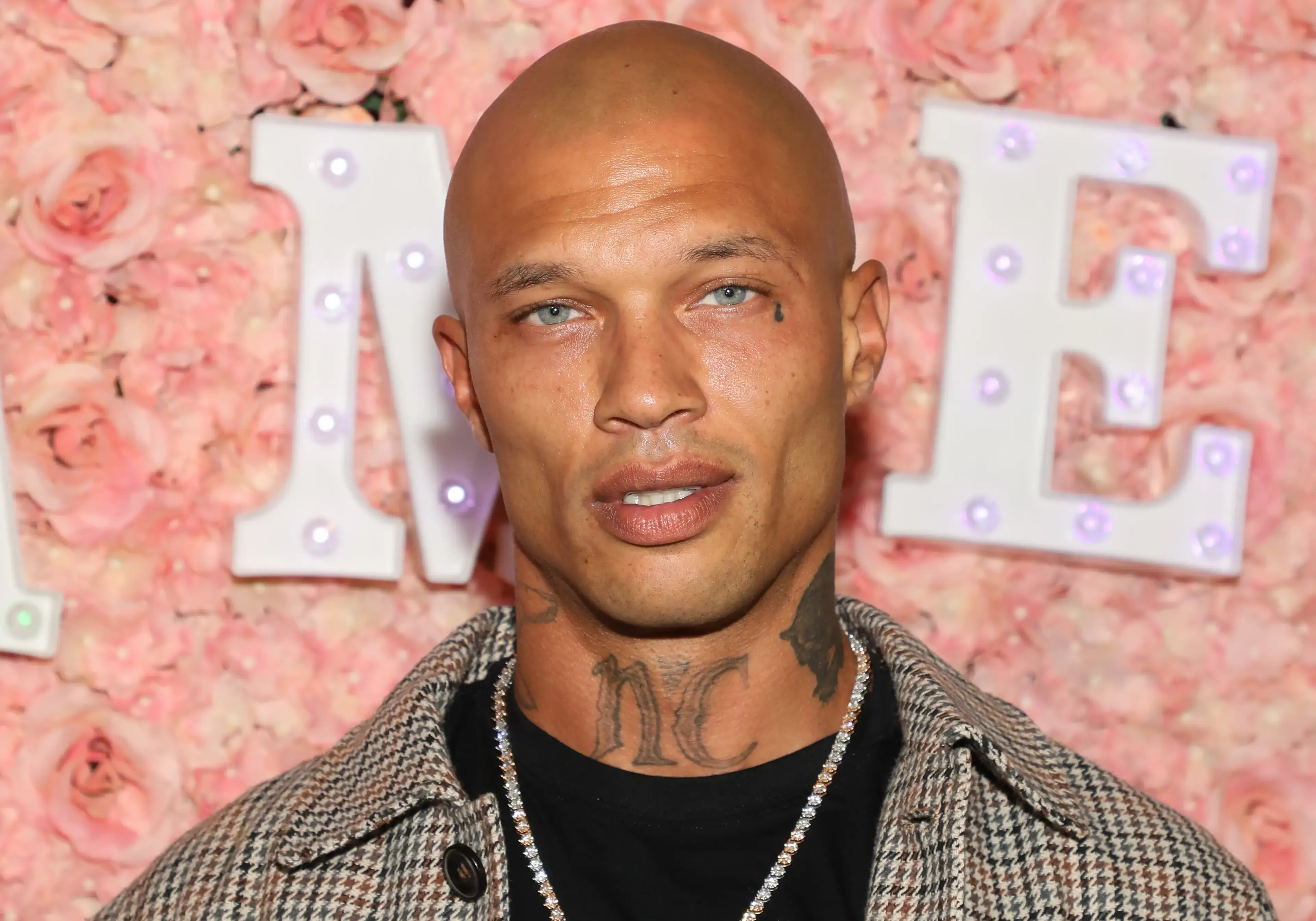
Why the “World’s Hottest Felon” Label Still Follows Him
More than a decade after the original photograph circulated online, the nickname “World’s Hottest Felon” continues to appear in headlines about Jeremy Meeks. It is memorable, easy to recognize, and closely tied to the moment that introduced him to the world.
But a nickname can become a limitation when it follows someone for too long.
Meeks has worked as a model, appeared in films, explored fashion business opportunities, and published an autobiography. Yet many stories about him still begin with the same reference: the mugshot.
That is understandable from a media perspective. The photograph is the most recognizable starting point in his public story. It provides an immediate explanation for why people know his name. But it also risks making every later achievement seem like an extension of that original image.
There is a difference between being famous because of a photograph and building a career after that photograph. The first can happen almost instantly. The second requires time, professional relationships, and the willingness to take opportunities that may not always work out.
The nickname also creates a strange contrast between the way people first encountered him and the person he has become. In 2014, the public saw a booking photograph. In the years that followed, they saw runway appearances, fashion portraits, film projects, and interviews.
The original image remains part of his history, but it does not have to be the only part.
His autobiography is one way of addressing that imbalance. By describing his childhood, his years in the criminal justice system, and the transition into a different professional life, he gives readers more information than the viral photograph ever could.
It is also important not to romanticize the criminal case itself. A viral reaction to someone's appearance does not make the underlying conduct unimportant, and a later career does not erase legal consequences. Meeks's story can be discussed as an unusual example of reinvention without suggesting that fame makes the past irrelevant.
The most useful way to understand his journey is to recognize both realities: he faced serious difficulties and legal consequences, and he later pursued a different direction through work in fashion and entertainment.
What the Transformation Really Says About Second Chances
The story of Jeremy Meeks is often presented as a dramatic rise from prison to luxury fashion. That description captures the most visible contrast, but the deeper subject is the possibility of change.
A second chance is not simply an opportunity handed to someone. It is also the responsibility to decide what to do when that opportunity arrives.
Meeks received attention at a moment when he could not immediately act on it. He was incarcerated, dealing with the consequences of his case, and waiting for the possibility of a new professional life. After his release, he had to move from public curiosity into actual work.
His career illustrates how an unexpected opportunity can alter the direction of a person's life. It does not prove that every person will receive the same opportunity, nor does it suggest that a viral moment is a reliable route to success. Most people who experience online attention do not become professional models.
What makes his story unusual is the combination of timing, public fascination, and the willingness of people in the fashion industry to give him a chance.
But the more lasting part of the story may be what he has done with the years since then. He has continued exploring new professional roles, spoken about his past, and published a memoir. He has also described wanting to develop as an actor and potentially become involved in writing and directing.
Those goals point toward a future that is not limited to repeating the same story about a mugshot.
For readers, there is another lesson in the way the internet responds to people. A photograph can become a global symbol before anyone knows the full story behind it. It can create an identity that is difficult to escape, even when the person in the image changes.
Meeks's experience shows how quickly public perception can shift. One year, the world was discussing a booking photograph. A few years later, it was watching him walk a fashion runway. More recently, it has been reading about his memoir and listening to him discuss the experience of becoming famous while incarcerated.
The image that started everything is still part of his public history. But it is no longer the only thing worth knowing about him.
So, What Does Jeremy Meeks Look Like at 42?
The answer is that Jeremy Meeks is now a 42-year-old model and actor whose public appearance is shaped by years of work in fashion and entertainment.
His distinctive blue eyes, facial structure, and tattoos remain recognizable features in photographs. However, the way he is presented today is very different from the booking photograph that went viral in 2014. Instead of the plain background and institutional setting of a mugshot, recent public images show him in fashion and entertainment environments, dressed for events and professional appearances.
The comparison is striking because it captures more than the passage of time. It reflects the different roles he has occupied since the photograph first spread online.
At 41, he published his autobiography and continued speaking about the experiences that shaped his life. At 42, he remains visible in fashion coverage and continues to pursue opportunities in entertainment.
His story has moved through several distinct stages: a difficult childhood, involvement in gang life, repeated incarceration, a viral booking photograph, a prison sentence, release, modeling, acting, business interests, and finally the decision to tell his own story in a memoir.
None of those stages alone explains the whole person.
The phrase “World’s Hottest Felon” may have made Jeremy Meeks famous, but it cannot fully describe the man who exists today. His journey is more complicated than a before-and-after photograph. It is a story about how an unexpected moment of public attention opened a door, and how he tried to build a different life after walking through it.
The most remarkable part may not be that a man once known for his mugshot appeared on a runway. It may be that, years later, people are still asking what happened after that photograph — and discovering that the story continued long after the internet moved on to its next viral sensation.