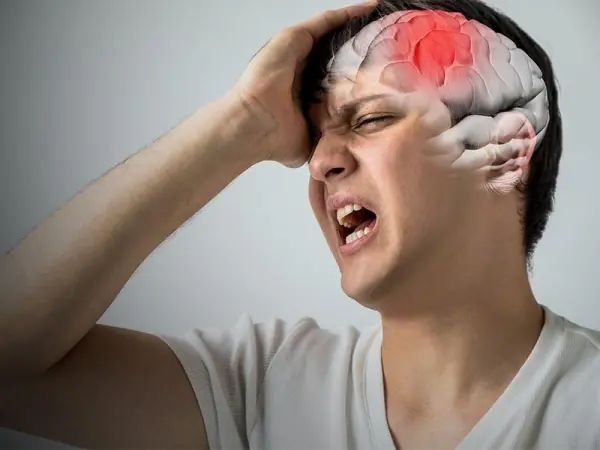
I have heard about silent heart attacks, so is it possible for us to have a stroke without knowing it?
According to Harvard Medical School, the answer is "Yes, it is possible."
In fact, a statement from the American Stroke Association and the American Heart Association estimates that up to 1 in 4 people over the age of 80 may have experienced one or more strokes without any symptoms.
These events are often only discovered when a person undergoes a brain scan for another reason.
Silent strokes typically occur due to reduced blood flow in one of the smaller arteries supplying the brain. It can happen without noticeable symptoms if it affects a part of the brain that does not control major movements or vital functions.
This means it will not produce the usual stroke symptoms such as weakness in the arms or legs…
Bùi Thị Thu Hà, from Phú Thọ Provincial General Hospital, states that when people think of a stroke, they may immediately recall its typical symptoms such as paralysis or loss of movement in certain body parts, difficulty speaking or eating, or cognitive disorders…
However, there is a type of stroke that does not show any of the above symptoms, and it is called a silent stroke.
A silent stroke is one that occurs without any outward symptoms related to the stroke, and the patient is often unaware that they have had one.
In a large study in the U.S. in 1998, it was estimated that nearly 12 million people had strokes, with about 770,000 cases having symptoms, and 11 million cases being silent strokes first detected on MRI scans.
How dangerous is a silent stroke?
Not being able to recognize that a silent stroke is happening does not mean it does not cause significant harm to health.
Although silent strokes typically affect only a small area of the brain, the damage will gradually accumulate. If someone has had several silent strokes, they may start to experience difficulty remembering things or concentrating.
Researchers have confirmed that multiple silent strokes can increase the risk of developing dementia due to multiple brain infarctions (multi-infarct dementia). Some symptoms of dementia include:
- Memory problems.
- Emotional issues, such as laughing or crying at inappropriate times.
- Changes in gait.
- Getting lost, even in familiar places.
- Difficulty making decisions.
- Loss of control over bowel and bladder functions.
Additionally, according to Dr. Hà, after more than two decades of research, it has been observed that silent strokes are quite common. Even though they do not cause noticeable symptoms, a silent stroke still increases the risk of future conditions such as transient ischemic attacks (TIA), major strokes, and dementia.
The risk of silent strokes increases with age but can also affect younger people. Women appear to be at a higher risk of silent strokes. The three primary manifestations of silent strokes are silent brain infarctions, white matter damage due to vascular causes, and microscopic brain hemorrhages.
How can you recognize a silent stroke?
If you undergo a CT or MRI scan of your brain, the imaging results may show spots or areas of damage where brain cells have ceased functioning. However, you will not have any observable signs of neurological impairment, such as speech or motor issues.
Some other signs are difficult to recognize and are often mistaken for normal aging, such as:
- Problems maintaining balance.
- Increased risk of falling.
- Urinary leakage.
- Mood changes.
- Reduced thinking ability.
Similar to how reducing the risk of severe strokes works, addressing cardiovascular risk factors, such as high cholesterol and high blood pressure, also helps reduce the risk of silent strokes.