Potatoes: How to Prevent Them from Sprouting — Grandma’s Simple Trick to Keep Them Fresh Longer
You buy a bag of potatoes with plans for comforting soups, crispy fries, or a family dinner. At first, they look perfect: firm, smooth, and ready to use. Then, a few days later, you open the cupboard and notice tiny pale shoots pushing out of their eyes. Some potatoes have begun to wrinkle, others feel softer than before, and suddenly the food you thought would last for weeks seems ready for the bin.
It is a familiar kitchen frustration, but sprouting does not always mean that every potato must be thrown away. The real secret is understanding what makes potatoes sprout, how to slow the process, and when a potato is no longer a good choice for cooking.
The photograph accompanying this topic shows potatoes at two different stages: some with short pinkish shoots and others covered in longer, pale sprouts. That visual difference is important. Sprouting is a natural part of a potato’s life cycle, but storage conditions can make it happen much sooner than expected.
The so-called “grandma’s trick” is often described as a simple way to preserve potatoes. Rather than promising a miracle method, this article looks at the practical habits that genuinely help: choosing the right storage place, controlling light and moisture, keeping potatoes away from certain produce, checking them regularly, and handling sprouted potatoes safely.
There is also a surprising reason why the issue deserves more attention than food waste alone. Under certain conditions, potatoes can develop increased levels of natural compounds called glycoalkaloids. Knowing when to remove a small sprout, when to peel and prepare a potato carefully, and when to discard it can help protect both your food budget and your household.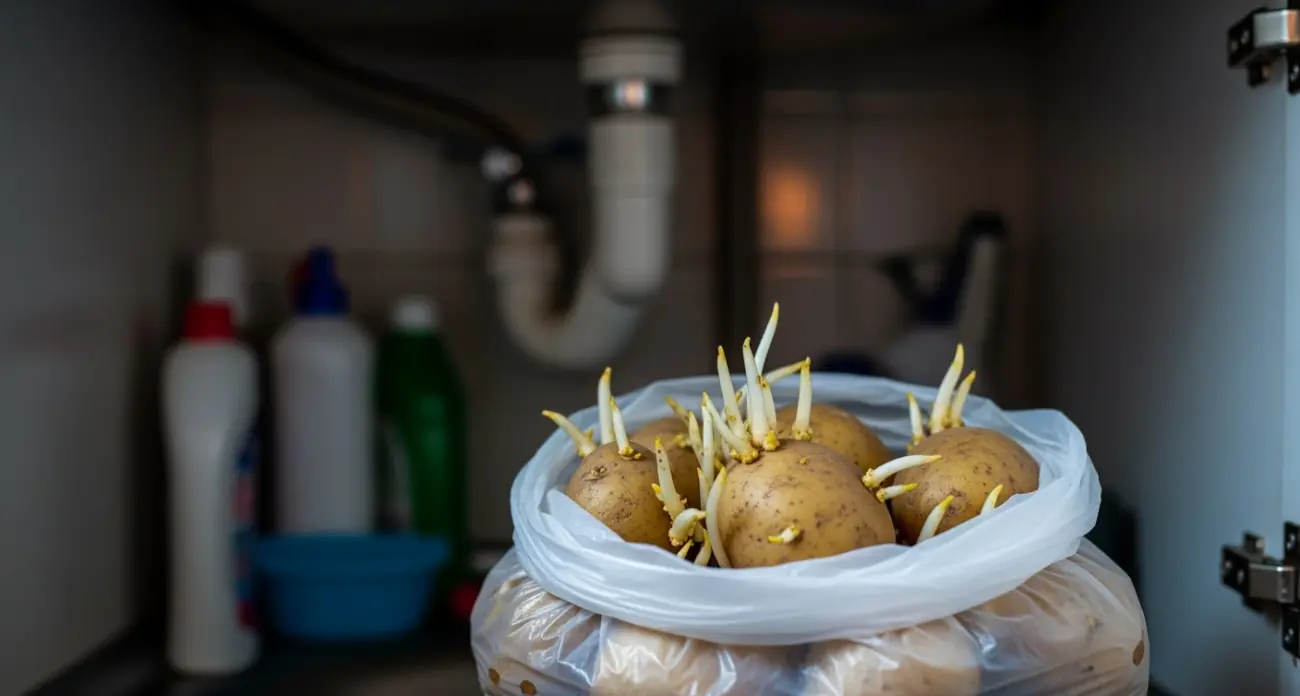
Chapter 1: Why Potatoes Sprout Even When Nobody Touches Them
To understand how to prevent sprouting, it helps to understand what a potato actually is.
A potato is not simply a vegetable sitting quietly in a cupboard. Botanically, it is a tuber: a modified underground stem that stores energy for a new plant. Its small indentations, commonly called “eyes,” are buds. Each eye has the potential to produce a shoot when conditions become suitable.
That is why the pink and white shoots in the photograph appear from several different points on the potatoes. They are not random marks or signs that insects have damaged the skin. They are new growth emerging from the potato's natural buds.
The potato is still alive after harvest
Once a potato is harvested, it does not immediately stop functioning. Its cells remain alive, and the tuber continues to respire and respond to its surroundings.
For a period after harvest, the potato remains dormant. During this stage, the eyes do not develop visible shoots. The length of this resting period depends on the variety, the maturity of the tuber, its condition, and the temperature at which it is stored.
As time passes, dormancy naturally comes to an end. The potato begins using stored nutrients to support new growth. If the environment is warm enough, shoots begin to appear.
This explains why even carefully stored potatoes will eventually sprout. Good storage slows the process; it does not preserve potatoes forever.
Temperature is one of the biggest influences
A warm cupboard can encourage potatoes to leave dormancy sooner than expected. In general, cooler storage temperatures slow the biological processes that lead to sprouting.
For household storage, a cool location is usually preferable to a warm kitchen counter or cabinet beside an oven. Many home-storage recommendations suggest temperatures around 45–55°F (approximately 7–13°C), although ideal conditions vary by potato variety and intended use.
Commercial and agricultural storage facilities may use more carefully controlled temperatures and humidity levels. Their requirements are not always identical to those of a household pantry.
The practical lesson is simple: if potatoes are stored in a warm room for weeks, sprouts are more likely to appear than if they are kept in a consistently cool location.
Light encourages greening
Light is another major reason potatoes deteriorate.
When potato tubers are exposed to light, they can develop green patches beneath the skin. The green colour comes from chlorophyll, the same pigment that makes leaves green.
Chlorophyll itself is not the main food-safety concern. The concern is that greening can occur alongside an increase in natural glycoalkaloids, including solanine and chaconine.
These compounds are part of the potato's natural defence system. Their levels are usually low in healthy edible tubers, but they can become higher in sprouts, green areas, and damaged or bitter-tasting parts.
That is why potatoes should be stored in darkness, even if the storage area is otherwise cool.
A decorative bowl on an open kitchen counter may look attractive, but it is not an ideal long-term storage location if daylight reaches the potatoes.
Moisture and poor ventilation can create additional problems
Potatoes contain a great deal of water. If they are stored in a damp environment without adequate airflow, moisture can collect on their surfaces and encourage decay.
A tightly sealed plastic bag can trap moisture, especially if potatoes are placed inside while still damp. The result may be mould, soft spots, and rotting tubers.
However, potatoes should not be allowed to dry out excessively either. A very dry environment can cause them to lose moisture, wrinkle, and become soft.
The goal is a balanced storage environment: cool, dark, reasonably humid, and ventilated enough to prevent condensation.
Time matters, even in good conditions
One of the most common misunderstandings about potato storage is the idea that a particular trick can stop sprouting permanently.
It cannot.
Potatoes have a natural dormancy period. When that period ends, they begin to grow. Storage conditions influence how quickly this happens, but no ordinary household method can guarantee that a bag of potatoes will remain unchanged for months.
The best approach is to slow sprouting, inspect the potatoes regularly, and buy quantities that can realistically be used before their quality declines.
Chapter 2: Grandma’s Foolproof Trick — What Actually Works?
Traditional kitchen advice often focuses on simple habits rather than expensive equipment. That is why the idea of a grandmother's potato-storage trick is appealing: it promises a practical solution using things already available at home.
But the most reliable method is not a secret ingredient. It is a storage routine.