There is no dependable basis for treating an apple as a universal sprout-prevention tool.
Ripening fruit can release ethylene, which may influence potato sprouting. Keeping potatoes away from ripening fruit is the more cautious approach.
Myth 2: Potatoes must be stored in a refrigerator
Not necessarily.
A cool pantry or cellar may be suitable. Very cold storage can increase sugars in some potatoes and affect browning during frying.
However, household advice varies by location and climate. If a home is consistently hot and no cool pantry exists, refrigeration may be considered under certain food-storage recommendations.
Myth 3: A sprouted potato is always poisonous
Not every potato with a small sprout must automatically be discarded.
The condition of the tuber matters. A firm potato with a small sprout and no significant greening may be usable after careful removal of the sprout and surrounding area.
A heavily sprouted, green, bitter, or deteriorated potato should be discarded.
Myth 4: Boiling removes all natural toxins
Ordinary cooking does not reliably destroy potato glycoalkaloids.
Do not rely on boiling, frying, or baking to make heavily green or badly sprouted potatoes safe.
Myth 5: Washing potatoes makes them last longer
Washing before storage can leave moisture on the surface and shorten storage life.
For ordinary household use, it is usually better to wash potatoes shortly before cooking.
Myth 6: A sealed plastic bag is the best storage container
A sealed bag can trap moisture and encourage decay.
A breathable container or perforated bag is generally a better choice.
Myth 7: If one potato sprouts, the entire bag is ruined
Not necessarily.
Inspect the rest of the batch. Remove damaged potatoes, separate any that are deteriorating, and store the sound ones correctly.
Regular inspection is more useful than throwing away every potato because one has started to grow.
Chapter 10: The Most Important Lesson Behind the Grandma's Trick
The photograph of sprouting potatoes may look alarming, but it also shows a natural process that can be managed with sensible storage habits.
The most dependable way to delay sprouting is not to rely on an apple, an onion, a special powder, or an elaborate kitchen recipe.
It is to control the conditions around the potatoes.
Keep them cool without exposing them to unsuitable extremes of temperature. Protect them from light. Use containers that allow airflow. Avoid trapping moisture. Keep them away from ripening fruit. Remove damaged tubers before they spoil the rest.
Just as importantly, understand when storage has gone too far.
Small sprouts on a firm potato are not the same as extensive growth on a green, bitter, soft, or badly shrivelled tuber. The first situation may be manageable with careful trimming and preparation. The second is a reason to discard the potato.
The best household strategy is therefore a combination of prevention and inspection.
Buy an amount your family can use. Store it in a suitable place. Check it regularly. Use older potatoes first. And never assume that cooking can remove every food-safety concern.
A traditional kitchen tip is valuable when it helps people avoid waste and prepare food safely. The real wisdom behind this one is surprisingly straightforward: a cool, dark, dry-on-the-surface, well-ventilated storage space is the simplest way to help potatoes stay firm and delay sprouting.
That is the practical answer behind the headline—and it is a habit that can save money, reduce food waste, and make everyday cooking easier.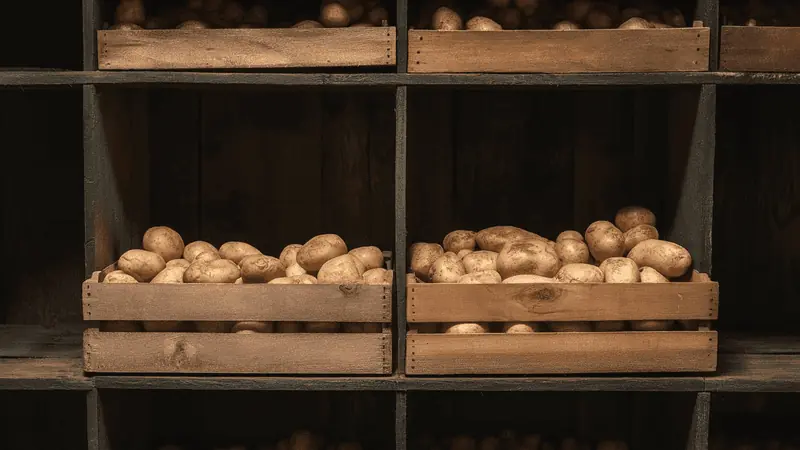
Chapter 11: Frequently Asked Questions About Potatoes and Sprouting
How long can potatoes stay fresh?
There is no single shelf-life figure that applies to every potato. Variety, maturity, damage, temperature, humidity, and ventilation all influence how long tubers remain in good condition.
Potatoes kept in a suitable cool, dark storage area may last considerably longer than those left in a warm, bright kitchen. However, even well-stored potatoes eventually lose quality and may sprout.
The best guide is to inspect them regularly rather than relying only on the date they were purchased.
Should potatoes be stored in a plastic or paper bag?
Both can work if the container provides appropriate conditions.
A perforated plastic bag can help retain humidity while allowing some air movement. A paper bag can protect potatoes from light and allow moisture to escape.
Avoid tightly sealed packaging that traps condensation. Whatever container you choose, make sure the potatoes are dry on the surface and that the storage area is not damp.
Can potatoes and onions be stored in the same basket?
It is better to store them separately.
They have different storage needs, and keeping them together can make it harder to control moisture and odours. Potatoes should also be kept away from ripening fruit that releases ethylene.
Separate containers are an easy way to organize the kitchen and reduce unnecessary deterioration.
Is it safe to eat potatoes with pink or purple sprouts?
The colour of a sprout does not, by itself, tell you whether the potato is safe.
Some varieties naturally produce shoots with pink, purple, or reddish tones. Other sprouts may appear white or pale yellow because they have grown in darkness.
What matters is the condition of the entire tuber. Remove small sprouts and surrounding eyes from a firm potato with no significant greening, following cautious food-safety guidance. Discard potatoes that are extensively sprouted, green, bitter, rotten, or badly shrivelled.
Can potatoes be stored beside bananas?
It is better to keep potatoes away from ripening bananas and other ripening fruit.
Ripening fruit can release ethylene, a plant hormone that may influence sprouting in potatoes. Keeping the produce separate is a straightforward precaution.
Should potatoes be kept in complete darkness?
Yes, darkness is important for maintaining quality.
Light exposure can cause potatoes to turn green and may be associated with increased glycoalkaloid levels. An opaque container or closed cupboard is preferable to an open bowl in a bright kitchen.
Can sprouted potatoes be frozen?
Freezing raw whole potatoes is generally not recommended because their texture can change significantly. If you want to freeze potatoes, prepare and cook them appropriately first, then use suitable freezer containers.
Freezing does not make a green, rotten, or heavily sprouted potato safe to eat.
What is the single best way to prevent sprouting?
There is no single trick that can stop sprouting forever. The most reliable household approach is to store potatoes in a cool, dark, ventilated location, keep them dry on the surface, separate them from ripening fruit, and inspect them regularly.