Before purchasing a new unit, ask a qualified technician to assess the condition of your existing system.
If the current unit has a relatively minor maintenance problem, repairing it may be more economical than replacing it.
If it is very old, frequently breaks down, or performs poorly despite proper maintenance, replacement may offer better long-term value.
Compare the energy-efficiency ratings of suitable models and obtain estimates for purchase, installation, and ongoing maintenance.
Also consider how often you use the air conditioner. A more efficient model may offer substantial savings in a home where cooling operates for many hours each day. The financial benefit may be smaller in a room where the unit is used only occasionally.
Do not focus exclusively on the purchase price.
A low-cost unit that is poorly sized or inefficient may cost more to operate over its lifetime.
Likewise, the most expensive model is not necessarily the best choice for every household.
Look for a suitable capacity, reliable installation, appropriate efficiency ratings, and features that match your actual needs.
18. Common Air Conditioning Habits That Can Waste Electricity
Some habits seem sensible but may not provide the savings people expect.
Setting the temperature extremely low
Selecting the lowest possible setting does not usually make a room cool faster. Choose a reasonable target and allow the unit to operate.
Leaving the windows open while cooling
Warm, humid outdoor air increases the cooling demand. Close exterior openings during operation unless ventilation or safety requirements dictate otherwise.
Ignoring dirty filters
Restricted airflow can reduce performance. Inspect and clean filters according to the manufacturer's instructions.
Running fans in empty rooms
Fans generally cool people rather than the room itself. Turn them off when they are not needed.
Blocking the outdoor unit
Objects and dense vegetation can interfere with airflow and make heat rejection less effective.
Buying an oversized air conditioner
Excess capacity can cause comfort and humidity problems, particularly with systems that cycle frequently. Select equipment based on an appropriate cooling-load assessment.
Assuming every energy-saving feature always saves money
Sleep mode, dry mode, eco mode, and timers work differently across models. Evaluate their effect on comfort and actual electricity use.
Neglecting the building itself
Poor insulation, direct sunlight, and air leaks can increase cooling demand even when the air conditioner is functioning properly.
Correcting these habits can improve comfort without requiring you to stop using the appliance.
19. A Simple Daily Routine for Lower Electricity Costs
You do not need to follow a complicated checklist every day. A few consistent habits can help maintain comfort and reduce unnecessary consumption.
In the morning
Open suitable windows if outdoor air is cooler and conditions are appropriate. Allow fresh air into the home, then close windows before outdoor temperatures rise.
Turn off unnecessary lights and appliances that produce heat.
During the afternoon
Close curtains or blinds on windows receiving direct sunlight.
Set the air conditioner to a comfortable temperature, often around 24°C to 26°C as a starting point.
Use a fan if it helps you remain comfortable at a slightly higher temperature.
Keep doors and windows closed while cooling, and make sure the outdoor unit's airflow is unobstructed.
In the evening
Adjust the temperature according to the conditions rather than automatically choosing the coldest setting.
If the outdoor air becomes cooler and less humid, consider ventilating the home when appropriate.
Avoid running heat-producing appliances longer than necessary.
Before bedtime
Use sleep mode or a timer if it suits your needs.
Choose a temperature that allows you to sleep comfortably and safely.
Turn off fans in unoccupied rooms and check that windows are closed if the air conditioner will continue operating.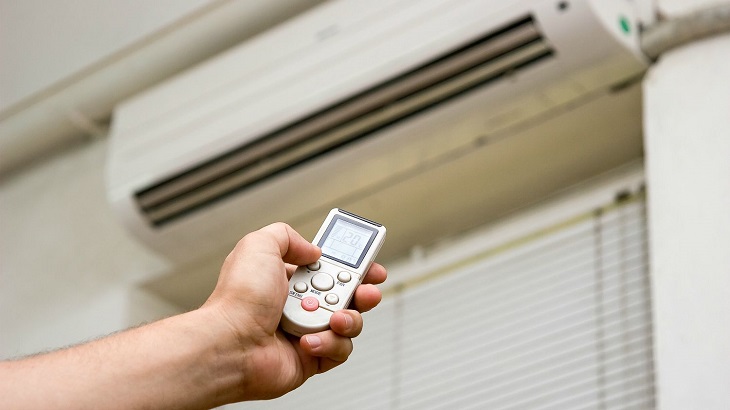
Every few weeks
Inspect the air filter and clean it when needed.
Look for obvious obstructions around the outdoor unit.
Check whether the air conditioner is cooling normally and whether electricity consumption appears unusually high.
Arrange professional maintenance when required.
The best routine is one that fits your household rather than one that forces you to sacrifice comfort.
20. The Most Important Principle: Comfort and Savings Can Coexist
Using an air conditioner efficiently is not about enduring a hot room or turning the appliance off whenever you feel uncomfortable.
It is about avoiding unnecessary work for the system.
A clean filter improves airflow. Closed windows reduce unwanted heat and humidity. Curtains help block direct sunlight. Fans can improve perceived comfort, allowing you to use a slightly higher thermostat setting. Appropriate maintenance helps the unit perform as intended.
Choosing the right equipment and improving insulation can make an even greater difference over time.
The benefits extend beyond the electricity bill. Better temperature control can improve sleep, reduce discomfort during hot weather, and make your home more pleasant throughout the day.
There is no single temperature, operating schedule, or maintenance routine that works perfectly for every household. Climate, building design, equipment type, health needs, and personal preference all matter.
Start with the changes that are easiest to implement.
Clean the filter. Close the curtains during strong sunlight. Try a fan. Choose a reasonable temperature. Monitor your electricity consumption.
Then evaluate the results and adjust your habits accordingly.
You may discover that you do not need to run the air conditioner at an extremely low temperature to feel comfortable. You may also find that a few simple improvements make your home easier to cool.
Ultimately, the goal is not to spend as little as possible on electricity at any cost.
The goal is to get the comfort you need while paying only for the energy your household actually needs.
With the right settings, sensible maintenance, and a few everyday changes, you can enjoy a cooler home without letting electricity bills become a constant source of worry.