The drying stage matters too.
Excess moisture can damage certain flooring materials, especially wood and laminate. Water may enter joints, seams, or exposed edges and cause swelling or other problems.
A wet floor can also create a slipping hazard.
After mopping, make sure the surface is drying appropriately. Open windows or improve ventilation when practical, and keep people and pets away from slippery areas until the floor is dry.
If you have a moisture-sensitive floor, use a well-wrung mop rather than soaking the surface.
A good cleaning routine should leave the floor clean without leaving unnecessary water behind.
A Practical Weekly Floor-Care Routine
Rather than relying on a single mixture to keep every room clean for seven days, consider a simple routine that spreads the work across the week.
Monday: Focus on high-traffic areas.
Sweep or vacuum entrances, hallways, and kitchen floors. Spot-clean visible marks using a compatible cleaner.
Tuesday: Check the kitchen.
Remove crumbs beneath the table and clean around cooking areas. Wipe up grease or food spills promptly.
Wednesday: Refresh living spaces.
Vacuum or sweep beneath furniture where dust tends to collect. Check the corners and areas around sofas.
Thursday: Clean bathroom floors.
Use a cleaner approved for the bathroom flooring. Pay attention to areas around the sink and toilet, where moisture and residue can accumulate.
Friday: Give the whole home a maintenance clean.
Use the appropriate method for each floor type. Change mop water when necessary and wash the mop head after use.
Saturday: Deal with neglected areas.
Move lightweight furniture carefully and clean areas that are usually missed, such as behind doors and around furniture legs.
Sunday: Prepare for the coming week.
Clean entrance mats, organize shoes, wash reusable mop pads, and make sure cleaning tools are dry before storage.
This routine does not mean every room needs to be mopped every day. It simply prevents dirt from accumulating until a major cleaning session becomes necessary.
Common Mistakes to Avoid When Using Baking Soda
Even a simple household cleaning method can go wrong if it is used carelessly.
Here are several mistakes worth avoiding.
Using it on every floor without checking
Different surfaces have different requirements. Never assume a recipe suitable for ceramic tile is automatically suitable for hardwood, marble, laminate, or another material.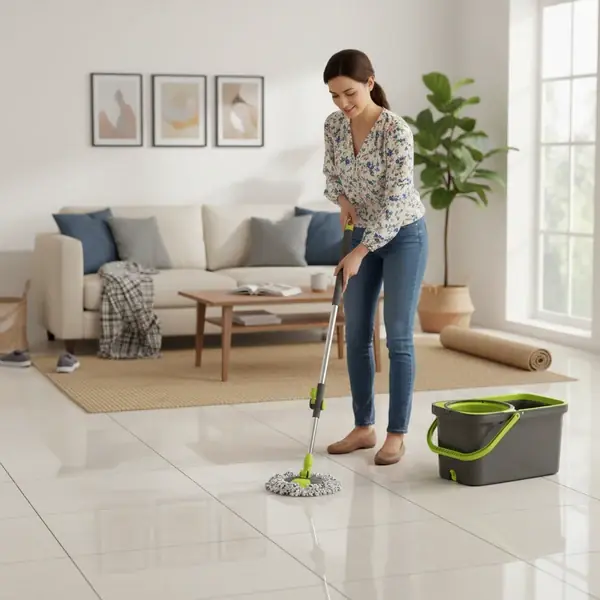
Adding too much
A concentrated solution may leave residue and create more work.
Skipping the initial sweeping
Loose dirt and grit should be removed before wet cleaning.
Using the same dirty water for the entire home
Change the water when it becomes visibly dirty.
Leaving too much moisture behind
Wring the mop thoroughly, particularly when cleaning wood, laminate, and other moisture-sensitive surfaces.
Scrubbing delicate finishes
Avoid aggressive scrubbing and dry-powder abrasion on polished or sensitive surfaces.
Expecting disinfection
Baking soda is not a substitute for a disinfectant labeled for the intended use.
Ignoring persistent smells
If a floor continues to smell unpleasant, investigate the source instead of repeatedly adding more fragrance or powder.
A Note About Household Safety
Baking soda is a familiar household product, but that does not mean every cleaning mixture is automatically safe.
Keep cleaning ingredients away from young children and pets. Do not store homemade mixtures in containers that could be mistaken for drinking water or food.
Label any container used to store a cleaning solution, and avoid preparing more mixture than you need.
Never combine baking soda with bleach, ammonia, drain cleaners, or other products unless their manufacturers explicitly state that the combination is safe.
If a cleaning product causes irritation, stop using it and follow the product's safety instructions.
Also remember that a floor can become slippery while wet, regardless of which cleaning ingredient is used. Keep children, older adults, and pets away until the surface is dry.
So, Will Your Floors Stay Clean for a Whole Week?
Now we can return to the promise in the original picture.
The white powder shown being added to the mop bucket is baking soda. It can be useful for certain household cleaning tasks, including helping to loosen some everyday grime and neutralize certain unpleasant odors.
But the claim that adding it will keep every floor clean for an entire week is an exaggeration.
No ingredient can prevent dust, footprints, pet hair, food crumbs, and outdoor dirt from entering a home. The result will always depend on the type of flooring, the number of people living in the house, daily activity, pets, and the cleaning routine.
A more realistic benefit is that a suitable cleaning solution, combined with a clean mop and proper technique, may help make routine floor maintenance easier.
The most important rules are simple:
-
Identify the floor material before choosing a cleaning solution.
-
Use baking soda only when the flooring manufacturer permits it.
-
Avoid excessive amounts.
-
Remove loose dirt before mopping.
-
Change dirty mop water.
-
Rinse away residue when the floor-care instructions require it.
-
Keep moisture to a minimum on sensitive surfaces.
-
Clean spills and high-traffic areas before dirt builds up.
The biggest difference may come not from the powder itself, but from the way you clean.
A clean mop, fresh water, the correct cleaning product, and a few simple habits can help keep a home looking fresher without unnecessary effort.
So the next time you see a viral cleaning tip promising spotless floors for seven days, remember the ingredient in the picture — baking soda — but also remember the detail that the picture leaves out: the right cleaning method depends on the floor beneath your feet.