If a Mole Has These 5 Characteristics, Get a Can.cer Screening Immediately
Most of us have at least one mole on our bodies. However, it’s crucial to monitor them, as they could indicate skin can.cer.
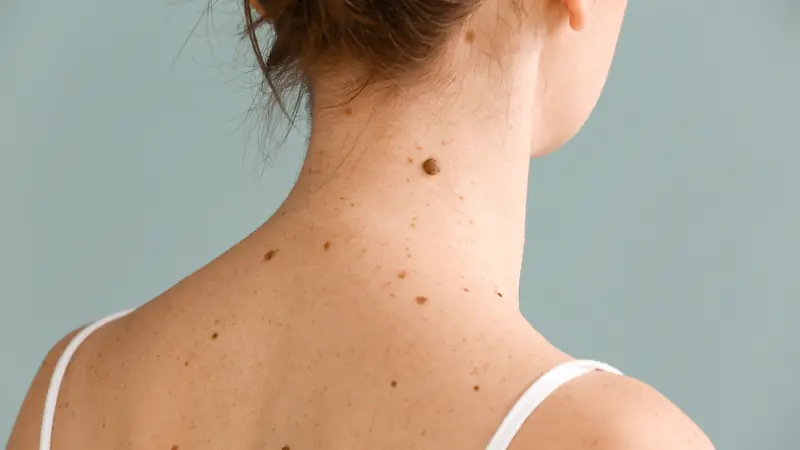
"By adulthood, the average person has between 10 and 40 moles. They can be flat or slightly raised, typically round or oval, and range in color from pink to brown, dark brown, or black. While moles are often harmless, some may indicate skin cancer or even develop into melanoma over time."
That’s what Dr. Darrell S. Rigel, Clinical Professor of Dermatology and Director of the Melanoma Surveillance Clinic at Mount Sinai Icahn School of Medicine (USA), shared in an interview with HuffPost.
Where Cancerous Moles Appear and Who Is at Risk
Dr. Rigel explained: "Melanomas can develop from existing moles, but more commonly, they appear as new skin lesions resembling moles. They can occur anywhere on the body but are most commonly found on the chest and back in men, and on the legs in women."
Several factors increase the risk of melanoma, including excessive sun exposure, indoor tanning, atypical moles, and a family history of skin cancer. It is also more prevalent in individuals with fair skin, a tendency to sunburn, red or blonde hair, and light-colored eyes.
"People with darker skin have a lower risk of skin cancer, but if they develop it, their mortality rate is higher. In individuals with deeper skin tones, melanoma often appears in areas with less sun exposure, such as the palms, soles, or under the nails. Even when it develops in visible areas, it can be harder to detect due to skin pigmentation."
One major concern, according to Dr. Rigel, is that most people don’t check their moles regularly, leading to late detection. Advanced melanoma, especially basal and squamous cell carcinoma, has a survival rate of less than 50% once it spreads, even with cutting-edge treatments. Even more worrying is that this type of cancer "tends to spread early in its development."
However, the good news is that early detection allows for effective intervention without significantly impacting one’s quality of life.
5 Warning Signs of Skin Cancer in Moles
Regularly examining your moles is crucial for detecting potential skin cancer early. According to Dr. Rigel, in addition to consulting a medical professional, you can perform self-checks at home using the ABCDE Rule—a method dermatologists use to identify suspicious moles.
Each letter in ABCDE stands for a key characteristic to watch for:
- A (Asymmetry) – Shape
- B (Border) – Edges
- C (Color) – Color changes
- D (Diameter) – Size
- E (Evolving) – Changes over time
Here’s how to check your moles in detail:
🔹 A: Asymmetry – If you draw a line through the mole, the two halves should match. If they don’t, it may be a warning sign.
🔹 B: Irregular Borders – The edges may be jagged, scalloped, or blurred, making it difficult to distinguish the mole from surrounding skin.
🔹 C: Unusual or Uneven Color – Normal moles are usually uniform in color (pink, light brown, or black). Be cautious if a mole has multiple shades, such as bright red, white, blue, or deep black, or if its color has changed over time.
🔹 D: Large Diameter – A mole larger than 6mm (about the size of a pencil eraser) could be a concern.
🔹 E: Evolving Appearance – Harmless moles typically remain unchanged unless physically damaged. A cancerous mole, however, may grow in size, change in color or texture, become raised, start bleeding, itch, or ulcerate.
Dr. Rigel also emphasized the importance of checking your entire body, including your front and back in a mirror, lifting your arms to examine your sides, and inspecting areas like the forearms, underarms, palms, legs, between toes, and soles. Don't forget your nails, neck, and scalp, and ask someone for help if needed.
"People at high risk of skin cancer should conduct monthly self-examinations and visit a dermatologist annually," Dr. Rigel advised.