Understanding the Relationship Between Breast Size and Hormonal Health: What Every Woman Should Know
Meta description: Breast size is influenced by genetics, hormones, age and body composition, but it cannot reliably reveal hormonal balance or overall health.
A woman may notice that her breasts change size during puberty, around her menstrual cycle, after pregnancy or as her weight changes. Someone else may have naturally small breasts throughout adulthood and wonder whether that says something about her hormones. These questions are common, but they are often surrounded by misleading claims about femininity, fertility and health.
One popular belief suggests that breast size can reveal whether a woman's hormones are balanced. Another claims that smaller breasts indicate low estrogen, while larger breasts supposedly mean higher estrogen levels. Neither conclusion is medically reliable. Breast size is shaped by several interacting factors, and appearance alone cannot tell a woman whether her endocrine system is functioning normally.
The relationship is more complicated—and more interesting—than many online headlines suggest. Hormones do influence breast development and changes in breast tissue, but genetics, age, body fat, pregnancy, breastfeeding and individual anatomy also play important roles. Two women with similar hormone levels can have very different breast sizes, while one woman's breasts may change considerably during different stages of life without indicating a health problem.
There is also a separate question worth understanding: research has examined associations between breast size, body composition and certain metabolic conditions. But an association does not automatically mean that breast size itself causes illness. In many cases, factors such as overall body weight, fat distribution and metabolic health may help explain the relationship.
So, what does breast size really tell us about hormonal health? Why do breasts change throughout life? And which changes should prompt a medical check rather than a comparison with someone else's body?
The answers begin with understanding what breasts are made of, how hormones influence their development and why appearance is not a dependable measure of a woman's internal health.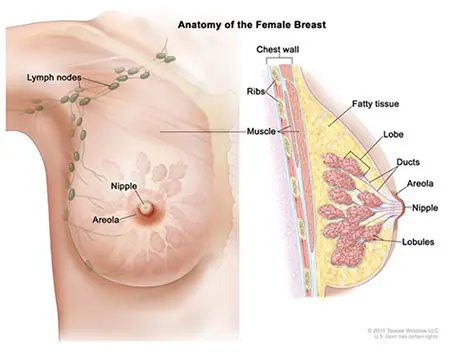
1. Breast size is not a hormone test
The first misconception to clear up is that breast size can reveal whether a woman has high or low estrogen. It cannot.
Estrogen is important for breast development, particularly during puberty. It contributes to the growth of the milk ducts and influences the development of breast tissue. Progesterone also plays a role, especially in the changes that prepare the breasts for possible pregnancy. Other hormones, including prolactin and growth-related hormones, become important at different stages of reproductive life.
However, the amount of breast tissue a woman develops is not determined by one hormone alone. Genetics, the sensitivity of breast tissue to hormones, the proportion of fatty tissue, age and other biological factors all contribute.
A woman with small breasts may have normal estrogen levels, regular ovulation and healthy reproductive function. A woman with large breasts may also have normal hormone levels—or may have a hormonal condition that has nothing to do with breast size. Appearance cannot distinguish between these possibilities.
Hormone levels also fluctuate naturally. Estrogen and progesterone change throughout the menstrual cycle, during pregnancy and after childbirth, and around menopause. A single measurement may not provide a complete picture of hormonal health, particularly if it is not interpreted in relation to the menstrual cycle and the reason for testing.
The same is true of other hormone-related symptoms. Irregular periods, persistent acne, unusual hair growth, hot flashes, unexplained changes in weight or difficulty becoming pregnant may sometimes justify medical assessment. Breast size alone does not.
This distinction matters because the belief that smaller breasts indicate low estrogen can cause unnecessary worry. It may also lead women to buy supplements or herbal products intended to increase breast size or supposedly balance hormones, even when there is no evidence that they have a hormone problem.
The more reliable approach is to assess health through symptoms, medical history, examination and appropriate tests—not through a clothing size.
2. What breasts are actually made of
Understanding breast anatomy helps explain why two women can have very different breast sizes even when their hormone levels are similar.
Breasts are made up of several types of tissue, including:
-
Fatty tissue, which contributes substantially to breast volume and shape.
-
Glandular tissue, which contains the structures involved in milk production.
-
Connective tissue, which helps support the breast.
-
Milk ducts and lobules, which carry and produce milk during lactation.
-
Blood vessels, lymphatic vessels and nerves, which supply and connect the breast to the rest of the body.
The amount and distribution of these tissues differ from person to person. In many women, fatty tissue makes a major contribution to overall breast size. Others have a relatively higher proportion of glandular and connective tissue.
This is why breast volume does not directly reveal how much milk-producing tissue someone has. A larger breast is not automatically capable of producing more milk, and a smaller breast does not automatically mean that a woman will have difficulty breastfeeding.
Breast density is another separate concept. It refers to the relative amounts of fibrous and glandular tissue compared with fatty tissue, generally assessed through mammography. It cannot be reliably determined simply by looking at breast size or shape. Dense breast tissue can also affect how easily certain abnormalities are seen on a mammogram.
The important lesson is that breast size is a visible measurement of overall volume, not a complete description of the tissue inside.
That is why appearance cannot be used to make reliable conclusions about fertility, hormone levels, milk production or general health.
3. Genetics: one of the strongest influences on natural breast size
Genetics plays a major role in determining breast size and shape. Women often notice similarities between themselves and female relatives, although family resemblance is not an exact prediction.
Inherited characteristics can influence body proportions, fat distribution, breast development and the way tissues respond to hormones. These factors interact, so a woman may resemble one relative in breast shape while having a different overall body composition.
Genetics also helps explain why breast size varies widely among healthy women. There is no single standard size that the body is supposed to reach.
A woman may have small breasts because that is her natural inherited body structure. Another may have larger breasts without having higher estrogen levels or a different reproductive capacity. Neither difference should automatically be treated as a sign of a health problem.
Genetic influences do not mean that breast size can never change. Weight fluctuations, pregnancy, breastfeeding, aging and certain medicines can all affect breast volume. But the basic pattern of breast development is influenced by inherited characteristics.
It is also worth remembering that breast size is not always symmetrical. Many women naturally have one breast that is slightly larger or differently shaped than the other. Small differences that have been present for a long time are usually part of normal anatomy.
A new or noticeable change in one breast, however, deserves attention, particularly if it is accompanied by a lump, skin changes or nipple changes.
4. Estrogen and progesterone: how hormones influence breast development
Although breast size cannot diagnose hormone balance, hormones do have an important role in breast development.
During puberty, estrogen contributes to the growth of breast ducts and the development of surrounding tissue. Progesterone becomes increasingly involved in the development of glandular structures, particularly in the later stages of the menstrual cycle and during pregnancy.
These hormones do not act in isolation. Their effects are influenced by other hormones and by how breast cells respond to hormonal signals.
During the menstrual cycle, estrogen levels rise during the first part of the cycle. Progesterone rises after ovulation. These changes can affect breast tissue, causing some women to notice temporary fullness, tenderness or a heavier feeling before menstruation.