Older adults can be particularly affected because they may take several medicines that contribute to dryness. Some may also have difficulty recognizing thirst or drinking regularly throughout the day. A dry mouth can make eating, speaking, and swallowing uncomfortable, so it should not automatically be dismissed as a normal part of aging.
What can help?
Drinking water regularly throughout the day is a sensible first step for most people. If the mouth becomes dry at night, keeping water nearby may be useful. Sugar-free gum or lozenges can stimulate saliva in some people, provided they can chew and swallow safely.
It is also worth reviewing medicines with a healthcare professional if dryness is persistent. Do not stop a prescribed medicine on your own. A doctor or pharmacist can determine whether a medicine may be contributing and whether an alternative or additional treatment is appropriate.
People with ongoing dry mouth may benefit from saliva substitutes or other products recommended by a dentist or doctor. Good hydration can help, but it cannot correct every underlying cause.
There is another reason not to ignore persistent dryness: saliva helps protect teeth. When the mouth remains dry for long periods, the risk of tooth decay, gum irritation, mouth infections, and difficulty wearing dentures may increase.
A white tongue accompanied by constant dryness, trouble swallowing dry foods, or repeated mouth infections deserves a professional assessment rather than endless attempts to clean the tongue more aggressively.
3. Poor Oral Hygiene: When Everyday Buildup Becomes Visible
Sometimes the explanation is much simpler.
The tongue has a textured surface, and its tiny papillae create spaces where food particles, bacteria, and shed cells can accumulate. If the tongue is not cleaned as part of regular oral care, this material may form a visible white coating.
The coating may be more noticeable toward the back of the tongue, where cleaning is often less thorough. It can also be associated with unpleasant breath or a bad taste in the mouth.
A person can brush their teeth regularly and still have buildup on the tongue. Teeth and tongue are different surfaces, and cleaning one does not automatically clean the other.
This is why many dentists recommend gently brushing the tongue or using a tongue scraper as part of a daily oral hygiene routine. The aim is to remove loose surface buildup—not to scrape away healthy tissue or force the tongue to look perfectly pink.
A soft toothbrush can be used with light pressure, moving from the back of the tongue toward the front as comfortably as possible. A tongue scraper is another option. It should be used gently, rinsed after use, and cleaned according to the manufacturer's instructions.
If cleaning causes pain, bleeding, or irritation, stop and seek advice. Repeatedly scraping a stubborn white patch is not a safe way to find out what it is.
Other habits can contribute to buildup. Smoking and tobacco use can affect the mouth's tissues and increase the risk of several oral conditions. Frequent alcohol consumption can contribute to dryness and irritation. A diet consisting mainly of soft foods may also be associated with changes in the way debris collects on the tongue.
Mouth breathing can make the problem more noticeable, particularly overnight. People with nasal congestion, allergies, or sleep-related breathing difficulties may wake up with a dry mouth and a coated tongue.
The useful clue is whether the coating improves with gentle cleaning and better hydration. A thin, removable film that gradually clears is different from a thick patch that remains fixed in place.
Even if poor oral hygiene seems likely, a persistent change should not be assumed to have that cause. A dentist can examine the tongue and the rest of the mouth to distinguish ordinary buildup from conditions that need specific treatment.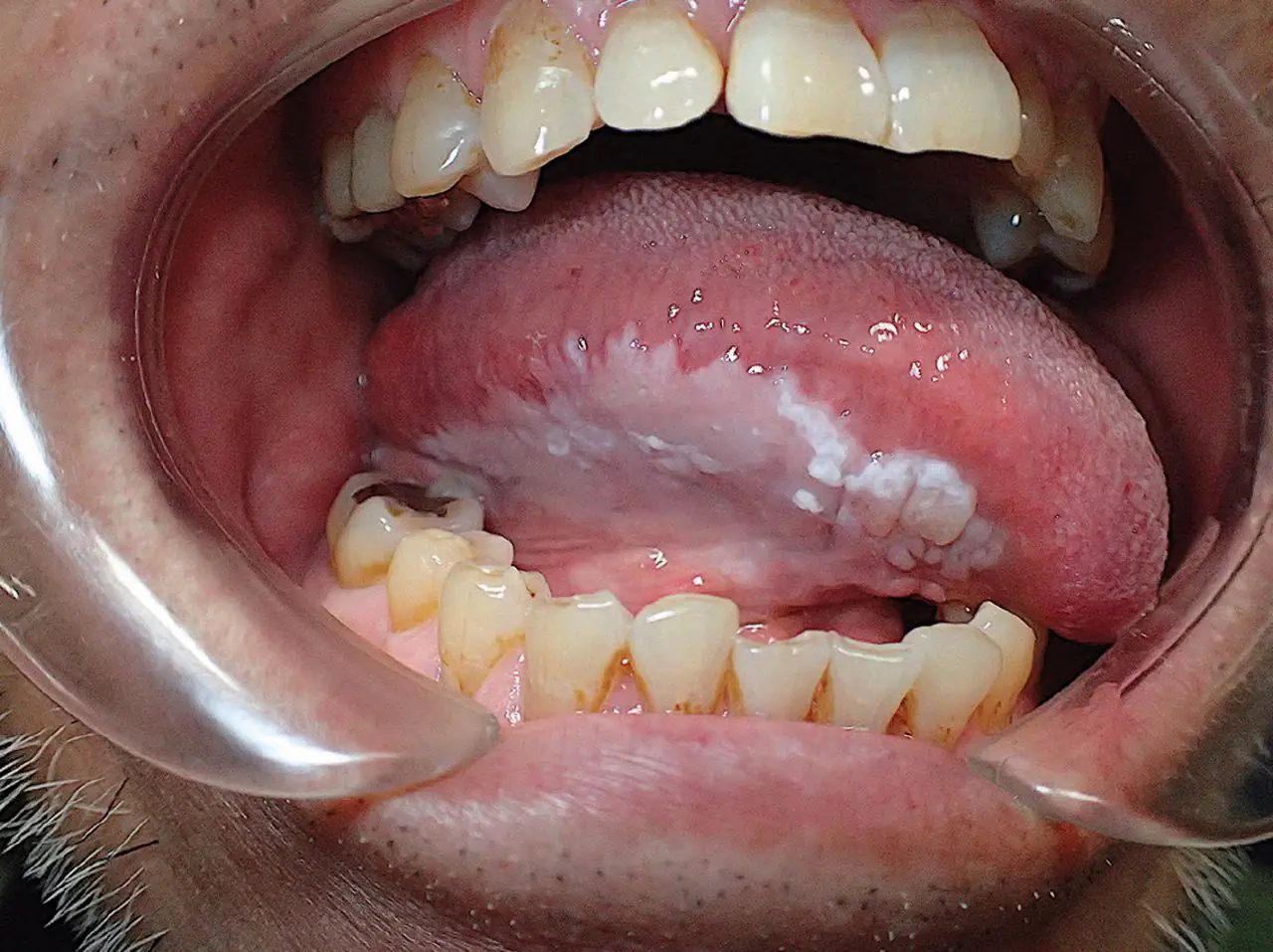
4. Leukoplakia: White Patches That Should Not Be Scraped Away
Leukoplakia is one of the reasons a persistent white patch deserves attention.
The condition causes white or grayish areas to develop on the mucous membranes inside the mouth. They may appear on the tongue, gums, inner cheeks, or floor of the mouth. Some patches are flat and smooth, while others may be thick, irregular, slightly raised, or mixed with red areas.
A key difference is that leukoplakia patches generally cannot be rubbed or scraped away.
That distinction does not establish a diagnosis, but it is an important reason not to treat every white area as ordinary coating or oral thrush.
Leukoplakia is often associated with long-term irritation. Tobacco use, including smoking and chewing tobacco, is a major risk factor. Heavy alcohol use may also contribute, particularly when combined with tobacco. Poorly fitting dental appliances, rough teeth, or repeated irritation may be relevant in some cases, although a clinician needs to assess the individual situation.
Most leukoplakia patches are not cancer. Nevertheless, some can contain abnormal cellular changes, and a small proportion may develop into oral cancer. The risk varies depending on the appearance, location, and microscopic features of the patch.
This is why a white patch that does not go away should be examined by a dentist or doctor. A professional may inspect the area, ask about tobacco and alcohol use, check for sources of irritation, and decide whether referral to a specialist is necessary.
In some cases, a biopsy is recommended. This involves taking a small sample of tissue so it can be examined under a microscope. A biopsy helps determine whether there are abnormal cells that require closer monitoring or treatment.
People sometimes delay seeking help because a white patch does not hurt. But the absence of pain does not prove that it is harmless. Leukoplakia is often painless, which means a person may not notice it unless they look inside their mouth.
If you notice a persistent white patch, particularly one that is thick, irregular, mixed with red areas, or located along the side or underside of the tongue, arrange an examination. Do not attempt to remove it with sharp objects, harsh chemicals, or repeated scraping.
Stopping tobacco use is an important step for people who smoke or chew tobacco. Reducing alcohol consumption may also be advised. However, lifestyle changes should not replace an examination of an existing patch.
The main lesson is simple: a white patch that stays in one place and cannot be wiped away needs professional attention. It may not be dangerous, but it should not be ignored.