If Your Veins Are Visible in Your Hands, It May Be a Signal — But What Does It Really Mean?
Seeing blue or green veins beneath the skin of your hands can be surprising, especially when they become more noticeable with age or after physical activity. Some people immediately worry that prominent veins indicate poor circulation, a heart problem, or a dangerous blood clot. Others assume they are simply a normal part of getting older.
The truth is more nuanced. Visible hand veins are often harmless, influenced by skin thickness, body composition, temperature, genetics, and exercise. But a sudden change accompanied by pain, swelling, redness, warmth, or other symptoms deserves attention. The important question is not simply whether your veins are visible, but whether their appearance has changed and what else is happening in your body.
To understand the difference, it helps to look first at why veins become noticeable, then at the medical conditions that can sometimes affect them, and finally at the warning signs that should never be ignored.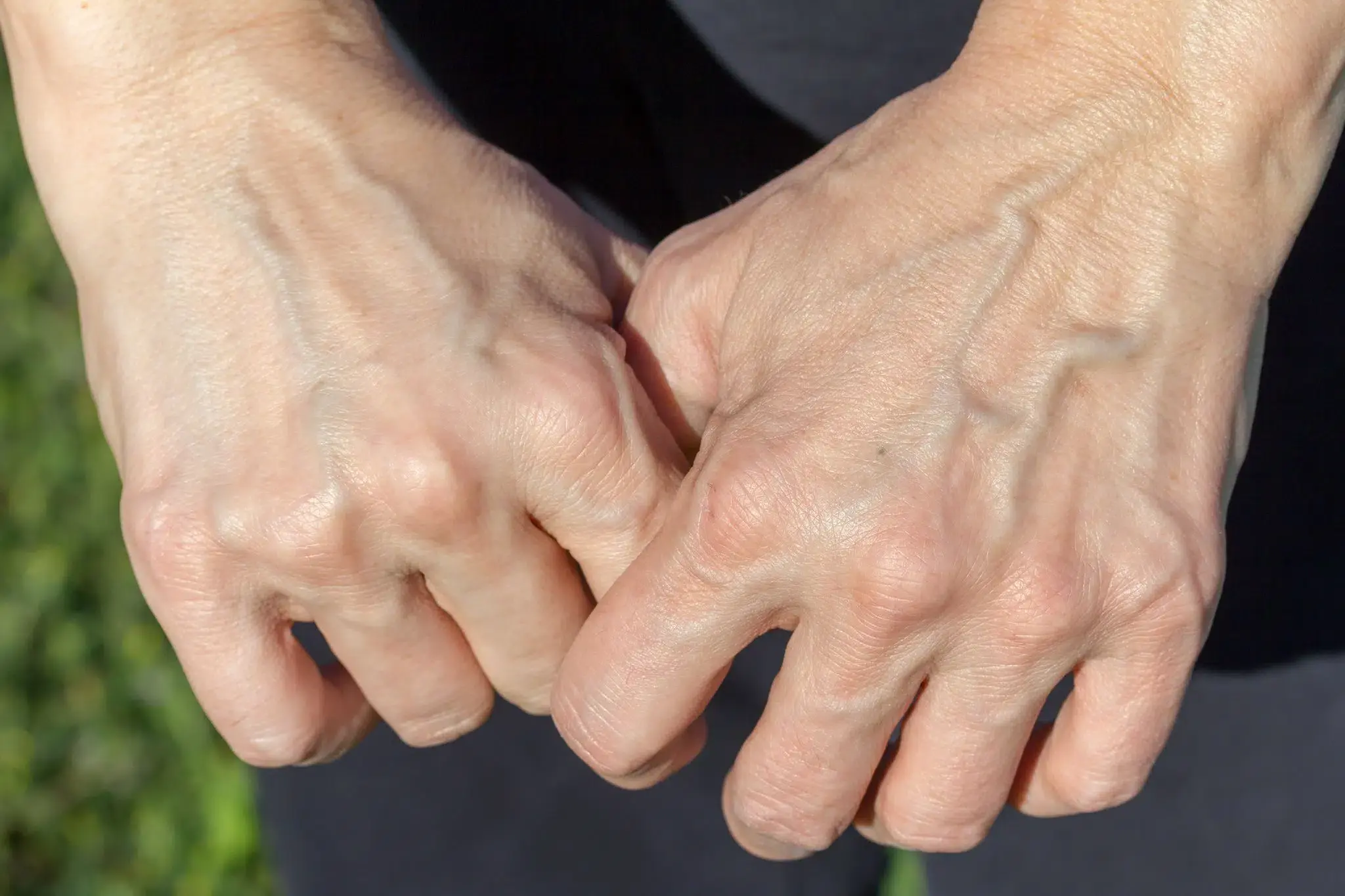
1. Why the Veins on Your Hands May Suddenly Look More Noticeable
The veins that run across the backs of the hands are close to the surface of the skin. Because of their position, even ordinary changes in the skin, surrounding tissue, blood flow, or body temperature can make them appear more prominent. In many people, these veins are visible for years without causing pain or affecting circulation.
One of the most common explanations is simply the natural structure of the body. Some people have superficial veins that sit closer to the skin than others. Their veins may be easy to see even when they are young, healthy, and physically active. Genetics plays a role in skin thickness, fat distribution, and the size and position of superficial veins, so two people of the same age and body type may have very different-looking hands.
Age is another important factor. As people grow older, the skin gradually becomes thinner and loses some of its elasticity. The layer of fat beneath the skin may also become less substantial, particularly on the backs of the hands. When the natural cushioning around a vein decreases, the vein can become easier to see. This change may happen slowly over many years, making the veins appear more raised or pronounced than they did earlier in life.
That does not automatically mean the veins are damaged. A visible vein is not necessarily a blocked vein, and a prominent vein is not proof that blood is failing to circulate properly. The appearance of a vein and the way it functions are two different things.
Body composition can also influence how clearly veins appear. People with relatively little body fat may have less tissue covering their superficial veins. This can make the veins on their hands and arms stand out, especially when the hands are held below heart level. A person who loses weight may notice that the veins become more visible even if their circulation has not changed.
Exercise can create another temporary effect. During physical activity, muscles require more oxygen and nutrients, so blood flow increases. The veins that carry blood back toward the heart may become more noticeable as circulation and muscle activity change. This is particularly common after weight training, resistance exercise, running, or other demanding activities.
Heat can make superficial veins appear more prominent as well. In warm weather, blood vessels near the skin may widen to help the body release heat. After a hot shower, time outdoors, or a workout in a warm environment, the veins on the hands may look larger than usual. They may become less noticeable again after the body cools down.
These everyday explanations are important because they help prevent unnecessary fear. If the veins have always been visible, look similar on both hands, and are not accompanied by pain, swelling, or skin changes, the appearance may simply be part of a person's normal anatomy.
However, a different situation deserves closer attention: when a vein becomes noticeably larger over a short period, especially on one hand or arm, or when the change occurs alongside discomfort. That is where the distinction between an ordinary visible vein and a possible medical problem becomes especially important.
2. The Difference Between Normal Visible Veins and a Medical Warning Sign
A useful starting point is to consider whether the veins have changed. A person who has always had prominent veins may have little reason to worry if their appearance remains stable. Someone who suddenly notices a swollen, painful, or unusually hard vein should not assume that the change is simply related to age.
Normal superficial veins are often soft and may become more or less visible depending on temperature, activity, posture, and hydration. They usually do not cause persistent pain. Their color may look blue, green, or slightly purple because of the way light passes through the skin, but color alone cannot reliably reveal whether a vein is healthy or unhealthy.
A concerning change is more likely to involve additional symptoms. The skin over a vein may become warm, tender, red, or darker than the surrounding area. The vein may feel firm or cord-like beneath the skin. The hand, wrist, or arm may also become swollen or uncomfortable.
These symptoms can occur with inflammation of a superficial vein, a condition known as superficial thrombophlebitis or superficial vein thrombosis. It involves inflammation and, in some cases, a blood clot in a vein located close to the skin. Although it is often less dangerous than a clot in a deep vein, it should not be dismissed, particularly when symptoms are significant or the person has risk factors for blood clots.
Superficial thrombophlebitis can develop after a vein has been irritated or injured. In the arm, it may occur after an intravenous line or injection has irritated a blood vessel. It can also be associated with conditions that increase the tendency of blood to clot. The affected area may feel painful, warm, swollen, or hard, and the skin may change color.
A visible vein by itself does not establish this diagnosis. Doctors consider the full pattern of symptoms, medical history, and physical examination. In some cases, imaging may be needed to determine whether a clot is present and whether deeper veins are involved.
Another condition that requires attention is deep vein thrombosis, commonly shortened to DVT. This occurs when a blood clot forms in a deep vein. DVT most often affects the legs, but it can also occur in the arms. A clot in an arm may cause swelling, pain or tenderness, warmth, and skin discoloration. Some people may notice that veins become more visible because blood flow through the affected area is obstructed.
DVT is important because a clot can sometimes travel through the bloodstream to the lungs, causing a pulmonary embolism. This is a potentially life-threatening emergency. Sudden difficulty breathing, chest pain, faintness, a rapid or irregular heartbeat, or coughing up blood requires emergency medical attention.
It is crucial not to confuse ordinary visible veins with DVT. Many people have prominent veins and never develop a blood clot. Conversely, some people with DVT have few obvious external signs. The diagnosis cannot be made by looking at the surface of the skin alone.
The most useful message is therefore straightforward: the appearance of veins matters less than the pattern of change and the symptoms that accompany it. A stable, painless vein is often a normal feature. A newly swollen, painful, warm, or hardened vein should be assessed by a healthcare professional.