The NTSB’s preliminary information describes a group of airport emergency vehicles moving in response to the United Airlines situation. The fire truck involved in the collision was among the vehicles directed toward a runway crossing. The aircraft, meanwhile, was approaching Runway 4 to land.
A runway is not simply another road across an airport. It is a protected operating surface where aircraft may be accelerating, landing or taking off. A vehicle entering that space at the wrong moment can create a risk that is difficult or impossible for a pilot to avoid.
The fact that the fire truck was responding to an emergency does not mean its crew intended to create a hazard. It also does not establish that the vehicle operator knowingly ignored a warning. The investigation must determine what instructions were given, what was heard, what was understood and what actions followed.
The distinction between receiving a message and understanding that it applies to you is particularly important in a busy radio environment. A controller may issue instructions to one vehicle while several other vehicles are communicating on the same frequency. If a message is partially blocked, unclear or not recognized as being directed at a particular unit, the consequences can be serious.
That is why aviation communication uses standardized phraseology, readbacks and confirmation procedures. The goal is to reduce ambiguity. But procedures are only effective when the people involved can hear, interpret and act on the messages in time.
The LaGuardia collision shows how fragile the margin can become when an aircraft is already approaching the runway and a vehicle is moving toward the same crossing point. The time available to correct a misunderstanding may be measured in seconds.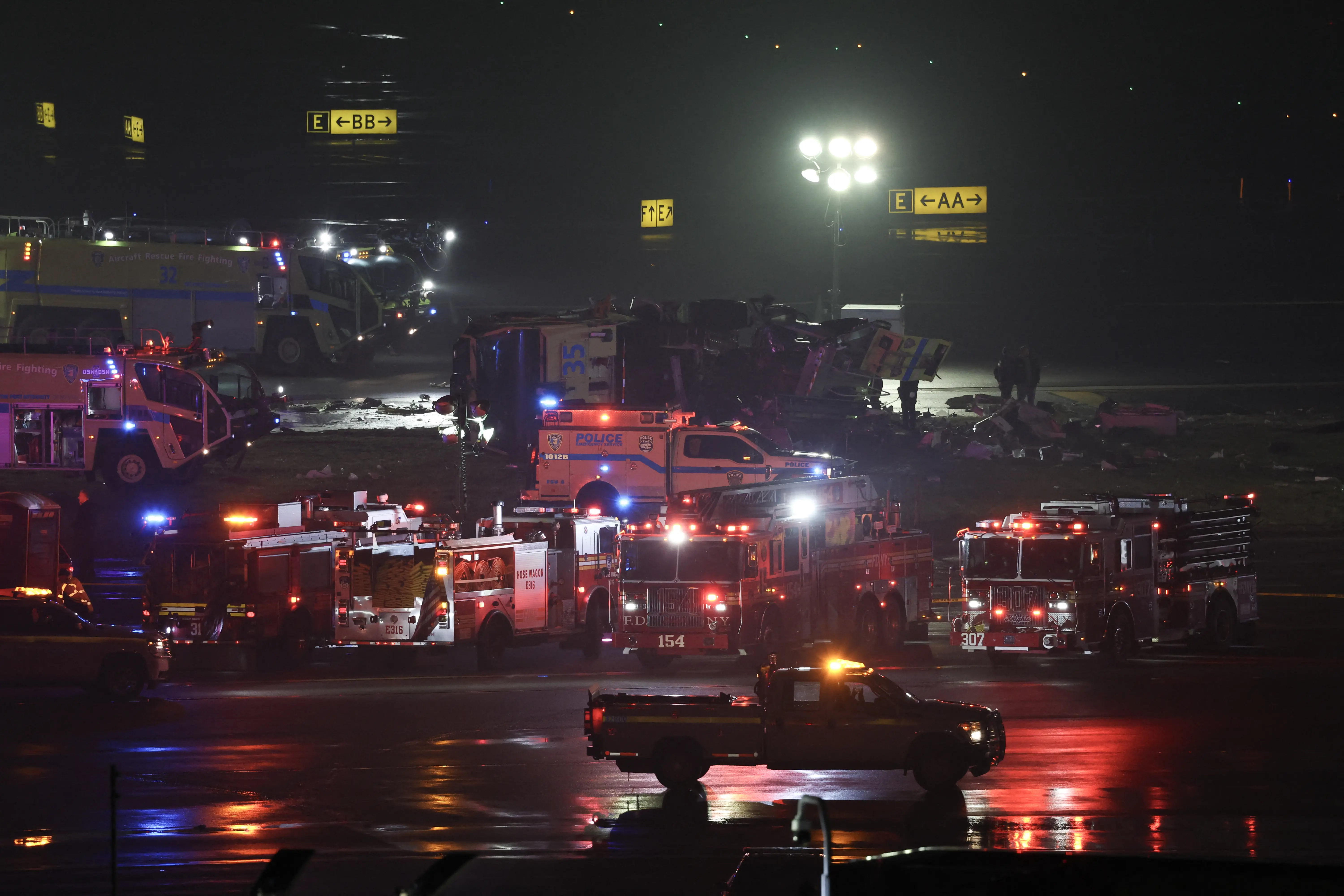
The Radio Warnings That Came Too Late
Air traffic control recordings became a central part of public attention after the crash. They captured a sequence in which a vehicle was initially cleared to cross the runway and then urgently instructed to stop.
The words “stop, stop, stop” became one of the most haunting elements of the incident. They suggest that the danger was recognized, but the warning came too late to prevent the collision.
According to the NTSB information reported after the crash, the fire truck requested permission to cross Runway 4. A controller issued a clearance. The controller then transmitted instructions for the vehicle to stop as the aircraft approached. The warning was repeated, but the collision still occurred.
The preliminary timeline places the first stop instruction around 12 seconds before impact, with another urgent warning only seconds later. The truck continued moving toward the runway. Investigators also examined the account of a vehicle operator who said that the crew did not initially understand that the warning was directed at their vehicle.
This detail illustrates a critical issue in radio communication: a message can be transmitted without being correctly received or interpreted. In a high-workload environment, the difference between hearing a warning and recognizing that it applies to your vehicle can be decisive.
The fire truck was part of a group of emergency vehicles. The radio frequency was being used for airport operations involving more than one aircraft and multiple ground units. Investigators have examined whether simultaneous transmissions obscured communications and how the controllers were managing the different tasks.
The preliminary information also described a controller who had been handling more than one responsibility while another controller was dealing with the separate emergency. This does not, by itself, prove that staffing levels or an individual error caused the crash. It does show why investigators are examining the workload and communication environment in the tower.
Aviation safety depends on layers of protection. A pilot follows a clearance. A vehicle operator follows a clearance. Controllers monitor traffic and issue instructions. Runway warning lights provide another signal. Surface surveillance systems help track aircraft and vehicles. Procedures are designed so that one missed signal does not automatically become a catastrophe.
In this case, several layers did not prevent the collision. The truck was cleared to cross, a stop warning followed, and the aircraft continued its landing roll. The airport’s surface surveillance system did not generate the expected alert. The fire truck did not have a transponder that would have helped transmit its position to the tower’s surveillance equipment.
The final investigation must determine how these elements interacted. It would be premature to reduce the crash to a single sentence about one controller, one driver or one pilot. The sequence involved multiple people, systems and decisions, and investigators are responsible for understanding the entire chain.
The Runway Safety System That Did Not Sound the Alarm
Modern airports use technology designed to reduce the risk of runway incursions and collisions. One system discussed in the LaGuardia investigation is ASDE-X, a surface detection system that helps controllers monitor the movement of aircraft and vehicles on the airport surface.
Such systems combine information from different sources to build a picture of activity on runways and taxiways. They can help identify situations in which an aircraft and a vehicle are moving toward the same area. In some circumstances, the system can generate an alert when it detects a potential conflict.
The NTSB said the system did not generate an alert before the LaGuardia collision. Investigators explained that the fire truck did not have a transponder and that the close proximity of vehicles merging and separating made it difficult for the system to create a sufficiently reliable track.
A transponder is a device that transmits identifying information and other data so that surveillance systems can recognize and track a vehicle or aircraft. When a ground vehicle lacks the necessary equipment, the airport’s ability to track it electronically may be limited.
This does not mean that the fire truck was invisible to every person or every system. Controllers had other sources of information, including radio communication and visual observation. But the absence of a transponder can reduce the reliability of automated tracking and limit the ability of a system to identify a particular vehicle.
The failure to generate an alert is a significant issue because technology is often intended to provide an additional layer of protection. If a controller is managing several tasks, an automated warning may help draw attention to a developing conflict. If the warning does not occur, the system loses one opportunity to prevent an accident.
However, investigators must determine whether an alert would have been generated under the precise circumstances and whether it would have arrived early enough to change the outcome. A system can detect a conflict only if it receives sufficiently reliable information. It also needs enough time to process that information and issue a warning that people can act upon.
The question is not simply whether the technology worked or failed in a general sense. It is whether the system had the necessary data, whether the vehicle’s position could be tracked accurately, whether the alert logic recognized the developing danger, and how the system’s output related to the actions of the people involved.
The investigation also examines runway status lights. These lights are designed to provide a visual warning when a runway is occupied or unsafe to enter. The preliminary report indicated that the lights were functioning, but investigators still need to establish what the vehicle crew could see and how the lights changed during the final sequence.
Aviation safety systems are most effective when they work together. Radio instructions, visual signals, surveillance technology, vehicle equipment and human judgment should reinforce one another. The LaGuardia collision demonstrates why no single layer should be treated as sufficient on its own.
Why the Aircraft Could Not Simply Stop
To someone watching from outside an airport, it may seem reasonable to ask why a pilot could not stop the aircraft as soon as the danger appeared. The difficulty is that an aircraft landing at speed is not comparable to a car approaching a stationary obstacle on an ordinary road.
A jet arriving on a runway has substantial momentum. Even after touchdown, it is moving quickly and needs distance to slow down. Pilots use a combination of aerodynamic drag, wheel braking, engine systems and directional controls to bring the aircraft to a safe speed.
The exact stopping distance depends on several factors, including aircraft weight, runway conditions, wind, speed, braking performance and the point at which deceleration begins. A pilot cannot assume that a landing aircraft can stop immediately just because the wheels are on the ground.
The NTSB’s preliminary information placed the aircraft’s speed at approximately 104 miles per hour at the time of impact. The fire truck was traveling at about 29 miles per hour. Those figures illustrate the speed difference between the two vehicles and the limited time available for either crew to respond once their paths converged.
A vehicle crossing a runway may be moving at a much lower speed than a landing aircraft, but it can still occupy the exact space the aircraft needs to use. The aircraft’s mass and speed mean that even a relatively short delay in recognizing the conflict can leave little room for avoidance.