When parents notice that their child's feet look unusually flat, it is natural to become concerned. Perhaps the arch seems to disappear when the child stands, the entire sole appears to touch the floor, or the feet look different from those of other children.
For some parents, the first thought is that something may be wrong.
But flat feet are common in childhood, and in many cases they are simply part of normal foot development. Young children naturally have less visible arches, and the appearance of the foot can change considerably as the bones, muscles, ligaments, and other tissues mature.
At the same time, "flat feet" should not automatically be dismissed as harmless. Some children develop symptoms or have a type of flatfoot that deserves evaluation by a healthcare professional.
The important question is therefore not simply, "Does my child have flat feet?"
A better question is:
"Does my child's flatfoot look and behave like a normal part of development, or are there signs that it needs medical attention?"
Understanding the difference can help parents avoid unnecessary worry while also recognizing when professional assessment may be appropriate.
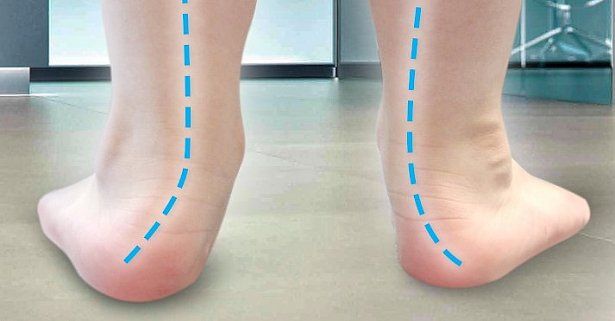
Why Do Young Children Often Have Flat Feet?
One of the main reasons flat feet are so common in young children is that their feet are still developing.
Babies and toddlers do not have the same foot structure that adults have. The bones and joints are still maturing, muscles are developing, and soft tissue around the foot can make the sole appear fuller.
Young children also tend to have a noticeable layer of soft tissue beneath the foot. This can make an arch that is actually developing difficult to see.
As children grow, the shape and mechanics of their feet gradually change.
The arch may become more visible.
The heel and ankle may become better aligned.
The muscles supporting the foot become stronger.
The child's walking pattern also becomes more mature.
Because of this, a foot that appears completely flat in a toddler may look quite different several years later.
This is one reason parents should be cautious about comparing their young child's feet with those of an adult.
What Exactly Is a Flat Foot?
A flat foot, medically referred to as pes planus, generally describes a foot in which the medial longitudinal arch is reduced or appears to flatten.
The arch is the curved structure along the inside of the foot.
When a person with a pronounced arch stands, there may be a visible space between the middle portion of the foot and the ground.
With a flat foot, that space may be smaller or disappear.
However, there is considerable variation in what healthy feet look like.
Some people naturally have relatively low arches without experiencing any problems.
This is particularly common among children.
That means the visual appearance of a flat foot does not automatically indicate a disease, injury, or disability.
The way the foot functions is often more important than how it looks.
Flexible Flat Feet vs. Rigid Flat Feet
One of the most useful distinctions when discussing children's flat feet is whether the foot is flexible or rigid.
Flexible flat feet
With flexible flat feet, the arch may flatten when the child is standing but become visible when the child sits, lies down, or rises onto the toes.
The foot remains flexible and can move through its normal range.
Flexible flat feet are common during childhood and are often painless.
In children who have no symptoms and otherwise move normally, this type of flatfoot frequently does not require treatment.
Rigid flat feet
Rigid flat feet are different.
In a rigid flatfoot, the arch remains flattened even when the child is not standing, and the foot may have limited movement.
A rigid or unusually stiff foot deserves greater attention, particularly if it is painful or affects walking.
The distinction between flexible and rigid flatfoot is not always something parents can determine accurately at home.
If the appearance is unusual, the child has pain, or there are concerns about movement, a pediatrician, pediatric orthopedist, or other qualified healthcare professional can evaluate the foot.
Is Flat Foot Normal in Children?
In many children, yes.
A low or absent arch can be a normal developmental finding, particularly in younger children.
The appearance of the arch varies from child to child.
Some children develop clearly visible arches relatively early.
Others continue to have low arches as they grow.
Some adults also naturally have flat feet and never experience significant problems.
Therefore, the presence of a flat arch alone does not necessarily mean that a child has a medical problem.
This is an important point because parents can sometimes become alarmed after seeing an image comparing a "normal" foot with a "flat" foot.
Real human feet are not identical.
There is a spectrum of normal anatomy.
A diagram can be useful for explaining anatomy, but it cannot determine whether a particular child needs treatment.
When Should Parents Pay More Attention?
Although many cases are harmless, certain signs deserve closer attention.
Parents should consider discussing flat feet with a healthcare professional if a child experiences:
- Persistent foot pain
- Pain in the ankles, knees, or legs associated with walking or activity
- Significant difficulty walking or running
- Frequent complaints of tired or aching feet
- A noticeably stiff foot
- One foot that looks substantially different from the other
- A sudden change in foot shape
- Difficulty participating in normal physical activities
- Repeated problems with balance or gait
- A noticeable limp
- Symptoms that are getting worse over time
These symptoms do not automatically mean that the child has a serious condition.
There are many possible explanations for foot pain and changes in walking.
But persistent or significant symptoms are worth evaluating rather than simply assuming that they are caused by "growing pains."
Pain Is More Important Than Appearance
One of the most useful principles for parents is this:
A child's symptoms often matter more than the visual appearance of the arch.
A child can have very flat-looking feet and still run, jump, climb, and play comfortably.
Another child may have only a mildly lowered arch but experience significant pain or difficulty with activity.
The second situation deserves more attention.
Parents should therefore avoid judging the seriousness of a foot problem solely by how dramatic the arch looks.
A very flat-looking foot is not automatically a painful foot.
And a relatively subtle abnormality should not automatically be ignored if the child is experiencing persistent symptoms.
How Can Parents Check Their Child's Feet?
Parents can observe their child's feet during ordinary activities without trying to diagnose a condition themselves.
For example, they can look at the feet while the child is:
- Standing normally
- Walking
- Running
- Sitting
- Standing on tiptoe
One interesting observation is whether an arch becomes visible when the child rises onto the toes.