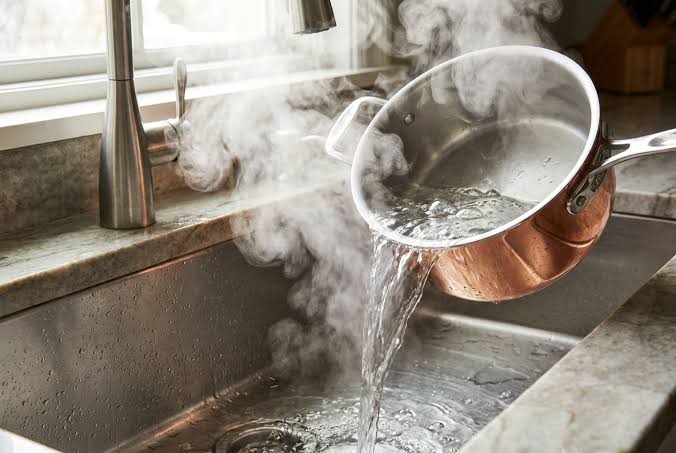
Pouring a pot of boiling water down the kitchen sink may seem like a simple household trick.
You've probably heard that boiling water can help dissolve grease, loosen food residue, eliminate unpleasant smells, or even clear a slow drain. Because hot water can break down certain substances, the idea sounds perfectly logical.
But there is an important question many people overlook:
Can extremely hot water actually damage your plumbing?
The answer depends on several factors, including the type of pipes in your home, how hot the water is, what is inside the drain, and how the plumbing system is designed.
Boiling water isn't automatically dangerous for every drain. However, repeatedly pouring water straight from a boiling pot into certain plumbing systems may create problems over time.
And if you're dealing with a serious blockage, boiling water may not solve the underlying problem at all.
Here's what you should know before making it a regular household habit.

Why Do People Pour Boiling Water Down the Drain?
There is a reason this trick has become so popular.
Hot water can help soften or dissolve certain materials.
For example, warm or hot water can loosen some:
-
Grease
-
Oils
-
Soap residue
-
Food particles
-
Certain organic deposits
If a kitchen drain is only slightly slow because of a thin layer of greasy residue near the opening, hot water may temporarily improve the flow.
That's where the idea comes from.
Someone pours boiling water into the sink, the drain appears to clear, and it seems like the problem has been solved.
But there's a difference between temporarily improving drainage and removing a blockage.
The Temperature Is the Important Part
Water at or near its boiling point is extremely hot.
When water is boiling at sea level, its temperature is approximately 100°C (212°F).
That's considerably hotter than the temperature of ordinary tap water.
Most household plumbing systems are designed to handle hot water within reasonable limits, but that doesn't mean every pipe, fitting, seal, or connection should repeatedly receive near-boiling water.
The effect also depends on the material.
Common household drain materials include:
-
PVC
-
ABS
-
Copper
-
Cast iron
-
Various composite or plastic components
These materials don't all respond to heat in exactly the same way.
What Happens to Plastic Pipes?
This is where the most common concern arises.
Plastic plumbing materials can soften or deform when exposed to sufficiently high temperatures, particularly with repeated exposure.
That doesn't mean pouring a single pot of hot water down a modern drain will instantly melt the pipe.
That's generally not how plumbing damage occurs.
Instead, the concern is that repeated exposure to very high temperatures can contribute to deformation, stress, or premature deterioration, depending on the specific plumbing material and installation.
There may also be plastic fittings, seals, washers, and connections within the system that respond differently to heat.
So the question isn't simply:
“Can plastic survive hot water?”
It's:
“Is this particular plumbing system designed to repeatedly receive near-boiling water?”
That's a much better question.
Thermal Shock Can Also Matter
Another issue is rapid temperature change.
Imagine a pipe that has been sitting at room temperature.
You suddenly send nearly boiling water through it.
The pipe and its components heat up quickly.
Later, cold water flows through the same system.
The materials expand and contract as temperatures change.
Repeated cycles of heating and cooling can place stress on plumbing components.
The amount of stress depends on factors such as:
-
Pipe material
-
Pipe thickness
-
Installation method
-
Temperature
-
Duration of exposure
-
Existing condition of the plumbing
-
Number of repeated cycles
This doesn't mean that thermal shock will immediately crack a pipe.
But older or already damaged plumbing may be less tolerant of repeated temperature extremes.
What About Metal Pipes?
Metal pipes generally tolerate high temperatures better than many plastic materials.
Copper, for example, is widely used in hot-water systems and can handle temperatures far above typical household hot-water temperatures.
Cast iron is also relatively resistant to heat.
But that doesn't mean boiling water is always a good drain-cleaning strategy for a metal plumbing system.
A drain may contain multiple materials.
For example, you might have:
Metal pipe → plastic connection → rubber seal → plastic trap
The entire system is only as resilient as its components.
And high-temperature water doesn't necessarily solve the blockage you're trying to remove.
Why Boiling Water May Not Actually Remove Grease
Here's an interesting problem.
People often pour boiling water into a greasy kitchen drain because they believe the heat will melt the grease and wash it away.
Sometimes it can help loosen small amounts of grease.
But larger amounts of cooking fat can behave differently.
When hot grease moves deeper into the plumbing and encounters cooler surfaces, it can cool and solidify again.
That means you may simply move the grease farther down the pipe.
Instead of:
Grease near the sink → blockage
you could end up with:
Grease farther inside the plumbing → harder-to-reach buildup
This is one reason pouring large quantities of cooking oil or grease down a drain is a bad habit in the first place.
Never Pour Cooking Oil Down the Drain
This is more important than whether the water is boiling.
Cooking oil, bacon grease, butter, shortening, and other fats can accumulate inside pipes.
Even if they are liquid when they enter the drain, they can cool later.
Over time, grease can combine with:
-
Food particles
-
Soap residue
-
Dirt
-
Mineral deposits
-
Other debris
The result can be a thick accumulation that restricts water flow.
Instead of trying to wash grease away with hot water, allow used cooking oil and grease to cool and dispose of them according to your local waste-management guidance.
For small amounts of residue on cookware, wiping the pan with a paper towel before washing can also reduce the amount of grease entering the drain.
What About a Smelly Drain?
A bad smell doesn't necessarily mean your drain needs boiling water.
Odors can come from:
-
Food particles
-
Grease buildup
-
Bacteria
-
Biofilm
-
Organic debris
-
A dirty drain trap
-
Plumbing problems
-
Poor ventilation
Boiling water might temporarily reduce certain odors by flushing away loose residue.
But if the underlying buildup remains, the smell may return.
A persistent foul odor can sometimes indicate a plumbing problem that requires investigation.
Can Boiling Water Kill Bacteria?
Very hot water can kill or inactivate many microorganisms under appropriate conditions.
But pouring a pot of boiling water down a household drain isn't a reliable way to disinfect your entire plumbing system.
Why?
Because the water cools rapidly.
The drain contains:
-
Pipe walls
-
Traps
-
Water
-
Organic material
-
Various surfaces
A brief flow of hot water doesn't guarantee sufficient temperature and contact time throughout the system to sanitize it.
And even if some microorganisms are temporarily reduced, new microorganisms can quickly recolonize areas containing moisture and organic material.
So don't think of boiling water as a substitute for proper drain cleaning.
What About Baking Soda and Vinegar?
Another extremely popular DIY drain remedy involves combining:
Baking soda + vinegar
The reaction produces bubbling and fizzing, which can look impressive.
But the dramatic fizz doesn't necessarily mean that a serious blockage has been dissolved.
The reaction primarily produces carbon dioxide gas along with water and other compounds.
It can help loosen or disturb some surface residue, but it isn't a guaranteed solution for a significant blockage.
If you use household cleaning products, be careful about combining substances.
Never mix drain cleaners with other chemicals unless the product instructions specifically say the combination is safe.
Some chemical combinations can produce dangerous gases or cause violent reactions.
What About Commercial Drain Cleaners?
Chemical drain cleaners can be effective for certain types of clogs, but they should be used carefully.
Many contain highly corrosive substances.
Improper use can cause:
-
Chemical burns
-
Eye injuries
-
Damage to certain plumbing components
-
Dangerous fumes
-
Problems if another chemical is added afterward
If you use a commercial drain cleaner, read the instructions carefully and follow them exactly.