Never assume that using more product will make it work better.
And if a drain remains blocked after using a chemical cleaner, tell a plumber what product you used.
That information can be important for their safety.
A Plunger May Be More Useful Than Boiling Water
For many simple blockages, mechanical methods can be more effective.
A plunger works by creating pressure and suction that can help dislodge material blocking the drain.
For a sink, make sure there is enough water to create a seal around the plunger.
Then use controlled, repeated movements rather than violently forcing the plunger.
Different types of plungers are designed for different fixtures, so using the appropriate style can make a difference.
What About a Drain Snake?
A drain snake, also called a drain auger, physically reaches into the pipe and breaks up or retrieves certain types of blockages.
This can be useful when the clog is caused by:
-
Hair
-
Food debris
-
Accumulated material
-
Foreign objects
-
Other physical obstructions
A mechanical tool addresses the blockage directly rather than relying on heat to dissolve it.
For persistent clogs, this can be a more appropriate strategy.
Kitchen Drains and Bathroom Drains Are Different
It's also important to consider where the problem occurs.
Kitchen sink
Common causes include:
-
Grease
-
Food debris
-
Coffee grounds
-
Soap residue
-
Accumulated organic material
Bathroom sink
Common causes include:
-
Hair
-
Soap
-
Toothpaste residue
-
Skin and cosmetic products
Shower drain
Hair and soap buildup are particularly common.
Toilet
Toilets have different plumbing designs and should not be treated like ordinary sink drains.
A toilet blockage may require a toilet plunger or auger rather than pouring large amounts of boiling water into the bowl.
What If Your Drain Is Already Slow?
If water is draining slowly, don't wait until it becomes completely blocked.
A slow drain is often an early warning that something is accumulating inside the pipe.
You can start with relatively simple measures:
-
Remove visible debris around the drain opening.
-
Clean the drain strainer.
-
Try a suitable plunger.
-
Use a mechanical drain snake if appropriate.
-
Flush with warm—not necessarily boiling—water.
-
Monitor whether the problem returns.
If the drain repeatedly becomes slow again, there may be a deeper blockage.
Why Warm Water Is Often a Safer Compromise
If your goal is simply to rinse away ordinary residue, hot tap water or warm water may be sufficient.
You don't necessarily need water at a rolling boil.
Warm water can help loosen some residues while reducing the extreme temperature exposure associated with boiling water.
This is particularly sensible if you're uncertain what type of plumbing is installed.
The exact temperature isn't as important as avoiding unnecessary extremes.
What About Pouring Boiling Water Into a Toilet?
This deserves special attention.
A toilet bowl and its connected plumbing are not necessarily designed for sudden exposure to boiling water.
Extremely hot water can potentially create thermal stress in ceramic.
Ceramic is strong but can be vulnerable to sudden temperature changes.
Imagine pouring boiling water into a toilet bowl that is relatively cold.
The rapid temperature difference could potentially cause cracking.
And a cracked toilet can become a serious plumbing and sanitation problem.
For that reason, don't use boiling water as a routine toilet-unclogging method.
Use a proper toilet plunger or toilet auger instead.
What Happens If You Pour Boiling Water Into a Sink Full of Cold Water?
This is another situation where temperature matters.
If the sink contains cold water and you pour boiling water into it, the water immediately begins mixing and cooling.
That may reduce the temperature reaching the plumbing.
However, it doesn't eliminate all risks.
The safest approach is generally to avoid deliberately exposing uncertain plumbing components to extreme temperature changes.
If you need hot water for cleaning, letting it cool somewhat before pouring it into the drain is a simple precaution.
How to Prevent Drain Problems in the First Place
Preventing a clog is much easier than trying to remove one.
Keep grease out
Don't pour cooking oil or grease into the sink.
Use a drain strainer
A simple strainer can catch food particles, hair, and other debris.
Don't flush inappropriate materials
Toilets and drains aren't garbage disposal systems.
Clean regularly
Remove visible buildup before it becomes a larger problem.
Run warm water
After washing greasy dishes, warm water can help carry small amounts of residue through the drain.
But remember: warm water isn't a solution for pouring large quantities of grease down the sink.
Pay attention to slow drainage
A slowly draining sink is worth addressing before it becomes a complete blockage.
Don't Ignore a Repeatedly Clogged Drain
If you've tried basic measures several times and the drain keeps clogging, there may be a deeper issue.
Possible causes include:
-
A blockage farther down the pipe
-
Grease accumulation
-
Tree roots in exterior sewer lines
-
Damaged plumbing
-
Poor pipe slope
-
Collapsed or deteriorated pipe
-
A problem with the main drain
In these situations, pouring more boiling water down the sink isn't likely to solve the underlying problem.
A professional inspection may be necessary.
Signs You May Need a Plumber
Consider getting professional help if you notice:
-
Multiple drains becoming slow at the same time
-
Repeated clogs
-
Sewage odors
-
Water backing up into another fixture
-
Gurgling sounds
-
Drainage problems throughout the house
-
Water around the base of plumbing fixtures
-
A blockage that won't respond to reasonable mechanical methods
These can indicate a problem beyond a simple surface clog.
A Simple Myth vs. Fact Guide
Myth: Boiling water completely cleans your drain.
Fact: It may loosen certain residues, but it doesn't reliably remove all types of buildup or sanitize the entire plumbing system.
Myth: Boiling water melts all grease and sends it away.
Fact: Hot water can temporarily liquefy grease, but the grease can cool farther down the pipe and contribute to buildup.
Myth: One pot of boiling water will destroy PVC pipes.
Fact: A single exposure doesn't automatically mean a pipe will fail. Risk depends on the plumbing material, temperature, installation, and repeated exposure.
Myth: Boiling water is the best solution for every clog.
Fact: Different blockages require different approaches. A plunger, drain snake, cleaning, or professional service may be more appropriate.
Myth: Boiling water disinfects the entire drain.
Fact: A brief flush of hot water doesn't provide controlled temperature and contact time throughout the plumbing system.
So, Is Pouring Boiling Water Down the Drain Safe?
There isn't a universal yes-or-no answer.
For some plumbing systems and occasional situations, hot water may not cause a noticeable problem.
But deliberately making a habit of pouring water straight from a boiling pot into an unknown drain isn't necessary and isn't the best universal recommendation.
The risks depend on:
-
Pipe material
-
Pipe condition
-
Plumbing design
-
Temperature
-
Frequency of exposure
-
Type of blockage
If you want to rinse a drain, warm or hot tap water is generally a more conservative choice.
If you're dealing with a clog, identify the likely cause first.
And if you're dealing with grease, the best strategy is to prevent large quantities from entering the drain in the first place.
The Bottom Line
Boiling water seems like an easy household solution because heat can loosen certain substances.
But a drain is more than just a hole leading outside.
Behind that sink are pipes, joints, seals, traps, and connections made from different materials. Repeated exposure to extreme temperatures can place unnecessary stress on some plumbing systems.
At the same time, boiling water isn't a magic drain cleaner.
It may temporarily improve a slow drain, but it won't necessarily remove a deeper blockage. In the case of grease, it may even move the problem farther into the plumbing where it can cool and accumulate.
For everyday maintenance, consider using warm or hot tap water, keeping grease and oil out of the drain, using strainers, and addressing slow drainage early.
For stubborn clogs, mechanical solutions such as a plunger or drain auger are often more appropriate. And when multiple drains are affected, sewage odors appear, or blockages repeatedly return, it's time to investigate the plumbing itself.
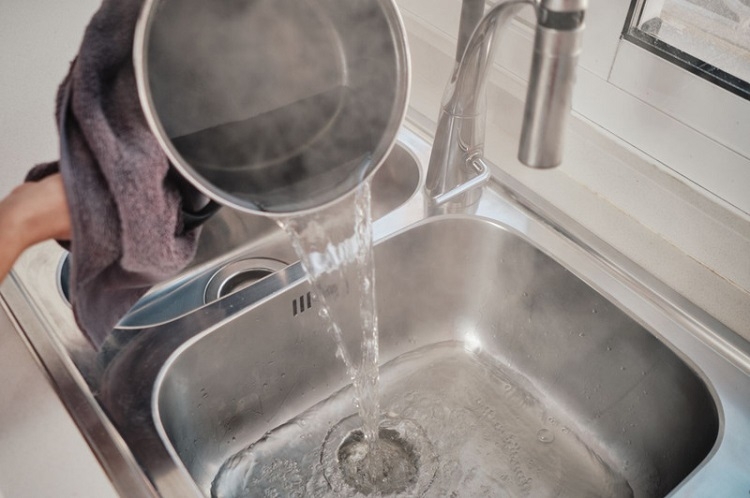
So the next time you're standing over the sink holding a pot of boiling water, pause for a moment.
Hot water can be useful—but hotter isn't always better.
When it comes to your plumbing, a little prevention can save you from a much bigger problem later.