Chapter 4: What Makes Lemon Smell So Distinctive?
The familiar scent of lemon comes largely from aromatic compounds found in its peel.
One of the best-known compounds is limonene, a naturally occurring substance found in the essential oils of many citrus fruits.
Limonene contributes to the characteristic citrus aroma found in lemons, oranges, and other related fruits.
Other volatile compounds also contribute to the overall fragrance.
Some plant-derived aromatic substances have been investigated for their potential effects on insects. Depending on the substance, concentration, mosquito species, and method of application, certain compounds may influence insect behavior.
However, laboratory findings do not automatically translate into reliable protection from mosquito bites in a home.
There are several reasons for this.
Concentration matters.
The amount of an aromatic compound released by a few lemon slices is not necessarily sufficient to affect mosquitoes.
Exposure time matters.
A scent may be noticeable to humans but may not remain concentrated enough to influence mosquitoes for an extended period.
Mosquito species differ.
Different mosquito species can respond differently to particular chemical substances.
Environmental conditions matter.
Air circulation, room size, temperature, and humidity can all affect how quickly volatile compounds disperse.
This is why a lemon placed on a table may smell pleasant without having a meaningful impact on mosquito activity.
It is also important not to confuse lemon fruit with oil of lemon eucalyptus.
Oil of lemon eucalyptus, often abbreviated as OLE, is a specific ingredient used in certain formulated insect repellents. Products containing appropriately tested concentrations of OLE or its related active ingredient PMD can provide protection against mosquito bites.
Ordinary lemon juice and lemon slices are not equivalent to these products.
Chapter 5: The Lemon and Clove Combination: A Traditional Household Favorite
One variation of the lemon trick involves combining citrus with cloves.
The method is popular because it is easy to prepare and creates a noticeable fragrance without requiring complicated equipment.
To make it, cut a lemon in half and insert several whole cloves into the exposed surface.
Place the prepared halves on a small plate and position them in a convenient area of the home.
Some people prefer placing them near windows, on dining tables, or in areas where they frequently notice mosquitoes.
Why do people like this combination?
First, the fragrance is relatively strong compared with that of plain lemon slices.
Second, both ingredients are inexpensive and easy to find.
Third, the preparation does not require heating, spraying chemicals, or purchasing special equipment.
However, popularity should not be confused with proven effectiveness.
There is not enough reliable evidence to conclude that lemon and cloves together can protect an entire room from mosquitoes or prevent mosquito-borne illnesses.
If you enjoy the fragrance, there is little reason not to use the combination as a decorative household scent, provided it is kept clean and out of reach of children and pets.
But if mosquitoes are actively biting people in your home, use a tested insect repellent or another established mosquito-control measure.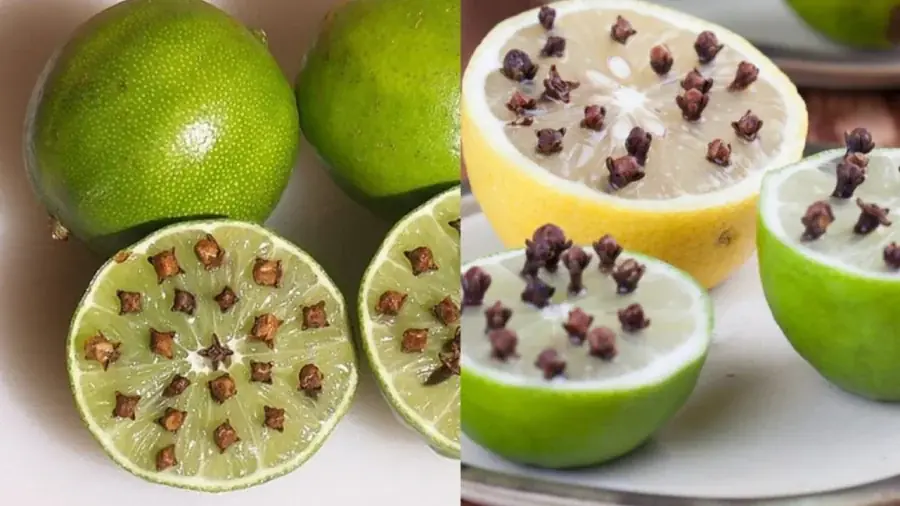
Chapter 6: Why You Should Not Rub Lemon Juice Directly Onto Your Skin
Some homemade mosquito-repellent suggestions recommend rubbing lemon juice or citrus peel directly onto exposed skin.
This is not a reliable way to protect yourself from mosquito bites.
Lemon juice has not been established as an effective skin-applied mosquito repellent, and applying it directly to the skin may cause irritation in some individuals.
There is another concern.
Certain citrus substances can contribute to a skin reaction known as phytophotodermatitis when they come into contact with skin that is subsequently exposed to ultraviolet sunlight.
This reaction can cause redness, irritation, blistering, and dark patches that may take a long time to fade.
The risk depends on the citrus substance and the level of exposure. Citrus oils and plant compounds can vary considerably, so homemade preparations should not be assumed to be harmless.
People with sensitive skin may also experience irritation from acidic lemon juice.
For these reasons, avoid using lemon juice as a substitute for a properly formulated insect repellent.
If you want to protect exposed skin, choose a product containing an established active ingredient and follow its label instructions.
Chapter 7: More Reliable Ways to Keep Mosquitoes Out of Your Home
If mosquitoes regularly enter your home, a combination of preventive measures is more dependable than relying on a lemon-based household trick.
The following steps can help reduce mosquito activity.
1. Install or Repair Window Screens
Window and door screens create a physical barrier that helps prevent mosquitoes from entering your home.
Check for small holes, damaged corners, or gaps around the edges.
Even a relatively small opening may allow mosquitoes to enter.
Repair damaged screens and make sure doors close properly.
2. Remove Standing Water
This is one of the most important steps.
Mosquitoes lay eggs in water, and many common household containers can become breeding sites.
At least once a week, inspect areas around your property.
Empty, scrub, cover, or remove objects that hold water, including:
-
Flowerpot saucers.
-
Buckets and storage containers.
-
Old tires.
-
Unused bottles and cans.
-
Outdoor toys.
-
Water-holding trash containers.
-
Uncovered water storage containers.
Simply pouring out the water may not always be enough. Some mosquito eggs can remain attached to container surfaces, so scrubbing is important.
3. Use a Proper Mosquito Net
A mosquito net can provide a physical barrier around beds and sleeping areas.
This can be particularly useful for babies, young children, and people who are vulnerable to mosquito bites.
Make sure the net is properly tucked in and does not contain holes.