These Are the Consequences of Sleeping With Your Phone: What Happens When Your Smartphone Stays Beside You at Night?
It begins with one last scroll. A quick look at a message, a short video, or a notification that appears just as you are about to close your eyes. You tell yourself it will only take a minute. But before you realize it, several minutes have passed, your eyes are still wide open, and the quiet of the night has been replaced by the glow of a screen.
For millions of people, this has become a familiar bedtime routine. The smartphone rests on the pillow, beside the bed, or beneath the blanket. It may be used as an alarm clock, a source of entertainment, or a way to stay connected with family and friends. Yet the habit of using a phone immediately before sleep can affect the quality of rest in ways that are easy to overlook.
The consequences are not necessarily dramatic or immediate. A phone beside your bed does not automatically cause illness, and simply owning a smartphone does not mean your sleep will suffer. The real concern is how the device influences your bedtime habits, your attention, your exposure to light, and your ability to remain asleep without interruption.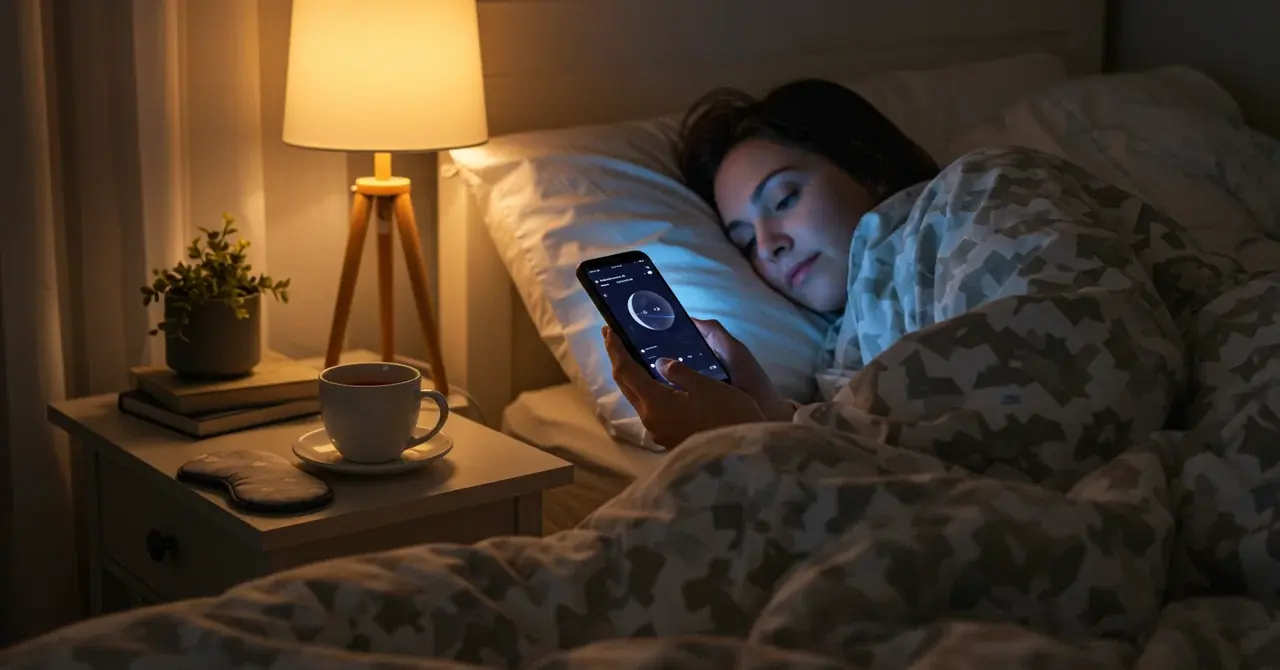
There is also an important distinction between sleeping near a phone and actively using it in bed. Those two situations are often treated as if they were the same, even though they may have very different effects.
In this article, we will look at what can happen when a smartphone becomes part of your nighttime routine, why the last few minutes before sleep matter, and how to create a healthier relationship with your device without giving up the convenience it provides.
The most surprising point is that the biggest problem may not be the phone's presence at all. It may be the small habits that develop around it—and the way those habits gradually change your nights.
What the Photograph Shows—and What It Does Not Prove
The photograph accompanying the headline shows a person's tongue with dark, hair-like material on its surface. This appearance can resemble a condition commonly known as hairy tongue, in which tiny projections on the tongue become elongated and collect debris, creating a coated or hair-like appearance.
However, the image alone cannot establish a diagnosis, and it does not prove that the person's condition was caused by sleeping with a smartphone.
There is no reliable basis for claiming that keeping a phone beside the bed directly causes a hairy tongue. The article should therefore focus on the sleep-related concerns supported by research rather than connecting the tongue photograph to an unsupported medical claim.
The distinction matters because dramatic health images can make an ordinary habit appear to have a specific medical consequence. A photograph may be real, but the explanation attached to it still needs to be accurate.
The central question remains: what happens when someone repeatedly uses a phone in bed, delays sleep, and allows notifications or screen activity to interrupt the night?
Research has found associations between evening screen use and poorer sleep outcomes. A large 2025 study published in JAMA Network Open examined more than 122,000 adults and found that screen use before bed was associated with shorter sleep and worse self-reported sleep quality. The study was observational, so it cannot prove that screen use alone caused those outcomes.
PubMed Central (PMC)+1
That is a more useful starting point than assuming that the phone itself produces a mysterious illness.
1. You May Fall Asleep Later Than You Intended
One of the most common consequences of using a smartphone in bed is simply going to sleep later.
The problem often begins with a small decision. Someone checks a message, watches a short video, or opens a social media application. The content leads to another post, another video, or another conversation.
The person may not feel particularly tired because the phone keeps providing new things to look at.
A bedtime that was supposed to be 10:30 p.m. gradually becomes 11:00 p.m., then 11:30 p.m., or even later.
This is sometimes described as bedtime procrastination: delaying sleep despite knowing that doing so may make the following day more difficult.
Smartphones can make this habit especially easy because they are portable, personal, and always available. There is no need to get out of bed, turn on a computer, or prepare anything. The entire world of entertainment and communication is available with a single touch.
The consequences may be most noticeable when someone has to wake up at a fixed time.
If a person delays sleep by an hour but still gets up for work, school, or family responsibilities at the usual time, the lost hour may come directly out of their nightly rest.
Over several nights, that pattern can contribute to insufficient sleep.
The important point is that the phone does not need to keep someone awake all night to influence their routine. Even a modest delay, repeated frequently, can make it harder to obtain enough sleep.
A practical way to address this problem is to decide on a bedtime before opening the phone. Rather than relying on willpower after an endless stream of content has begun, create a clear stopping point.
For example, a person who wants to sleep at 11 p.m. might choose to finish phone use at 10:15 p.m. and spend the remaining time preparing for bed.
That simple boundary can help prevent a short check from becoming an extended nighttime session.