The third step is to make the phone less convenient to use once bedtime begins.
Charging it outside the bed, placing it on a desk, or using a separate alarm clock can reduce the temptation to pick it up repeatedly.
The fourth step is to observe how the change affects sleep.
Some people notice improvements quickly. Others may need more time to establish a consistent pattern.
It can help to pay attention to bedtime, wake-up time, how long it takes to fall asleep, and how rested the person feels in the morning.
The aim is not to obsess over every minute of sleep. It is to recognize whether a particular habit is making rest more difficult.
13. A Simple Evening Plan That Does Not Require Giving Up Your Phone
For people who want a practical starting point, the following routine can be adapted to different schedules.
One hour before bedtime: Finish work-related messages and avoid starting conversations that may become stressful or lengthy.
Thirty to forty-five minutes before bedtime: Reduce screen brightness and switch to quieter activities. If using the phone, choose something that does not encourage endless scrolling.
Fifteen minutes before bedtime: Set the alarm, activate Do Not Disturb, and place the phone on its charging station.
At bedtime: Keep the room dark, comfortable, and quiet. Avoid checking the phone again simply because it is within reach.
This is not a medical prescription, and the exact timing does not need to be identical for everyone.
Some people may prefer a longer screen-free period. Others may find that a shorter, consistent routine is more realistic.
The key is to protect the time intended for sleep.
If the phone is needed for an emergency, important calls can be allowed through the device's settings.
If it is needed for accessibility, such as hearing alerts or health-related monitoring, those functions can be configured without leaving every notification active.
A healthy routine should support a person's real needs rather than create unnecessary stress.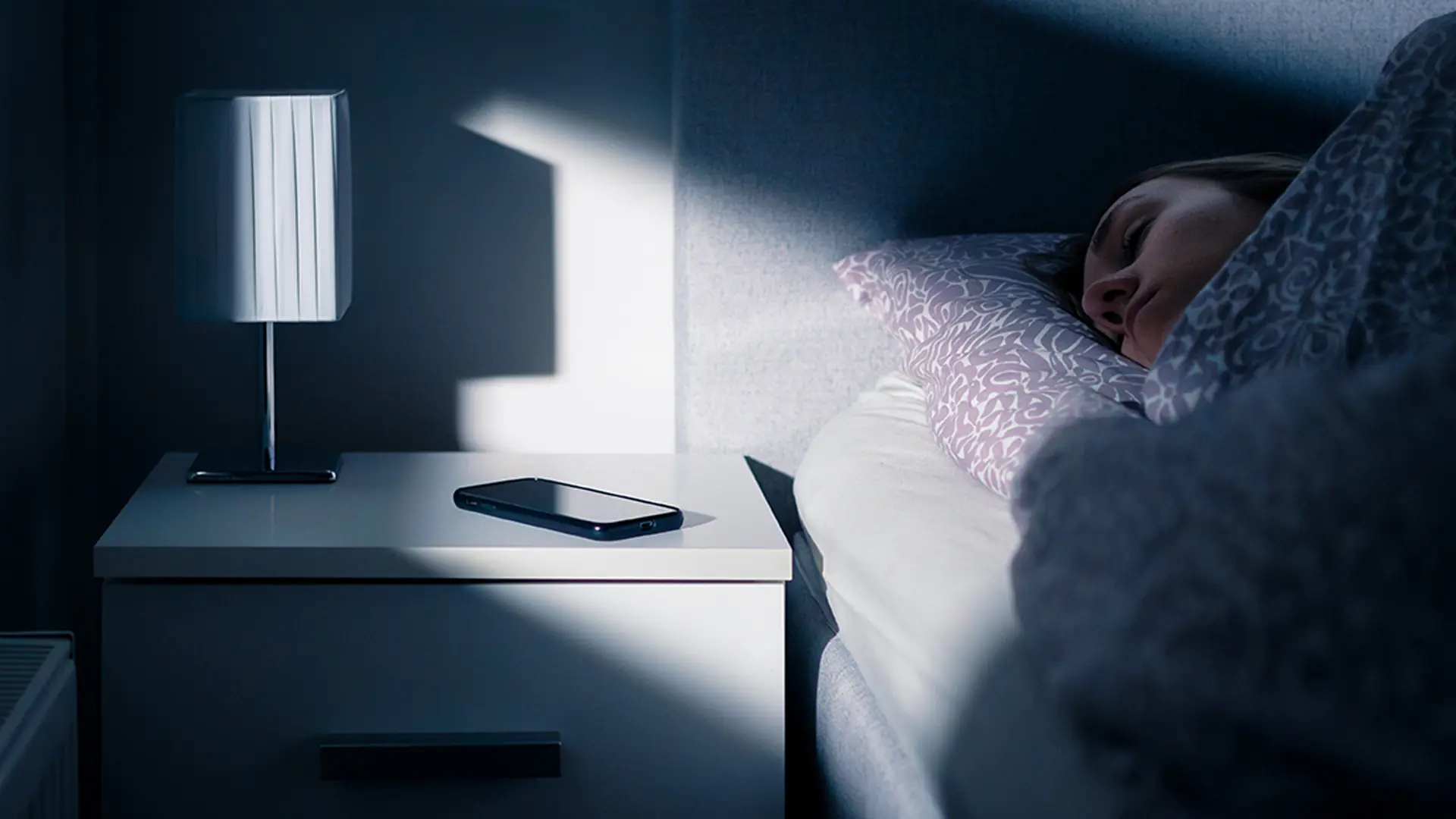
14. When Nighttime Phone Use May Be a Sign of a Bigger Problem
Sometimes the phone is not the only reason someone has difficulty sleeping.
A person may use it because they are already struggling to fall asleep. They may feel anxious, lonely, restless, or worried about the next day.
In that situation, removing the phone may help reduce stimulation, but it may not resolve the underlying issue.
Persistent sleep difficulties can have many causes, including stress, pain, medication effects, breathing problems during sleep, irregular work schedules, or other health conditions.
If someone regularly has difficulty falling asleep, wakes frequently, or feels excessively sleepy during the day, it may be worth discussing the symptoms with a healthcare professional.
A clinician can help determine whether the problem is related to habits, a sleep disorder, or another medical concern.
The same applies when someone experiences severe daytime sleepiness that affects driving, work, or daily activities.
The important point is not to blame every sleep problem on the phone.
Smartphone habits are one factor that can be adjusted, but they are not a universal explanation for every nighttime difficulty.
15. The Real Consequence May Be the Habit You Barely Notice
The most significant effect of sleeping with a phone may not be a sudden physical reaction.
It may be the gradual loss of a clear boundary between the day and the night.
A person who checks messages in bed may begin to expect constant availability. Someone who watches videos until they feel exhausted may stop recognizing the natural signals that it is time to sleep.
Over time, bedtime can become less predictable.
The phone may also change how people experience quiet moments. Instead of allowing the mind to settle, they may automatically reach for the device whenever they feel bored or restless.
This habit is not unique to smartphones. Many forms of entertainment can delay sleep.
But smartphones combine several powerful features in one device: communication, entertainment, news, games, work, and social interaction.
That combination makes them especially easy to use for longer than intended.
A healthier routine does not require rejecting technology. It means deciding when technology is useful and when it is interfering with something more important.
For many people, sleep is one of those things.
Final Thoughts: Should You Keep Your Phone Beside Your Bed?
The answer depends on how you use it.
Keeping a smartphone on a bedside table is not automatically dangerous, and there is no reliable evidence that its mere presence causes the unusual tongue appearance shown in the photograph.
However, using a phone for long periods immediately before sleep can be associated with delayed bedtime, shorter sleep, poorer sleep quality, and interruptions from notifications.
The effects vary from person to person. Some people may be more sensitive to evening light, while others may be more affected by emotionally stimulating content or the habit of staying online too long.
The most practical approach is to protect the time you have set aside for rest.
Lower the brightness, silence unnecessary notifications, avoid endless scrolling, and give yourself a clear stopping point before bed.
If you need the phone as an alarm, keep it available without making it the center of your bedtime routine.
The message behind the headline is not that every person who sleeps near a phone will become sick. It is that a small, familiar nighttime habit can gradually influence how much sleep you get and how well you feel the next day.
Sometimes the most helpful change is surprisingly simple: put the phone down, let the room become quiet, and give your body the chance to rest.