When phone use delays bedtime, interrupts sleep, or encourages irregular schedules, the following morning may feel more difficult.
Some people notice that they struggle to get out of bed. Others feel mentally slow, less motivated, or unusually sleepy during the first part of the day.
These experiences are not unique to smartphone use. They can also result from stress, illness, insufficient sleep, irregular schedules, or other factors.
However, if someone regularly spends long periods scrolling at night, the phone may be contributing to a pattern that leaves too little time for rest.
A 2025 analysis of adult screen use found an association between bedtime screen activity, shorter sleep duration, and poorer self-reported sleep quality. The findings were particularly notable among people with later chronotypes, meaning individuals whose natural sleep timing tends to be later.
PubMed Central (PMC)+1
The practical lesson is straightforward: if you wake up tired most mornings, examine your evening routine rather than assuming that the problem is simply a lack of energy.
Try moving phone use earlier, keeping a more consistent bedtime, and allowing enough time for sleep.
If persistent tiredness continues despite adequate sleep opportunity, it may be worth discussing the problem with a healthcare professional.
6. Concentration and Reaction Time May Be Affected
Sleep supports many functions that people rely on throughout the day, including attention, learning, decision-making, and reaction time.
When sleep is shortened or disrupted, some people find it harder to concentrate on routine tasks.
They may reread the same paragraph several times, lose track of a conversation, or take longer to complete work that normally feels easy.
The effects can be particularly important during activities that require sustained attention, such as driving, operating equipment, or making decisions under pressure.
A smartphone habit that repeatedly reduces sleep may therefore have consequences beyond feeling sleepy.
Research published in Scientific Reports in 2026 examined smartphone use before bedtime among university students. The study reported associations between longer pre-bedtime use, poorer sleep quality, and slower reaction times in its sample. The researchers also observed relationships with measures of concentration and performance.
PubMed+1
These findings should not be interpreted as proof that every person who uses a phone before bed will experience impaired performance.
The study involved a specific student population, and the results may not apply equally to all ages or circumstances.
Still, the research adds to the broader concern that prolonged nighttime phone use may be connected with sleep-related difficulties.
If someone notices that they are increasingly distracted or sluggish during the day, reviewing their nighttime habits may be a useful first step.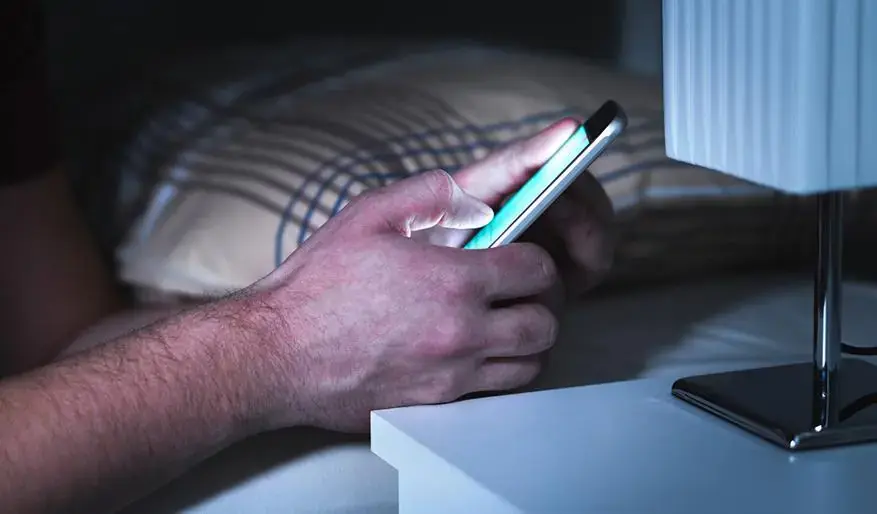
7. The Phone Can Make It Harder to Maintain a Regular Sleep Schedule
A consistent sleep schedule helps the body anticipate when it should be awake and when it should rest.
Going to bed and waking up at very different times each day can make that rhythm less stable.
Smartphones can contribute to irregular schedules because entertainment and communication are available at any hour.
One night, a person may stop scrolling at 10 p.m. The next night, they may remain online until midnight. On the weekend, they may stay awake even later.
The following morning, they might sleep in to compensate.
This pattern can create a cycle in which bedtime becomes increasingly unpredictable.
Some people experience a form of social jetlag: their sleep timing differs substantially between workdays and free days.
The feeling can resemble jetlag even though no travel has occurred.
A more regular routine may help. Choosing a consistent wake-up time is often a useful anchor because it can encourage a more predictable bedtime.
A person does not need to follow an exact schedule every minute. The aim is to avoid large, repeated shifts that make it difficult to know when the body should be ready for sleep.
The phone can support this goal by using bedtime reminders, scheduled quiet modes, and limits on nighttime applications.
It can also undermine the goal if those tools are ignored or if the device becomes a source of endless late-night activity.
8. Keeping the Phone in Bed Can Encourage Poor Sleep Habits
The location where a person uses a phone can influence how strongly the habit becomes connected with bedtime.
When the phone is used every night while lying under the covers, the bed may gradually become associated with scrolling, messaging, watching videos, and browsing.
Instead of being a place used primarily for sleep, it becomes a place for many different activities.
For some people, that can make it harder to settle down when they finally decide to sleep.
Sleep specialists often encourage people to keep the bed associated with sleep and intimacy rather than extended periods of wakeful activity.
This principle is part of a broader approach known as stimulus control, which aims to strengthen the association between the bed and sleep.
If someone has been awake for a long time and feels increasingly frustrated, it may help to get out of bed briefly and do something quiet in dim light. They can return when they feel sleepy.
The advice is not intended to make the bedroom uncomfortable or to turn sleep into a strict performance.
It is about creating a routine that helps the body recognize when the day is ending.
For a person who enjoys reading on a phone, moving the activity to a chair before bedtime may be a simple adjustment.
Once the reading is finished, the phone can be placed on a bedside table or charging station, leaving the bed free from the activity that tends to delay sleep.