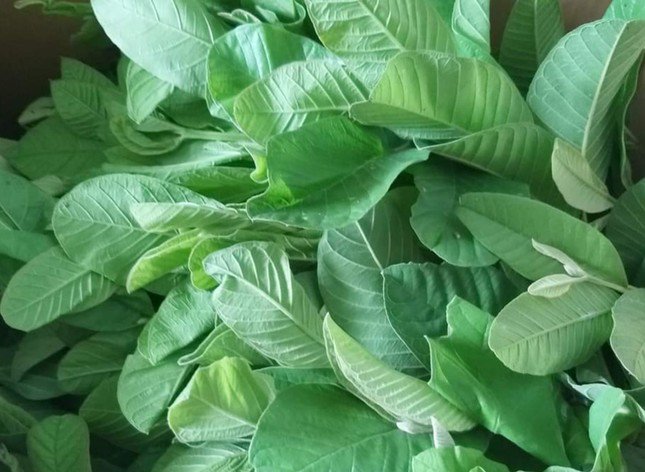
From a plant-chemistry perspective, guava leaves contain polyphenols, flavonoids, tannins, and other phytochemicals.
These compounds have been studied in laboratory and experimental research because of their potential antioxidant and antimicrobial activities.
That does not mean guava-leaf tea is a universal treatment.
But it does help explain why the leaves have attracted scientific attention.
Guava Leaves and Digestive Health
Traditional use has often focused on digestive health.
Certain compounds in guava leaves have demonstrated activity against microorganisms in laboratory studies, and researchers have also examined guava-leaf preparations in relation to gastrointestinal function.
However, digestive symptoms can have many causes.
Diarrhea, abdominal pain, bloating, nausea, and changes in bowel habits can result from infections, food intolerance, inflammatory conditions, medication effects, and other disorders.
A homemade herbal tea may provide a soothing experience, but it should not delay evaluation when symptoms are severe or persistent.
Guava Leaves and Antioxidant Compounds
Like mango leaves and cinnamon, guava leaves contain plant compounds with antioxidant-related activity.
The leaves' natural polyphenols are part of what makes them interesting from a nutritional and botanical perspective.
Again, the correct interpretation is not:
“Guava leaves prevent disease.”
A more accurate statement is:
Guava leaves contain bioactive plant compounds that scientists continue to study for their potential biological effects.
That is a much narrower—and more defensible—claim.
Could These Three Ingredients Be Combined?
This is where online wellness advice can become particularly confusing.
You may see recipes combining mango leaves, cinnamon, and guava leaves into one tea and claiming that the mixture “detoxes the body,” “controls blood sugar,” “cleans the liver,” or “kills harmful bacteria.”
Those claims should be treated cautiously.
Combining several plants does not automatically make their effects stronger.
In fact, combining them makes it harder to know which compound is responsible for an effect—or whether there is any meaningful effect at all.
There is also the possibility of interactions.
Even when individual ingredients are relatively harmless as foods, concentrated herbal preparations can be pharmacologically active.
That's why more ingredients do not necessarily equal more health benefits.
A Simple Tea Is Not the Same as a Concentrated Extract
This distinction is extremely important.
A homemade tea usually contains a relatively diluted mixture of compounds.
A laboratory study may use a purified substance at a much higher concentration.
A commercial supplement may contain an even more concentrated extract.
These are not interchangeable.
If a study finds that a concentrated mango-leaf extract affects a particular biochemical pathway, that does not mean a cup of weak mango-leaf tea will produce the same effect in a person.
The same principle applies to cinnamon and guava leaves.
What They Have in Common
Although these plants come from very different parts of the botanical world, there is a common theme.
All three contain naturally occurring phytochemicals that researchers have investigated for antioxidant, antimicrobial, or metabolic effects.
They also share another characteristic:
The laboratory evidence is generally more straightforward than the clinical evidence.