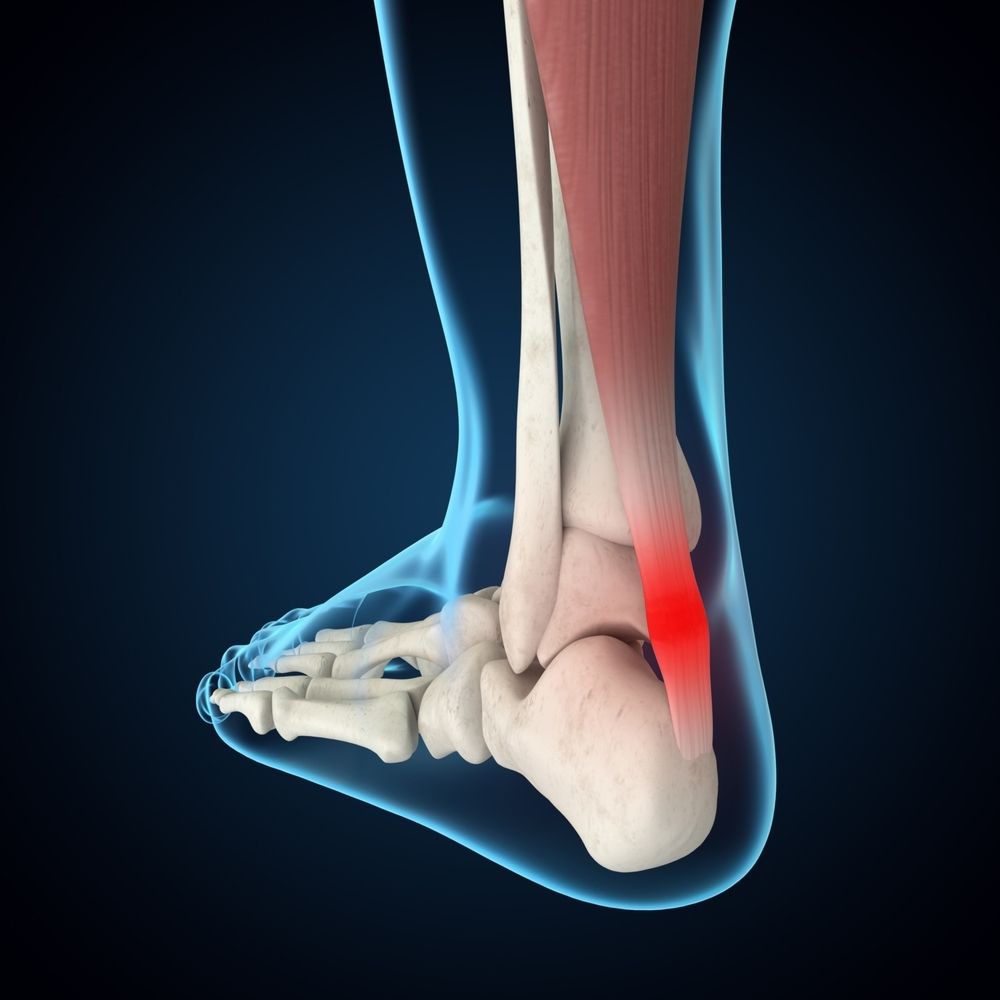
The Achilles tendon connects the calf muscles to the heel and plays a crucial role in walking, running, jumping, and pushing the body forward.
When the tendon is exposed to repeated excessive loading, it may develop tendinopathy. This can cause pain, stiffness, and tenderness, particularly during the first movements of the day or after periods of inactivity.
Achilles tendinopathy is often associated with running, jumping, sudden increases in training volume, hill walking, or activities that place repeated stress on the calf and tendon.
The discomfort may become noticeable when climbing stairs, walking uphill, standing on tiptoe, or beginning an exercise session.
Some people experience stiffness around the back of the ankle after waking up. The symptoms may ease as movement begins, but they can return during or after activity.
A different problem, called insertional Achilles tendinopathy, affects the part of the tendon that attaches to the heel bone. In some cases, nearby structures may also become irritated.
Treatment depends on the severity and duration of symptoms. Modifying activities that aggravate the tendon, selecting appropriate footwear, and following a structured strengthening program can help many people improve.
However, sudden severe pain at the back of the heel, particularly after a popping sensation or an abrupt loss of pushing strength, may indicate an Achilles tendon rupture. This requires urgent medical assessment.
Because the treatment for Achilles tendon problems differs from the approach used for plantar fasciitis, identifying the precise location of the pain is important.
5. Standing for Long Periods Can Put Extra Stress on Your Feet
If your job requires you to stand for hours at a time, heel pain may become a recurring problem.
Teachers, healthcare workers, retail employees, factory workers, hospitality staff, and others who remain on their feet for much of the day may experience discomfort that worsens toward the end of a shift.
Standing places sustained loads on the feet. Walking and changing positions distribute forces differently, but prolonged static standing can still create considerable discomfort, especially when performed on hard surfaces or while wearing unsuitable shoes.
The problem may become more pronounced when a person has recently changed jobs, increased working hours, started standing for longer periods, or returned to activity after an extended break.
However, standing itself does not automatically damage the heel. The effect depends on factors such as duration, footwear, foot mechanics, body weight, physical conditioning, and the presence of an underlying condition.
For some people, heel pain associated with prolonged standing is caused by plantar fasciitis. Others may have irritation of the heel's fat pad, tendon problems, or a different musculoskeletal condition.
Practical adjustments may help reduce discomfort. Supportive footwear, cushioned insoles when appropriate, brief movement breaks, and alternating standing with sitting can reduce the continuous load placed on the feet.
People who work on hard floors may also benefit from an occupational assessment of footwear and workstation arrangements.
If pain repeatedly returns despite these adjustments, medical evaluation can help identify whether a specific condition requires treatment.
6. Could Your Shoes Be Making the Pain Worse?
Footwear can influence how forces are distributed across the heel and arch. Shoes that are worn out, poorly fitting, or unsuitable for a person's activities may aggravate existing heel pain.
For example, thin-soled shoes may provide little cushioning on hard surfaces. Some people find that walking barefoot on hard floors makes their symptoms worse, particularly when plantar fasciitis or heel fat-pad irritation is present.
High heels can change the position of the ankle and increase stress on certain structures, including the Achilles tendon. Abruptly switching from shoes with elevated heels to completely flat footwear may also increase the demand placed on the calf and Achilles tendon in some individuals.
However, there is no single shoe design that works best for everyone. Foot shape, activity level, comfort, and the underlying cause of pain all matter.
If you experience morning heel pain, consider whether your symptoms changed after buying new shoes, increasing walking distances, or spending more time in footwear with limited support.
A practical starting point is to choose shoes that fit comfortably, have adequate cushioning for your activities, and provide support that feels appropriate for your feet.
Some people benefit from over-the-counter insoles. Others may need professionally fitted orthoses or a more individualized treatment plan, especially if their symptoms persist.
An expensive shoe is not automatically better, and a particular brand cannot guarantee relief.
The best footwear is the footwear that suits your foot, activity, and medical needs while allowing you to walk comfortably.
7. Heel Fat-Pad Syndrome: When the Bottom of Your Heel Feels Bruised
The heel contains a specialized pad of fatty tissue that helps absorb impact when you stand, walk, and run. This structure acts as a cushion between the heel bone and the ground.
If the fat pad becomes irritated, compressed, or less effective at absorbing impact, pain can develop in the center of the heel.
This is sometimes called heel fat-pad syndrome.
Unlike the typical pain of plantar fasciitis, which is often concentrated near the inner underside of the heel, fat-pad pain may feel more like a deep bruise in the middle of the heel.
It can become worse when walking barefoot on hard surfaces, standing for long periods, or participating in high-impact activities.
The discomfort may also occur when direct pressure is applied to the center of the heel.
Factors that may contribute include repetitive impact, prolonged standing, certain foot injuries, and age-related changes in the tissues. However, heel fat-pad pain cannot be confirmed based on symptoms alone.
Management may involve reducing aggravating activities, wearing cushioned footwear, using appropriate heel cups or insoles, and addressing other factors that increase pressure on the heel.
Because the treatment differs from that used for some tendon or plantar fascia conditions, persistent central heel pain should be evaluated rather than treated indefinitely with a generic stretching routine.