Chapter 1: What Are These Strange Horned Nuts?
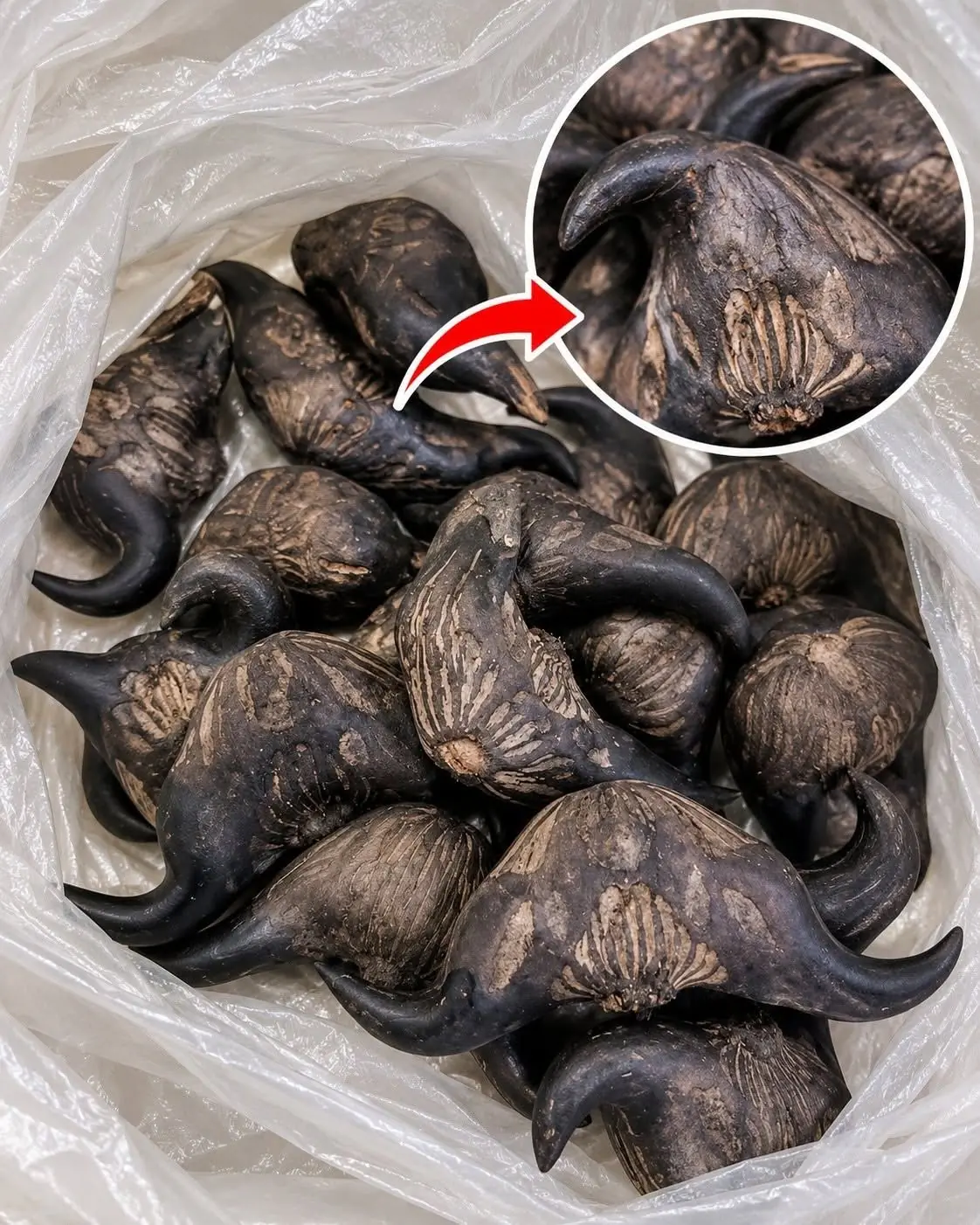
Imagine opening a bag from your neighbor and discovering a collection of dark, rough-looking objects that resemble tiny animal heads. Some have curved horns, others look almost like miniature sculptures, and their unusual shapes make them difficult to identify at first glance.
That is exactly the kind of reaction many people have when they first encounter water caltrops.
The objects in the photograph appear to be water caltrop fruits, commonly associated with plants in the genus Trapa. They are also known by names such as water chestnuts, horned water chestnuts, bat nuts, and buffalo nuts.
The most likely identification is a two-horned water caltrop, possibly Trapa bicornis, a species cultivated in parts of Asia for its edible seed.
However, a photograph alone cannot confirm the exact species or whether the particular fruits are safe to eat. If your neighbor gave you a bag of these, it is worth asking where they came from and whether they were harvested for food.
Why do they look so unusual?
Water caltrops grow on aquatic plants that live in freshwater environments such as ponds, lakes, and slow-moving waterways.
Unlike ordinary nuts that grow on trees, water caltrops develop underwater. The plant produces floating leaves, while its fruit forms beneath the water.
As the fruit matures, it develops a hard outer shell. Depending on the species, the shell may have two or four prominent horns.
These horns are not decorative. They are part of the fruit's natural structure and can be surprisingly sharp.
The dark color in your photograph may come from a mature or dried outer shell. Water caltrops can appear brown, reddish-brown, or nearly black as they mature and dry.
Their unusual shape has inspired many imaginative names. Some people think they resemble a bat, while others see a bull's head or a small animal face.
The resemblance is especially striking when the fruit is viewed from the front.
Is it really a nut?
Botanically speaking, water caltrop is not a true tree nut like an almond or walnut.
It is the fruit of an aquatic plant, containing a large edible seed inside a hard shell.
The edible portion is generally pale, starchy, and firm. When cooked, it can have a texture similar to a chestnut or a potato, with a mild, slightly sweet flavor.
In several Asian countries, water caltrops have been eaten for generations. They may be sold fresh, boiled, dried, or processed into flour.
The fruit is particularly familiar in parts of China, India, Thailand, and Vietnam, where it can be prepared as a simple snack or incorporated into traditional dishes.
An important difference from the familiar water chestnut
There is one detail that often causes confusion.
The crunchy water chestnuts commonly found in canned Asian vegetables are usually from a different plant, Eleocharis dulcis.
Those water chestnuts are round, smooth, and relatively small. They are not the same as the hard, horned fruits shown in your photograph.
Water caltrops belong to the genus Trapa, while the familiar crunchy water chestnut comes from a type of aquatic sedge.
Although both are called water chestnuts in English, their appearance, texture, and culinary uses are different.
So, if the identification is correct, your neighbor has probably given you a traditional aquatic food rather than an ordinary nut.
Before preparing them, though, there are a few important things to know about cleaning, cooking, and handling their unusual shells.
Chapter 2: How to Identify Them and What to Check Before Eating
The first thing to do when you receive an unfamiliar food is to identify it properly.
Water caltrops have a distinctive appearance, but not every dark, horned object found in a bag is necessarily an edible water caltrop. The fruits can vary in size, color, and shape depending on the species and how they were harvested or stored.
If your neighbor collected them from a pond, ask whether the plants were known to be water caltrops and whether the fruits were intended for human consumption.
This is especially important if they were gathered from a wild waterway.
Look at the horns and shell
The most recognizable feature is the hard outer shell with two or more pointed projections.
The species Trapa bicornis is commonly described as having two prominent horns. Other water caltrop species may have four horns or a different arrangement.
The shell may be dark brown or black when mature. Its surface can look wrinkled, woody, or slightly rough.
Some fruits have a rounded center with two curved points extending outward. Others have a more angular shape.
The fruits in your photograph appear to have the long, curved projections associated with two-horned water caltrops.
Still, shape alone is not enough to establish that they are safe to eat.
Check the condition of the fruits
Before cooking, examine each fruit carefully.
Discard any that show signs of mold, unusual discoloration, a rotten smell, or a soft and deteriorating shell.
A dry shell may naturally be hard and dark, but it should not have a strong unpleasant odor.
If the fruits were stored in a damp bag for a long time, inspect them especially carefully. Moisture can encourage mold and spoilage.
Do not assume that boiling will make spoiled food safe.
If the fruits are extremely old, badly damaged, or of uncertain origin, it is better not to eat them.
Why the source matters
Water caltrops grow in aquatic environments, and the quality of the water can affect the safety of the harvested fruit.
Fruits collected from polluted waterways may be exposed to contaminants. Washing can remove surface dirt, but it cannot reliably eliminate every possible chemical contaminant.
For this reason, water caltrops intended for eating should come from a known food source or a trusted seller.
If your neighbor harvested them personally, ask whether the pond or lake is used for food production and whether the fruits were properly cleaned and stored.
Be careful with the sharp points
The horns are hard and can injure your fingers.
Avoid squeezing the fruit tightly or trying to break it open with your bare hands.