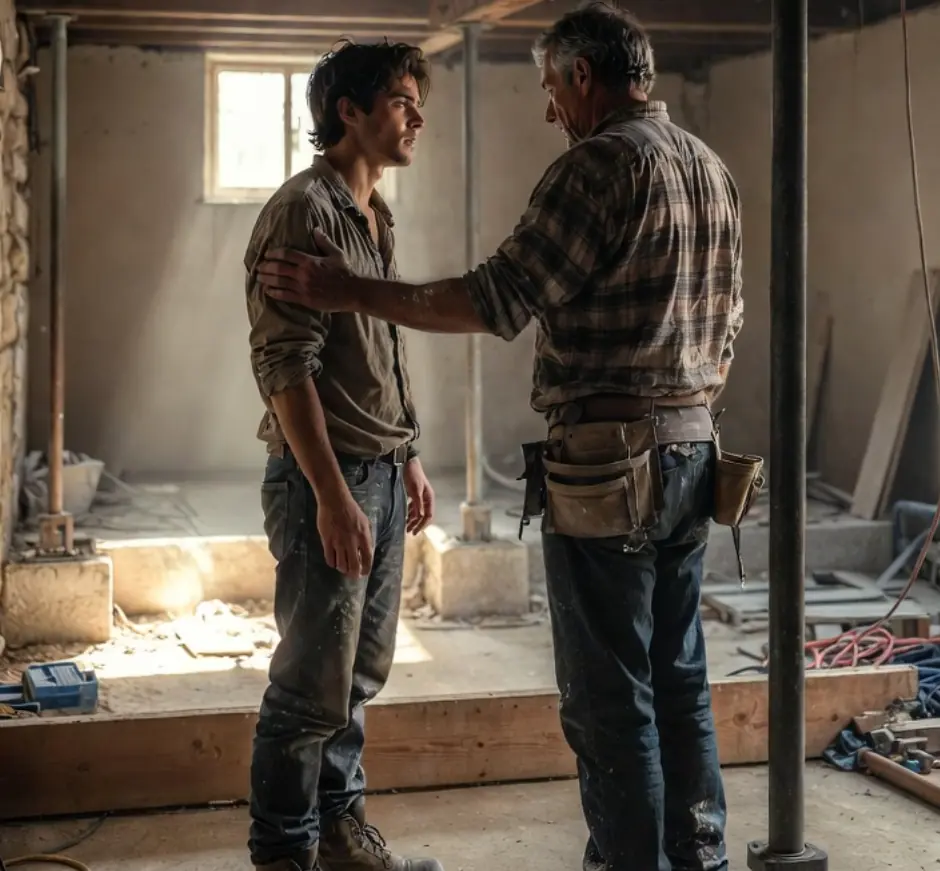
My stepfather’s quiet support rebuilt what divorce broke
My stepfather’s quiet support rebuilt what divorce broke
Story 23/02/2026 00:17

The house on Sycamore Lane was supposed to be my anchor. For twenty-five years, it had been a museum of my most cherished memories: the height marks penciled onto the kitchen pantry, the faded floral wallpaper in the dining room where we ate Sunday pot roast, and the heavy velvet curtains that muffled the world outside. When my mother passed away, that house became her proxy. Every creaking floorboard felt like a conversation with the past.
But six months after my father married Linda, I walked through the front door and felt like a stranger in my own life.
The first thing I noticed was the smell. It no longer smelled of cinnamon and old books; it smelled of "sea breeze" candles and high-end floor wax. Then, I saw the foyer. The antique coat rack—the one where my mother used to hang her yellow rain slicker—was gone. In its place stood a sleek, white console table topped with a minimalist ceramic vase.
"Alice! You’re here!" Linda came down the stairs, her face bright with a welcoming smile. "Come in, come in. I’ve been so excited for you to see the changes."
I stood frozen in the hallway. "Where is the coat rack, Linda? And the floral wallpaper in the dining room... it’s gray now."
Linda’s smile faltered just for a second, but she stayed upbeat. "Oh, we thought the place needed a bit of a breath of fresh air. Your father was so supportive. He said he felt like he was living in a time capsule. We wanted to make it feel like our home, you know?"
I didn't know. To me, "fresh air" felt like an erasure. Every change she had made—the new throw pillows, the reorganized spice cabinet, the modern landscape paintings replacing my mother’s watercolors—felt like a deliberate strike against my history.
The tension simmered throughout the afternoon. I walked through the rooms like a ghost, looking for remnants of myself. I found them in boxes in the garage: my old trophies, the knick-knacks from our family vacations, even the hand-stitched pillows from the sofa. Seeing my childhood packed away in cardboard felt like a physical weight on my chest.
By the time we sat down for dinner, I was vibrating with a mixture of grief and resentment.
"I made your father’s favorite," Linda said, placing a dish of lemon-herb chicken on the table. "I know your mother used to do the pot roast, but we’ve been trying to eat a bit lighter lately."
My father, bless him, looked happy. He looked younger, more energetic. "It’s delicious, Alice. You have to try the glaze."
I took a bite, but it tasted like ash. "It’s fine," I said, my voice tight. "But we always had pot roast on the first Sunday of the visit. It was a tradition. I didn't realize we were discarding those, too."
The air at the table turned brittle.
"Alice, honey," my father said gently. "It’s just a meal. Linda has worked so hard to make the house comfortable."
"Comfortable for who, Dad?" I snapped, the dam finally breaking. "Because it’s not comfortable for me. It feels like you’ve scrubbed away every trace of Mom. It feels like Linda is trying to pretend we didn't exist before she walked through the door. This isn't a 'refresh.' It’s a takeover."
Linda’s face went pale. She set her fork down with a quiet clink. "I think I’ll go check on the coffee," she whispered, standing up and quickly retreating to the kitchen.
"Alice," my father said, his voice stern but pained. "That was unfair. You have no idea what it’s been like."
The dinner ended in a heavy, suffocating silence. My father went to the den to compose himself, and I was left alone in the gray-walled dining room. I felt small and petty, but I also felt profoundly lonely. I decided to go to the kitchen to apologize for the outburst, even if I wasn't ready to forgive the changes.
I stopped at the doorway when I saw Linda. She wasn't making coffee. She was sitting at the small kitchen island, holding a framed photograph that hadn't been packed away. It was a photo of me, my father, and my mother at my graduation.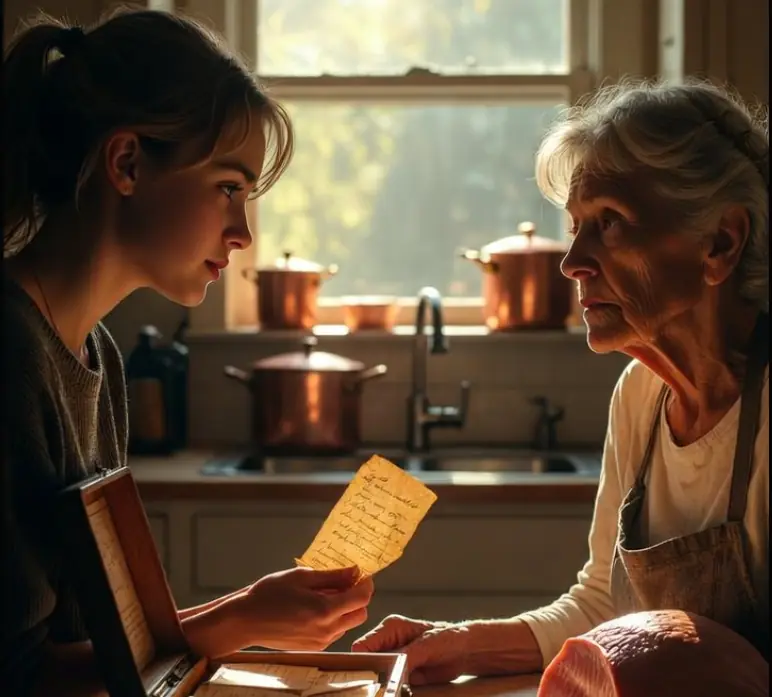
She was crying, but it wasn't the loud, dramatic crying of someone who wanted attention. It was the quiet, weary sobbing of someone who was exhausted.
"Linda?" I said softly.
She jumped, quickly wiping her eyes. "Oh, Alice. I’m sorry. I didn't hear you come in. I’ll have that coffee ready in a second."
"Forget the coffee," I said, sitting down across from her. "I’m sorry for what I said. I’m just... I’m hurting."
Linda looked at the photo in her hand, then at me. "I know you are. And that’s the last thing I ever wanted. Alice, I’ve spent every day for the last six months feeling like a guest in my own marriage. Every time I looked at that wallpaper or sat on those old sofas, I felt like I was trespassing on a life that wasn't mine."
She reached out, touching the sleek white surface of the new island. "I didn't rearrange the house to erase your mother. I did it so I could breathe. I was so intimidated by the memory of her—by how much everyone loved her—that I felt like if I didn't change something, I would never be anything more than a shadow in her house. I wasn't trying to take her place. I was just trying to find a place."
The realization hit me with the force of a sudden gale. I had seen her as an invader; she had seen herself as an outsider trying to build a shelter. I had been so focused on my own loss that I hadn't seen her struggle to belong. My father hadn't been "discarding" the past; he had been helping his wife feel at home in the present.
"I thought you hated the old things," I whispered.
"I don't hate them," Linda said, her voice steadying. "I just didn't know how to live among them without feeling like I was an interloper. I want you to feel at home here, Alice. I really do. But I need to feel at home here, too."
I looked around the kitchen. It was brighter, yes. It was different. But looking at Linda, I saw the woman who had made my father smile again. I saw the woman who had stayed up late helping him through his grief before they ever got married. She wasn't the enemy of my memories; she was the guardian of my father’s future.
"The coat rack is in the garage," I said, a small smile finally forming. "My mother loved it because it was sturdy. Maybe... maybe we could move it to the mudroom? It wouldn't be in the front hallway, but it would still be part of the house."
Linda’s eyes brightened. "I’d like that. And the watercolors? I kept the frames. I thought maybe we could hang them in the guest room. Your father said you used to paint with her."
We spent the next hour talking—truly talking. No "sea breeze" candles or "breath of fresh air" euphemisms. We talked about the hard parts of blending a family. I told her which traditions were the most painful to lose, and she told me which parts of the house made her feel the most welcome.
We reached a compromise that night. The house on Sycamore Lane would never be a museum again, but it wouldn't be a sterile showroom either. It would be a "living" house—a place where gray walls could coexist with old watercolors, and where lemon-herb chicken could be served alongside a holiday pot roast.
When my father walked into the kitchen a little later, he found us looking through one of the boxes from the garage together.
"What are you two up to?" he asked, looking between us with cautious hope.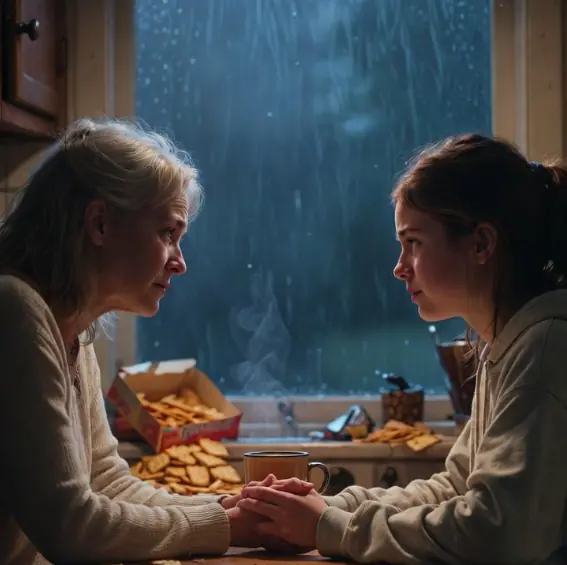
"We're just doing some curating, Dad," I said, holding up an old hand-carved birdhouse. "Linda thinks this would look great on the new back porch."
He beamed, and the tension that had been a permanent fixture in my chest for months finally dissolved.
I’ve learned that a house isn't made of wallpaper or furniture. It’s made of the people inside it and the grace they show one another. Linda didn't take my mother’s place, and she didn't want to. She created a new place, and in doing so, she taught me that the heart is big enough to hold both the love for who we’ve lost and the respect for who we’ve found.
We are the Millers, and our home is a work in progress. It’s a little bit of the old and a little bit of the new, held together by a lot of empathy and a shared commitment to making sure everyone has a seat at the table.
Love doesn't require us to forget the past. It just requires us to make room for the future. And as I looked at my "new" childhood home, I realized that for the first time in a long time, I wasn't just visiting. I was home.
My stepfather’s quiet support rebuilt what divorce broke
The weekend my mother-in-law and i got stuck together changed everything

Living with my stepmother taught me more about strength than i expected

My father-in-law refused to call me family until the day he needed me
My mother-in-law and i fought over baby names until we learned the real issue
A Whisper in the Night: When My Daughter Finally Told Me Her Back Hurt

I Saw Our Daughter’s Comment Under My Swimsuit Photo With My Husband—and My Heart Dropped

The day my stepfather showed up when my own father didn’t

My father-in-law tested me in silence for years until i finally understood why


The recipe card my mother-in-law hid from me changed our relationship forever



He Left $5,000 on the Table and Pretended to Sleep to Prove Their Honesty — But the Maid’s Son Stole Something Far More Precious
The Night a Husband Suspected His Wife of Cheating—Until He Followed Her and Discovered the Heartbreaking Truth Behind the Cologne

“I’ll give you 100 million if you open the safe,” the billionaire declared — and the room exploded with laughter
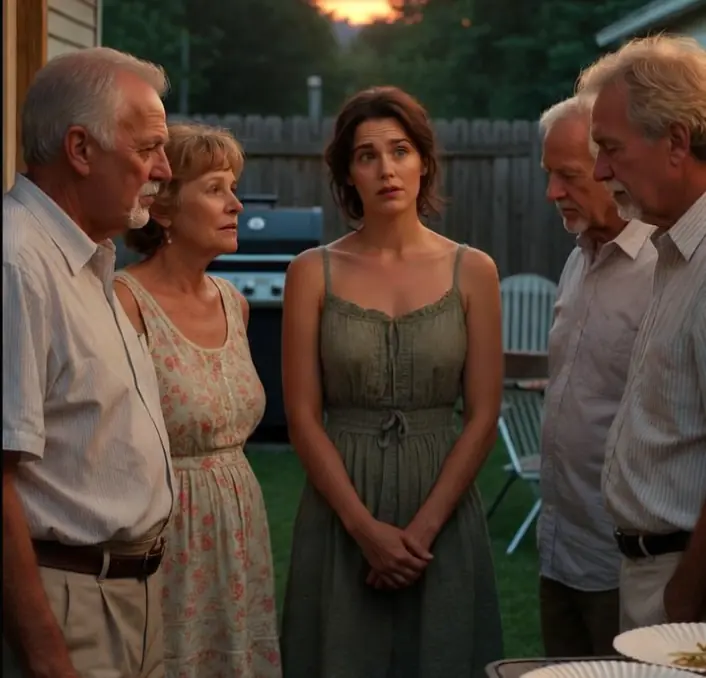
The family argument that almost divided us ended up defining us

My mother-in-law blamed me for everything until she learned the truth

The Health Effects of Eating Kohlrabi on a Regular Basis, According to Experts

What does it symbolize when a person who passed away appears in your dream
My stepfather’s quiet support rebuilt what divorce broke
The weekend my mother-in-law and i got stuck together changed everything
Living with my stepmother taught me more about strength than i expected
My father-in-law refused to call me family until the day he needed me
My mother-in-law and i fought over baby names until we learned the real issue
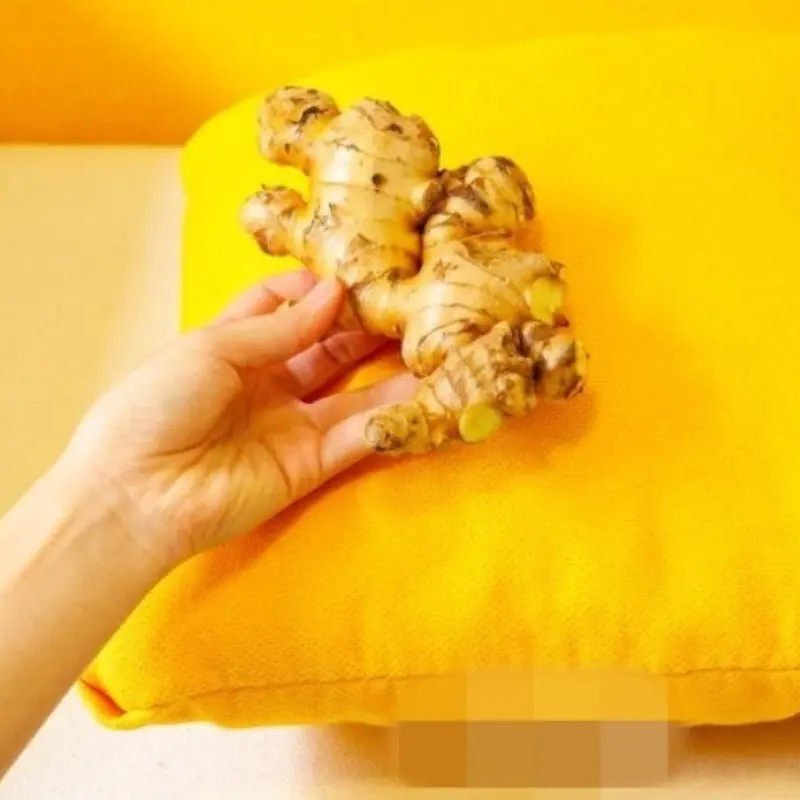
Sleeping With Ginger: Myth, Trend, or Real Benefit?
A Whisper in the Night: When My Daughter Finally Told Me Her Back Hurt
I Saw Our Daughter’s Comment Under My Swimsuit Photo With My Husband—and My Heart Dropped
The day my stepfather showed up when my own father didn’t
My father-in-law tested me in silence for years until i finally understood why
The recipe card my mother-in-law hid from me changed our relationship forever

Why 3–4 A.M. Wake-Ups Could Signal Hidden Stress

Better blood flow can start in your kitchen — and one spice at the end of this list is especially