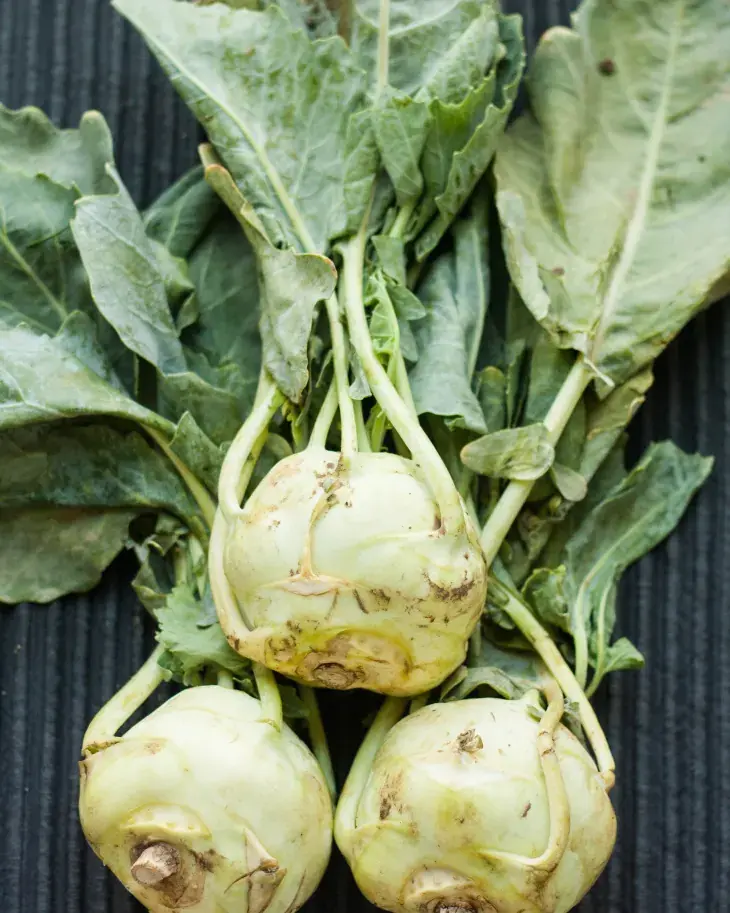
Have you tried one of these delicious crunchy alien looking artefacts?
Kohlrabi (Brassica oleracea var. gongylodes), a member of the cruciferous vegetable family, is a nutrient-dense vegetable with a mild, slightly sweet flavour. This versatile vegetable is rich in vitamins, minerals, dietary fibre, and bioactive compounds, making it a valuable addition to a balanced diet. This article provides a scientifically detailed examination of the health benefits of kohlrabi, including its nutritional value, impact on metabolic health, immune function, digestive health, and its role in disease prevention.
Kohlrabi is particularly high in vitamin C, which plays a crucial role in immune function and collagen synthesis (Carr & Maggini, 2017). Additionally, it contains glucosinolates, a class of sulfur-containing compounds with potential anti-cancer properties (Traka & Mithen, 2009).
Antioxidant and Anti-Inflammatory Properties
Kohlrabi is rich in antioxidants, including vitamin C, polyphenols, and glucosinolates, which help combat oxidative stress and reduce inflammation. Antioxidants play a crucial role in neutralising free radicals, which contribute to chronic diseases such as cardiovascular disease, diabetes, and neurodegenerative disorders (Lobo et al., 2010).
Glucosinolates, when broken down into isothiocyanates, have been shown to modulate inflammatory pathways and inhibit nuclear factor kappa B (NF-κB), a key regulator of inflammation (Hayes et al., 2008). This suggests that regular consumption of kohlrabi may contribute to reducing the risk of inflammatory conditions such as arthritis and cardiovascular disease.
Digestive Health and Gut Microbiota Support
Kohlrabi is an excellent source of dietary fibre, which plays a crucial role in digestive health. Fibre helps to regulate bowel movements, prevent constipation, and support overall gut function (Slavin, 2013). Additionally, the non-digestible fibres in kohlrabi serve as prebiotics, promoting the growth of beneficial gut bacteria such as Bifidobacteria and Lactobacilli (Gibson et al., 2017).
Fibre-rich diets, including cruciferous vegetables like kohlrabi, have been linked to a reduced risk of colorectal cancer by supporting gut microbiota diversity and producing short-chain fatty acids (SCFAs) such as butyrate, which play a role in maintaining colon health (Louis & Flint, 2017).
Metabolic Health and Blood Sugar Regulation
Kohlrabi’s high fibre content and low glycaemic index make it beneficial for individuals managing blood sugar levels. Fibre slows the absorption of glucose, preventing spikes in postprandial blood sugar levels and improving insulin sensitivity (Weickert & Pfeiffer, 2018).
A study by Traka & Mithen (2009) highlighted that glucosinolate-derived isothiocyanates may improve metabolic health by modulating glucose metabolism and reducing oxidative stress in people with insulin resistance. Regular consumption of kohlrabi may contribute to lowering the risk of type 2 diabetes and other metabolic disorders.
Cardiovascular Benefits
Kohlrabi contains potassium, a mineral essential for blood pressure regulation. Potassium helps to counteract the effects of sodium, reducing vascular tension and supporting normal blood pressure levels (He & MacGregor, 2008).
Additionally, glucosinolates and flavonoids in kohlrabi have been shown to reduce LDL cholesterol and prevent oxidative damage to blood vessels, lowering the risk of atherosclerosis and cardiovascular disease (Blekkenhorst et al., 2017).
Immune System Support
Kohlrabi is one of the best plant-based sources of vitamin C, which plays a crucial role in immune defence by stimulating the production of white blood cells and supporting antioxidant activity in the body (Carr & Maggini, 2017).
Additionally, polyphenols and glucosinolates contribute to immune function by modulating inflammatory responsesand enhancing the body’s defence against infections (Traka & Mithen, 2009). Regular consumption of kohlrabi may help reduce the severity of infections and enhance overall immune resilience.

Potential Anti-Cancer Properties
Cruciferous vegetables, including kohlrabi, have been extensively studied for their potential cancer-preventive properties due to their high glucosinolate content. Glucosinolates are converted into isothiocyanates, which have been shown to induce apoptosis (programmed cell death) in cancer cells and inhibit tumour growth (Verkerk et al., 2009).
Research suggests that a diet rich in cruciferous vegetables is associated with a lower risk of colorectal, lung, and breast cancers (Zhang et al., 2015). The combination of antioxidants, fibre, and glucosinolates in kohlrabi makes it a valuable addition to a cancer-preventive diet.
Nutritional Composition of Kohlrabi
Kohlrabi contains a variety of essential macronutrients and micronutrients. A 100g serving of raw kohlrabi provides approximately:
-
Energy: 27 kcal
-
Carbohydrates: 6.2g (including 2.6g sugar and 3.6g dietary fibre)
-
Protein: 1.7g
-
Fat: 0.1g
-
Vitamin C: 62mg (69% of the recommended daily intake, RDI)
-
Vitamin B6: 0.2mg (10% RDI)
-
Potassium: 350mg (10% RDI)
-
Calcium: 24mg (2% RDI)
-
Magnesium: 19mg (5% RDI)
-
Folate: 16μg (4% RDI)
(Source: U.S. Department of Agriculture, 2022)
Best Way To Use
Raw in salads or simply diced and roasted.
Conclusion
Kohlrabi is a nutrient-dense cruciferous vegetable with significant health benefits. Its high antioxidant content, fibre, and bioactive compounds contribute to its role in immune support, digestive health, metabolic regulation, cardiovascular protection, and potential cancer prevention. Including kohlrabi in a balanced diet may support overall well-being and reduce the risk of chronic diseases.
References
-
Blekkenhorst, L.C., et al., 2017. Cardiovascular health benefits of specific vegetable types: a narrative review. Nutrients, 10(5), p.595.
-
Carr, A.C. & Maggini, S., 2017. Vitamin C and immune function. Nutrients, 9(11), p.1211.
-
Gibson, G.R., et al., 2017. The International Scientific Association for Probiotics and Prebiotics (ISAPP) consensus statement. Nature Reviews Gastroenterology & Hepatology, 14(8), pp.491-502.
-
He, F.J. & MacGregor, G.A., 2008. Beneficial effects of potassium on human health. Physiologia Plantarum, 133(4), pp.725-735.
-
Slavin, J., 2013. Dietary fibre and gut health. Nutrition Reviews, 71(9), pp.561-582.
-
Traka, M. & Mithen, R., 2009. Glucosinolates, isothiocyanates and human health. Phytochemistry Reviews, 8(1), pp.269-282.
-
Zhang, Y., et al., 2015. Role of glucosinolates in cancer prevention. Annual Review of Food Science and Technology, 6, pp.171-189.