The family argument that almost divided us ended up defining us
In the quiet, suburban landscape of our Ohio neighborhood, my home has always been a sanctuary of neutrality. I am a person who thrives on harmony; I like my coffee smooth, my schedules organized, and my family gatherings predictable. But as any married woman can tell you, when you bring two different family trees together under one roof, the branches are bound to tangle eventually.
For years, we had managed a polite dance of "generational expectations." My parents, Bob and Linda, are the quintessential retirees from the "keep your head down and work" school of thought. My husband Mark’s parents, Susan and Gerald, are more from the "adventure is around the corner" philosophy. Usually, these differences were charming—a matter of debate over vacation spots or restaurant choices.
However, the tension had been simmering for months over a single, looming decision: Mark and I were planning to sell our starter home and move two hours away for a unique career opportunity I had been offered. To my parents, this was an abandonment of "stability" and the proximity they relied on. To Mark’s parents, it was an exciting leap, but they were already "subtly" pressuring us to move closer to their lake house instead.
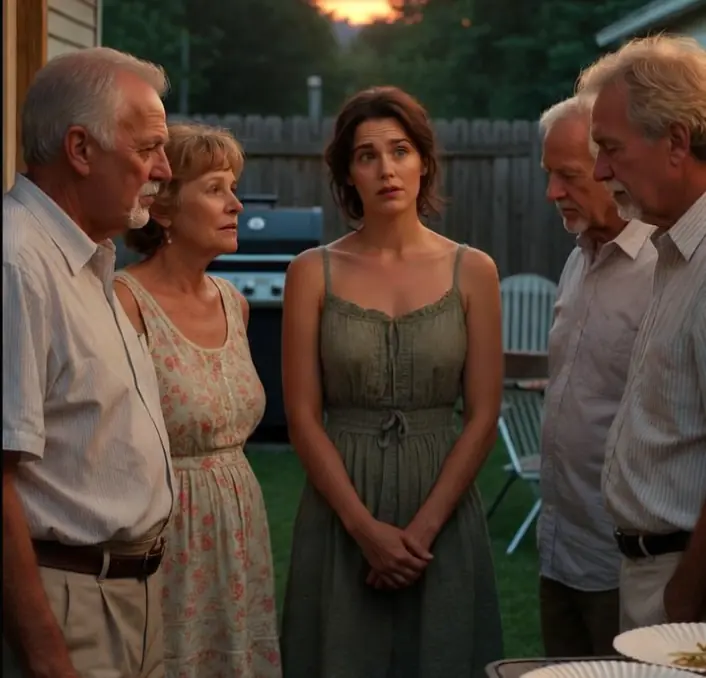
The breaking point arrived on a humid Saturday in August during what was supposed to be a celebratory backyard barbecue.
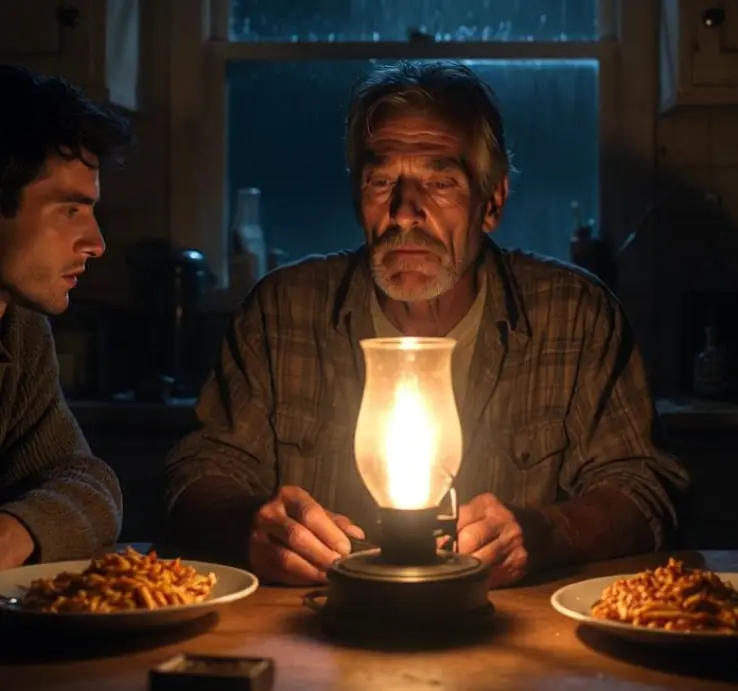
It started with a comment about the moving boxes in the hallway. My father, leaning against the kitchen counter, looked at the stacks and sighed. "I just don't see why you’d leave a perfectly good neighborhood where you have help right down the street. It seems like a lot of risk for a title change, Elena."
Gerald, Mark’s father, chimed in from the dining table. "Risk is part of the game, Bob! But if they’re going to move, they should be looking at the north side, near the water. That’s where the growth is."
The air in the kitchen suddenly felt heavy. Mark and I exchanged a look—the kind of look that says, “Here we go.”
"We aren't moving for the real estate growth, Gerald," Mark said, his voice tightening. "And we aren't staying for the 'stability,' Dad. We’re moving because this is what’s best for our future."
The "polite dance" stopped. For the next hour, the conversation moved from the kitchen to the living room, escalating into a heated, multi-generational debate. It wasn't a shouting match—we weren't that kind of family—but the air was thick with the sharp edges of disappointment and the weight of unfulfilled expectations.
My mother felt we were being "ungrateful" for the help they provided. Susan felt we were being "closed-minded" about their suggestions. Mark felt like his parents were treating him like a teenager, and I felt like a bridge that was about to collapse under the weight of everyone’s opinions.
"It feels like we don't have a say in our own lives!" Mark finally said, standing up. "Every decision we make is audited by four other people. We love you all, but we are drowning in your 'advice.'"
The room went silent. The only sound was the low hum of the air conditioner. My mother’s eyes filled with tears, and Gerald looked down at his hands. We had reached the edge of the cliff. In that moment, the argument could have divided us—it could have led to months of cold shoulders and awkward holiday phone calls.
But then, my mother did something she rarely does. She stepped out of her "protective" persona and chose vulnerability.
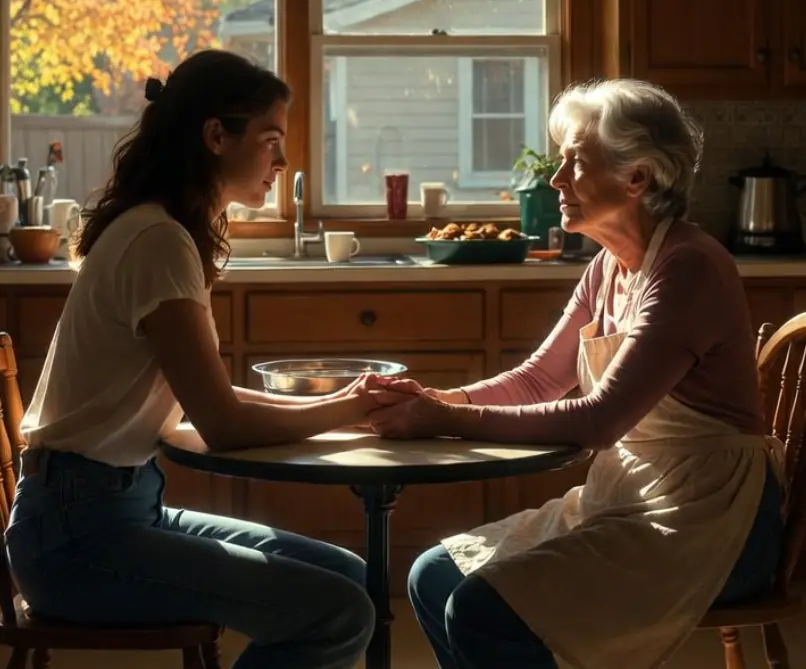
"I'm not trying to audit you, Mark," she whispered, her voice trembling. "I'm just afraid. I'm afraid that if you move two hours away, we’ll become the 'once-a-month' grandparents. I'm afraid that as we get older, we’re becoming less relevant to your world, and the distance just makes that feel... permanent."
The honesty of her statement was like a physical shift in the room. The anger evaporated, replaced by a raw, quiet clarity.
Susan cleared her throat, her usual bravado softened. "I suppose I’m doing the same thing. I push the lake house because it’s the only place where I feel like I can still provide a 'home' for all of you. I’m not trying to control your move; I’m trying to ensure I still have a place to gather my tribe."
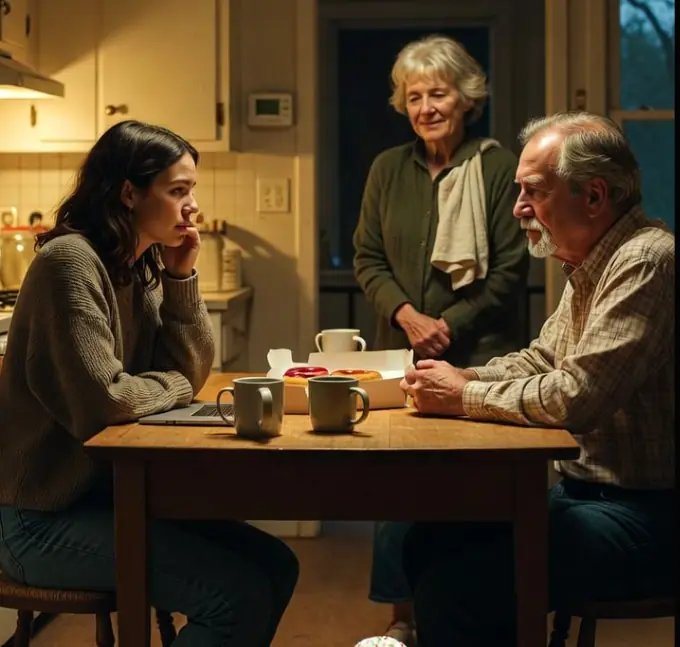
Then it was our turn. Mark sat back down, his shoulders dropping. "We aren't moving to get away from you," he said softly. "We’re moving so we can build the life that you taught us to want. You raised us to be independent, to take chances, and to work hard. We’re just trying to prove that you did a good job."
I looked at my father, the man of "stability." "Dad, I need you to trust me. I’m not abandoning the help you give us. I’m terrified of moving, too. But I need my parents to be the ones telling me I can do it, not the ones telling me why I shouldn't."
For the next two hours, the "argument" transformed into the most honest conversation we had ever had as a family. We didn't talk about real estate or moving boxes. We talked about fear—the fear of aging, the fear of failing, and the fear of being left behind. We realized that every "criticism" and every "pushy suggestion" was actually a clumsy, disguised expression of love.
My parents realized that their "protection" was feeling like a lack of faith. Mark’s parents realized that their "excitement" was feeling like pressure. And we realized that our "independence" was feeling like a rejection.
We didn't end the night by deciding where the moving truck would go. We ended it by acknowledging that the geography didn't matter as much as the connection.
"I think," my father said, standing up and finally offering Mark a firm, respectful handshake, "that I need to buy a better GPS so I can find my way to your new house without calling you every five minutes."
We laughed—a collective, relieved sound that filled the house. The tension hadn't just broken; it had cleared the air.
As we all stood in the driveway later that evening, saying our goodbyes, the feeling was entirely different. There was a new kind of unity—not the kind built on everyone agreeing, but the kind built on everyone being seen. We had survived the "Great Merger" of our differences and come out with a deeper understanding of the hearts behind the words.
I realized then that family arguments aren't always a sign of dysfunction. Sometimes, they are the necessary friction that smooths out the rough edges of our relationships. They are the moments when we stop being "polite" and start being "present."
We are the Millers and the Grants, and we are a complicated, opinionated, deeply loving work in progress. We still have our differences—my mom still thinks we need more "stability," and Gerald still thinks we should live on a boat—but the "audit" is over. Now, we have a "collaboration."

The move happened three weeks later. And while the drive is indeed two hours long, the road feels much shorter than it used to. Because now, when the phone rings, it isn't a critique or a suggestion. It’s just a voice on the other end, checking in on the people they love, knowing that no matter where the boxes are unpacked, the home is wherever we are honest with each other.
Love doesn't require us to stay in the same neighborhood. It just requires us to stay in the same heart. And as I look at the photo of all six of us on the wall of our new living room, I realize that the argument didn't divide us at all. It was the moment we truly became a family.