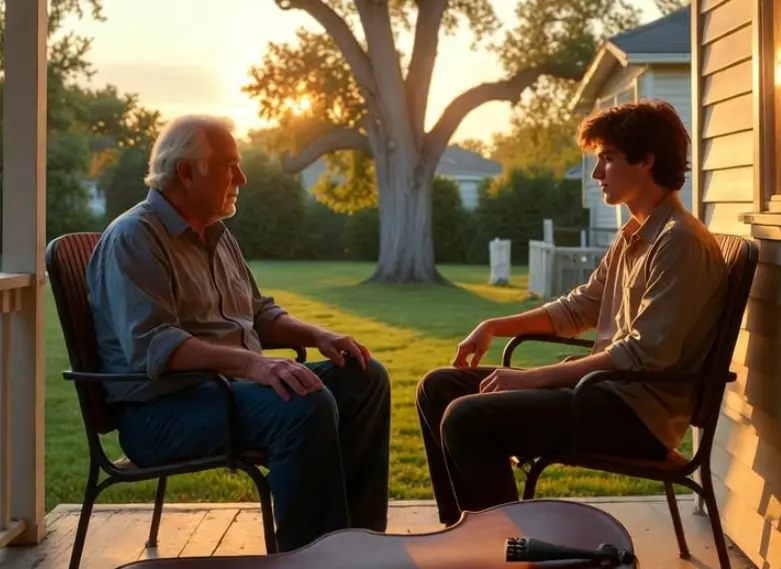
My father-in-law never smiled at me until the night everything changed
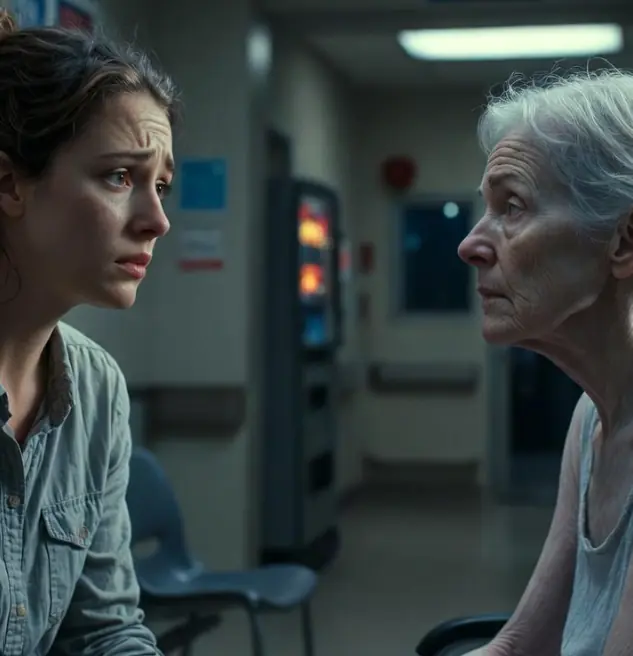
In the quiet, wood-paneled world of the Miller family, silence wasn't just a lack of noise; it was a language. For the five years I had been married to Mark, I had struggled to become fluent in it. My father-in-law, Robert, was a man carved out of New England granite—sturdy, dependable, and seemingly impossible to read. He was a retired fire chief who had spent his life managing crises with a steady hand and a closed mouth, and to me, his silence felt like a permanent appraisal I was failing.
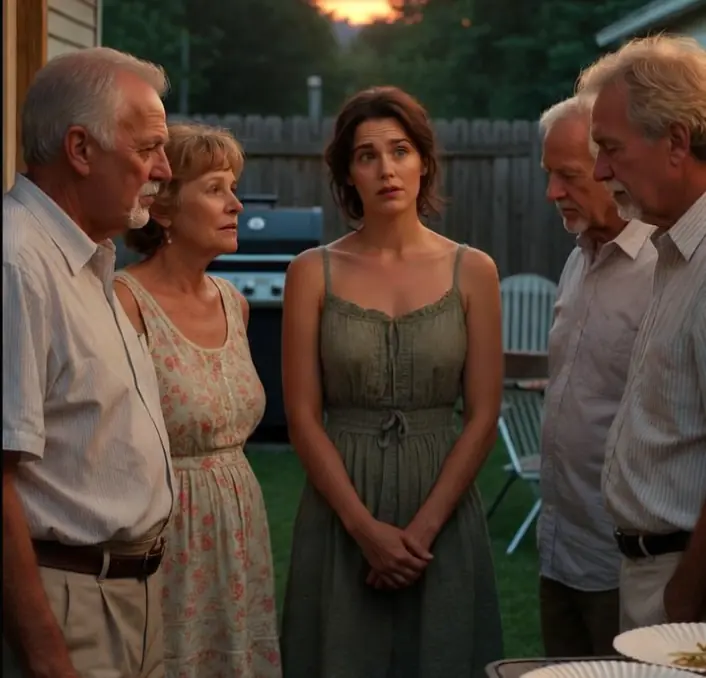
Holiday gatherings at their home in Vermont were an exercise in self-consciousness for me. I am, by nature, a talker. I’m a high school English teacher who believes in discussing feelings and "finding the theme" of every situation. But in Robert’s presence, my anecdotes seemed to wither.
Every Thanksgiving and Christmas followed a predictable, strained pattern. I would offer to help in the kitchen, and Robert would give a short, sharp nod from his recliner. I would try to strike up a conversation about his garden or the news, and he would respond with a "Mhm" or a "Suppose so." He never smiled at my jokes, never complimented the desserts I brought, and never once indicated that I was anything more than a temporary guest in his son’s life.
"He just takes a while to warm up, Jen," Mark would tell me on the drive home, noticing my slumped shoulders.
"Mark, it’s been five years," I’d reply, looking out at the snowy pines. "At this rate, we’ll be celebrating our fiftieth anniversary before he recognizes I’m in the room. I feel like he’s constantly waiting for me to trip up, like I'm not 'solid' enough for this family."
The insecurity was a quiet hum in the back of my mind. I saw how he looked at Mark’s older brother, a stoic engineer, with a silent but clear respect. I assumed that because I was bubbly and prone to over-explaining, Robert saw me as flighty. I felt like a footnote in a book he had already decided wasn't worth reading.
The night everything changed was a Tuesday in late January. Mark was away at a conference in Boston, and I had stopped by the big house to drop off some mail that had been delivered to our place by mistake. The weather was turning—a classic Vermont "quick-freeze" where the rain turns to ice in the blink of an eye.
When I pulled into the driveway, the house was dark except for a single light in the kitchen. Robert opened the door, looking more tired than usual. His wife, my mother-in-law Martha, was upstairs with a lingering flu.
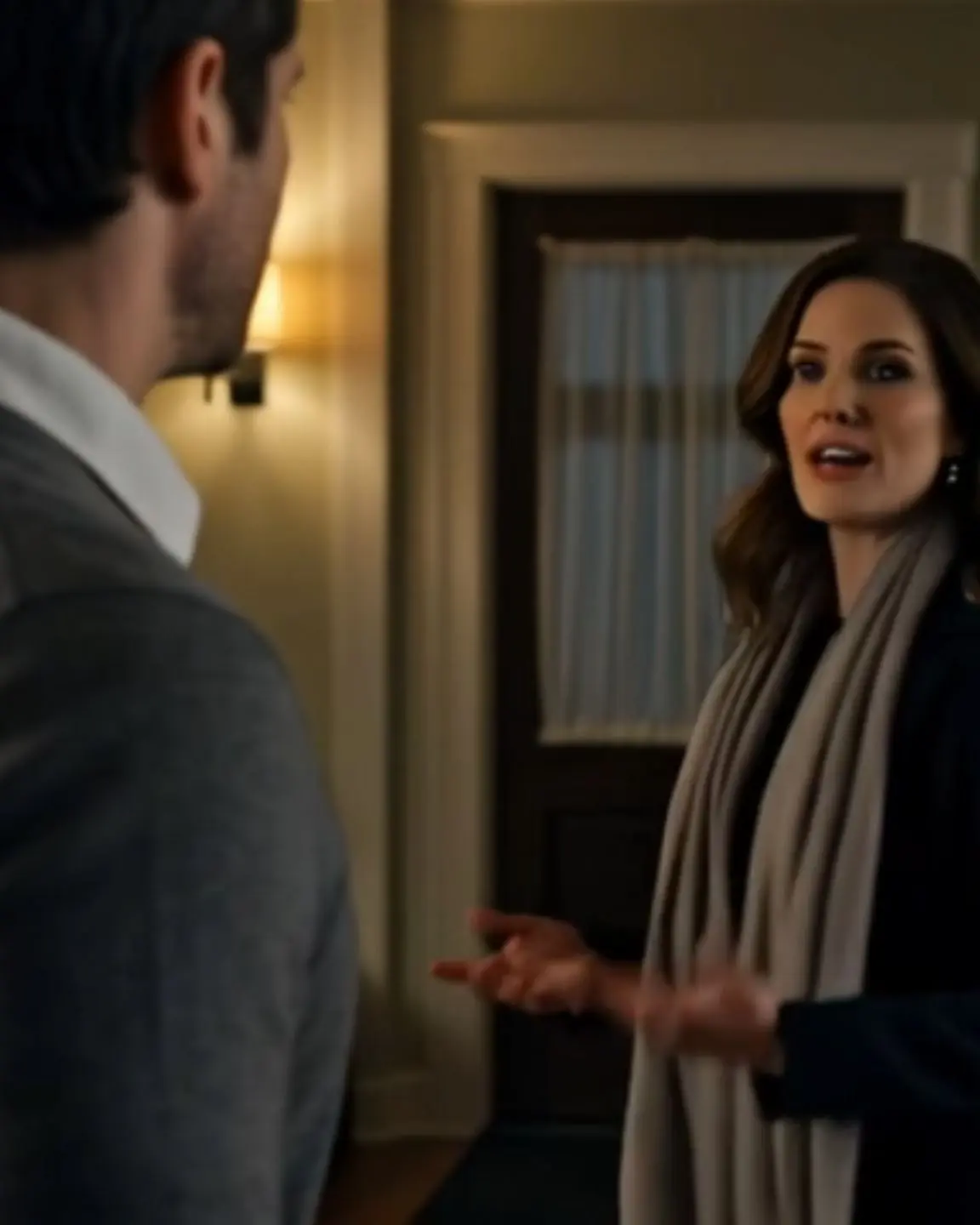
"Just dropping these off, Robert," I said, handing him the stack of envelopes. "Is everything okay? You look a bit worn out."

"Pipes are groaning," he muttered, stepping back to let me in. "Storm’s coming on fast. Just trying to keep the heat up."
As I stepped into the mudroom, a sound echoed from the basement—a sudden, sharp crack followed by the frantic, hissing sound of high-pressure water. Robert froze. For a man of seventy, his instincts were still sharp, but as he turned toward the basement stairs, he winced, clutching his lower back.
"Robert!" I moved to his side. "What happened?"
"Back’s been acting up," he grunted, his face tightening with pain. "Pipe’s burst. Main shut-off is in the crawlspace behind the furnace. I... I can't bend down that far right now."
In that moment, the "English teacher" vanished. I saw the man I had spent five years fearing looking genuinely helpless, and my own instincts kicked in. I didn't ask for permission. I didn't wait for a "suppose so."
"Give me the flashlight," I said, my voice coming out with a clinical firmness that surprised even me. "Stay here. Tell me exactly where it is."
"Jen, it’s a mess down there. You’ll ruin your clothes—"
"Robert, the flashlight. Now."
He handed it over, his eyes widening slightly. I hiked up the sleeves of my favorite wool sweater and descended the stairs. The basement floor was already becoming a shallow pond. The hiss was deafening, a jet of icy water spraying from a copper line near the ceiling.
I waded through the ankle-deep water, the cold stinging my skin. I found the crawlspace—a narrow, dark opening tucked behind the massive oil furnace. It was dusty, cramped, and smelled of old earth. I dropped to my knees, ignored the cobwebs brushing against my face, and squeezed into the gap.
"Right-hand side!" Robert’s voice called from the top of the stairs, sounding uncharacteristically frantic. "Large red wheel! Turn it clockwise!"
I found it. The metal was freezing and slippery with condensation. I gripped the wheel, but it wouldn't budge. I thought about those five years of silences. I thought about every dinner where I felt invisible. I dug my heels into the dirt floor, leaned my shoulder into the turn, and gave a guttural yell of effort.
With a screech of protesting metal, the wheel turned. One rotation. Two. Three.
The hissing stopped. The only sound left was the drip-drip-drip of water falling into the pools on the floor.
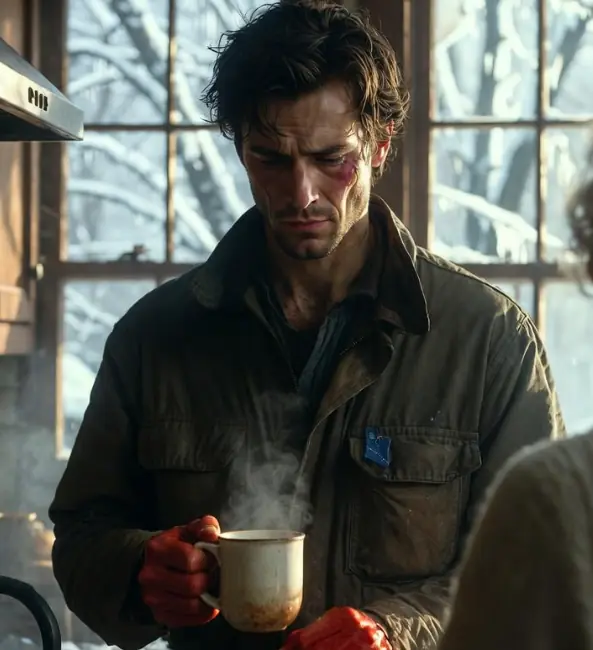
I crawled out, covered in rust, cobwebs, and soaking wet from the knees down. When I reached the top of the stairs, I was shivering, but I felt a strange, electric sense of calm. Robert was standing there, holding a dry towel.
"Shut off," I panted, wiping a streak of grime from my forehead. "I’ll go get the shop-vac. We need to get that water up before the floorboards soak it through."
For the next two hours, we worked in a different kind of silence. It wasn't the strained silence of the holidays; it was the rhythmic silence of two people doing a job. Robert sat on a stool, unable to move much, directing me with short, precise instructions as I vacuumed the water and moved boxes to higher ground.
I didn't chatter. I didn't try to fill the air with "themes." I just worked.
When the basement was finally dry and the temporary clamps were in place on the pipe, Robert led me back up to the kitchen. He moved slowly, his hand still on his back, but he pointed to the stove.
"Sit," he said.
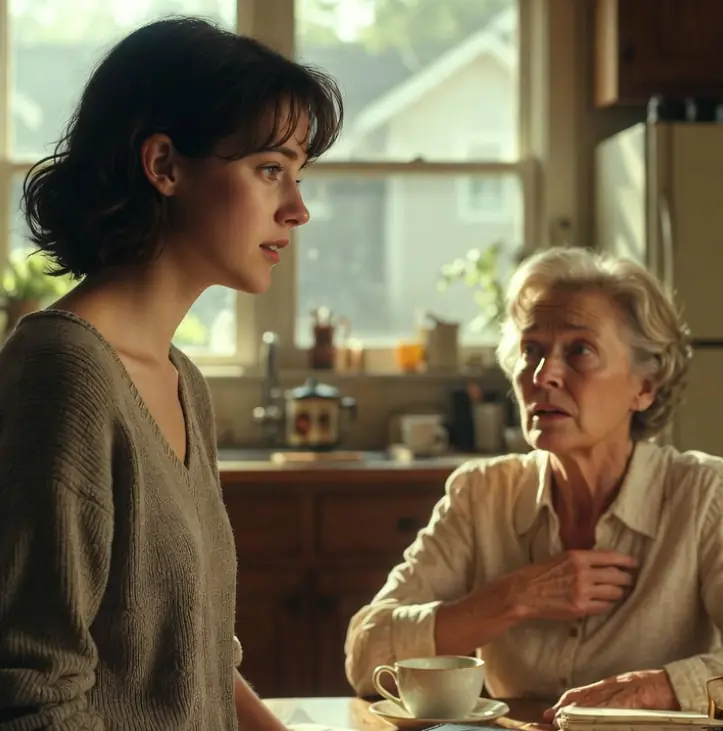
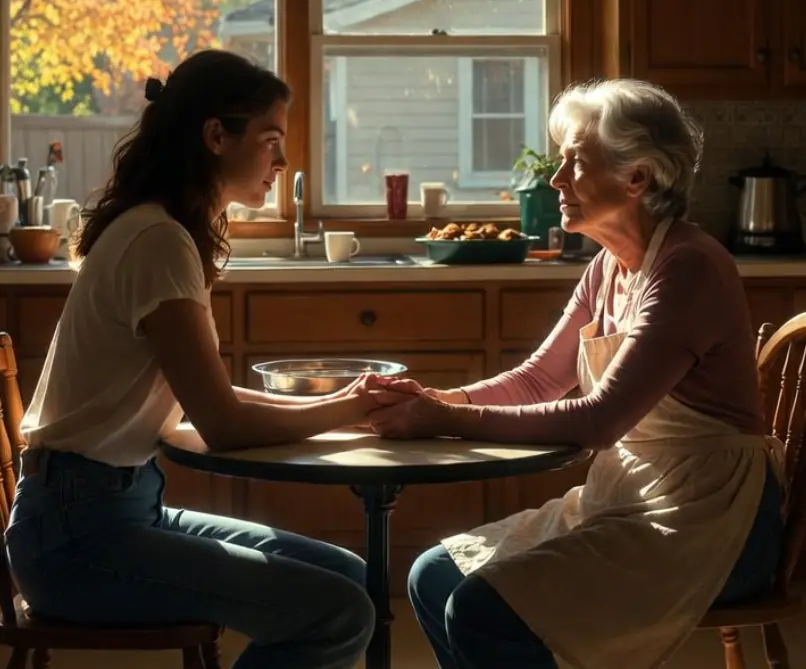
He moved with a quiet purpose, heating up a pot of cider and finding a pair of Martha’s oversized wool socks for me to wear. He sat across from me at the heavy oak table, the same table where I had felt so judged for so many years.
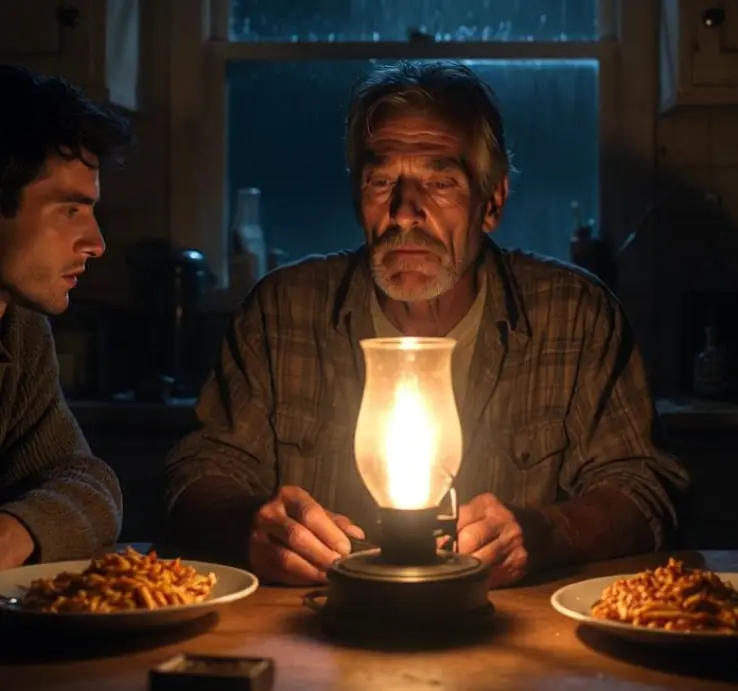
He didn't say anything for a long time. He just watched the steam rise from his mug. Then, he looked up at me. His eyes, usually as hard as flint, were soft.
"Mark told me once you were a marathon runner," he said quietly. "I didn't see it until tonight."
"I haven't run in a few years," I replied, tucking my cold feet under me. "But I guess the stamina stays with you."
Robert looked down at his hands, then back at me. And then, it happened. A slow, genuine crinkle formed at the corners of his eyes. His mouth tilted upward in a weary but unmistakable smile—the first one he had ever given me.
"You’re solid, Jen," he said. The word hit me like a physical warmth. "I spent a long time watching you, wondering if you were all talk. People in my line of work... we get wary of talkers. We look for the doers."
He leaned back, his gaze steady. "Tonight, you didn't talk. You just did. You’re the kind of person who stays when things get loud. I was wrong to wait this long to tell you that I'm glad you're a Miller."
The insecurity that had lived in my chest for five years didn't just fade; it evaporated. I realized that his silence hadn't been a judgment of my character, but a protective barrier he used to see who would stand firm when the "hissing" started. He hadn't been waiting for me to trip; he had been waiting for a reason to trust me.
"Thanks, Robert," I said, my voice thick with emotion. "I’m glad to be here."
"Next Thanksgiving," he said, the smile still lingering, "don't ask me if I want help with the turkey. Just take the knife and start carving. I think I’ve seen enough to know you won't miss."
We sat in the kitchen for another hour, talking—really talking. He told me about the fires he had fought in the seventies, and I told him about the students who challenged me. We found a middle ground in the shared understanding that life is mostly about showing up when the basement floods.
When I finally drove home through the freezing rain, the Vermont woods didn't look dark and forbidding. They looked like home. I realized that family isn't something you’re given the moment you sign a marriage license; it’s something you earn in the trenches, in the quiet moments of crisis, and in the realization that silence doesn't always mean distance.
Robert didn't need me to be a different person. He just needed to know that when the pipes burst, I wouldn't run.
We are the Millers, and we are a work in progress. But now, when I walk into that house on Sycamore Lane, I don't look for a script. I just look for my father-in-law. And when our eyes meet, he doesn't have to say a word. The smile is already there.
Love doesn't always need a grand declaration. Sometimes, it just needs a red shut-off valve, a pair of wet wool socks, and the courage to stop talking and start doing.