But there is something many people overlook: not all leftovers are equally safe.
Some foods can become dangerous when they are left at room temperature for too long, stored incorrectly, or reheated without following basic food-safety practices. Harmful bacteria can multiply in food without changing its smell, taste, or appearance. In certain cases, bacteria can also produce toxins that ordinary reheating may not destroy.
This means that food can look perfectly normal and still make you sick.
Food poisoning can cause nausea, vomiting, diarrhea, stomach cramps, fever, and dehydration. While many cases resolve without serious complications, some infections can lead to severe illness, particularly in young children, older adults, pregnant women, and people with weakened immune systems.
The good news is that you do not necessarily have to throw away every meal that has been stored overnight. Proper refrigeration and handling can keep many leftovers safe.
The important thing is knowing which foods require extra care, how quickly they need to be refrigerated, and when it is safer to discard them.
Here are five common leftover foods that deserve particular attention.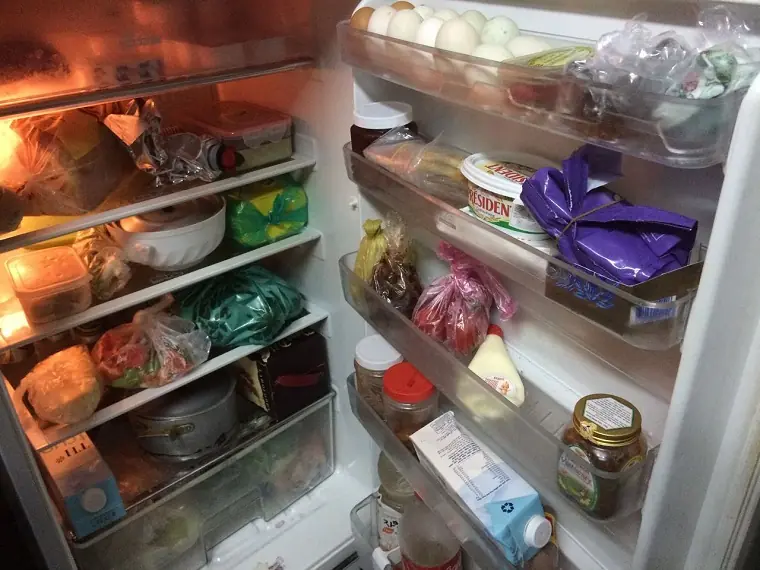
1. Cooked Rice: A Common Leftover That Can Become Dangerous
Rice is one of the most frequently saved foods in households around the world.
It is inexpensive, versatile, easy to prepare in large quantities, and convenient to use in fried rice, soups, and other meals the following day.
However, cooked rice has a food-safety risk that many people do not know about.
It can contain spores of a bacterium called Bacillus cereus. These spores may survive the cooking process because they are more resistant to heat than ordinary bacterial cells.
When cooked rice is left at room temperature, the spores can germinate and multiply. Under favorable conditions, the bacteria may produce toxins that cause food poisoning.
There are two main types of illness associated with Bacillus cereus.
One type causes vomiting, often within approximately 30 minutes to six hours after eating contaminated food. The other typically causes diarrhea and abdominal cramps, with symptoms developing over a longer period.
The problem is that reheating rice does not necessarily make it safe again. Some toxins produced by Bacillus cereus are heat-stable, meaning that ordinary cooking or reheating may not destroy them.
This is why simply placing rice in a microwave after leaving it on the kitchen counter overnight is not a reliable way to make it safe.
How to store cooked rice safely
You do not need to throw away rice simply because it is being saved for the next day.
Instead, follow these precautions:
-
Refrigerate cooked rice as soon as possible, ideally within one hour.
-
Divide large quantities into smaller, shallow containers so they cool quickly.
-
Keep the refrigerator at 40°F (4°C) or below.
-
Store rice in a covered container.
-
Use refrigerated rice within one day as a cautious household practice, or follow applicable local food-safety guidance.
-
Reheat only the portion you intend to eat.
-
Make sure reheated rice is steaming hot throughout.
Do not leave cooked rice sitting in a rice cooker or on the counter at room temperature for extended periods unless it is being maintained at a safe hot-holding temperature.
Important: If cooked rice has been left at room temperature overnight, discard it. Do not rely on its smell, appearance, or taste to determine whether it is safe.
2. Cooked Chicken and Other Poultry: Bacteria Can Survive Improper Handling
Chicken is a popular source of protein, but it is also one of the foods that requires careful handling.
Raw poultry can carry harmful bacteria, including Salmonella and Campylobacter. Proper cooking kills these bacteria, but cooked chicken can become contaminated again if it comes into contact with raw meat, dirty utensils, unwashed hands, or contaminated surfaces.
There is also another important risk: bacteria can multiply rapidly when cooked chicken is kept at unsafe temperatures.
Imagine preparing a large roast chicken for dinner. After everyone has eaten, the remaining pieces are left on the dining table while the family watches television. Several hours later, someone places the chicken in the refrigerator.
Even though the chicken was thoroughly cooked, the time spent at room temperature may have allowed bacteria to multiply.
Refrigeration slows bacterial growth, but it cannot reverse what happened before the food was stored.
Why chicken leftovers deserve attention
Chicken is rich in protein and moisture, creating conditions that can support bacterial growth when temperature control is inadequate.
Foodborne bacteria do not necessarily produce visible changes. Chicken may still look fresh and smell normal even when it contains harmful microorganisms.
This is why tasting a small piece to check whether it is safe is never a good idea.