Contrary to a common gardening myth, small quantities of citrus peels do not automatically make compost unusable. They can be composted as part of a balanced system.
However, adding excessive amounts of citrus waste at once may create an imbalance, particularly in a small compost container.
Avoid placing large amounts of fresh lemon peel directly around delicate plants. Concentrated citrus oils and acidity may affect some organisms or plant tissues, and the results are not a reliable pest-control method.
If you have a home compost bin, adding small quantities of chopped lemon peel alongside other organic materials is generally a more practical approach.
8. Make a Simple Citrus Scrub for Certain Household Tasks
Another useful way to reuse lemon peels is to prepare a simple citrus scrub for appropriate household cleaning tasks.
Lemon peels can provide fragrance, while a small amount of salt or baking soda can offer gentle physical abrasion.
This combination may help remove light residue from certain durable surfaces.
How to prepare it:
-
Collect several fresh lemon peels.
-
Chop them into small pieces.
-
Place them in a bowl.
-
Add a little baking soda or salt.
-
Mix until the ingredients form a slightly damp scrub.
-
Use a small amount on a suitable, non-delicate surface.
-
Rinse thoroughly after cleaning.
This mixture may be useful for certain washable kitchen items, such as durable stainless-steel sinks, depending on the manufacturer's care instructions.
However, test it on an inconspicuous area first.
Do not use abrasive mixtures on nonstick cookware, polished surfaces, delicate finishes, natural stone, or materials that scratch easily.
Also, never mix this preparation with bleach or commercial cleaning products unless the product labels explicitly confirm that the combination is safe.
A homemade scrub is best reserved for simple cleaning tasks rather than deep sanitation.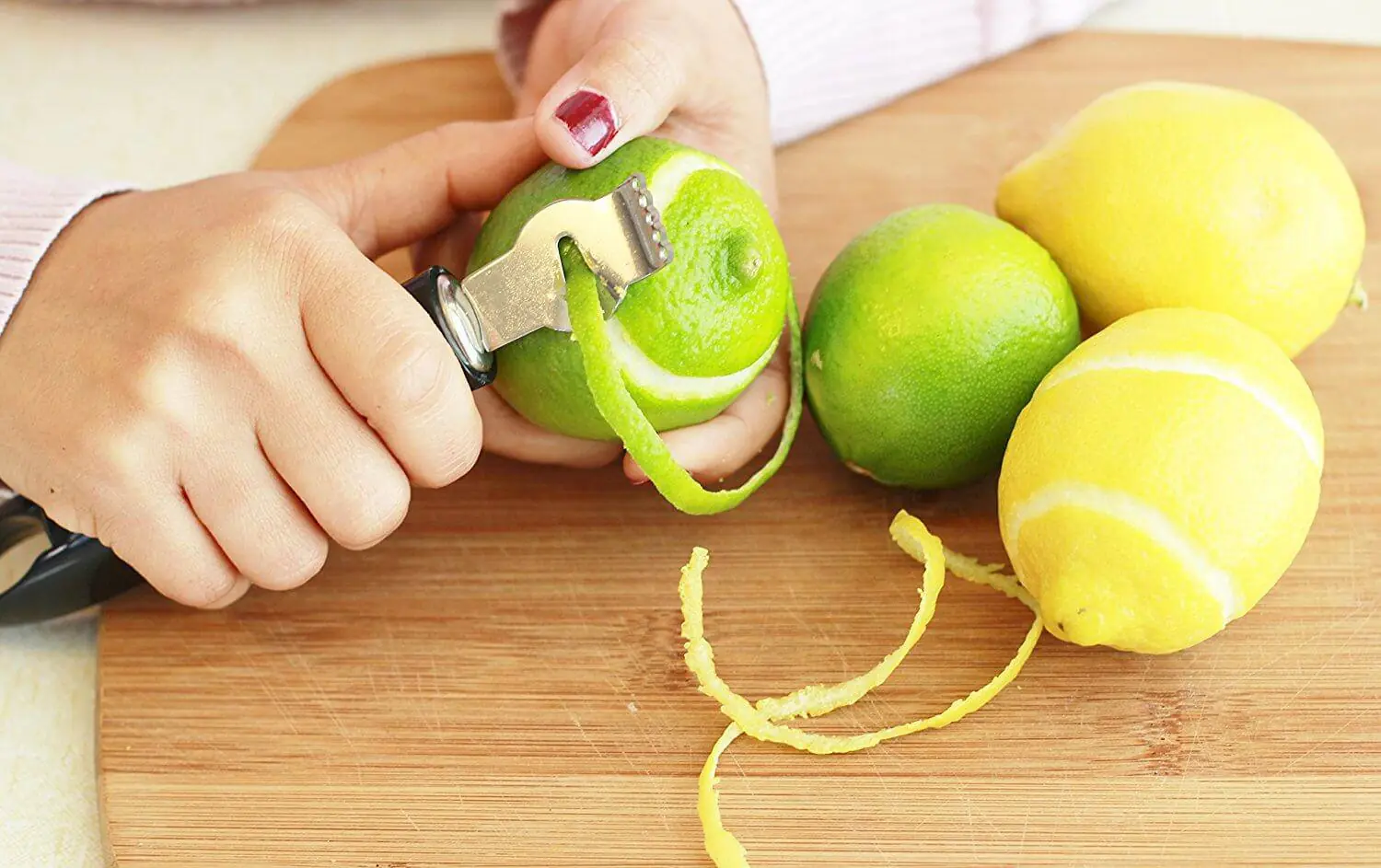
Bonus: How to Store Lemon Peels So You Can Use Them Later
One reason people throw away lemon peels is that they do not know how to store them.
Fortunately, there are several easy ways to preserve them for future use.
Freeze Fresh Lemon Peels
If you regularly use lemons, freezing the peels is one of the simplest options.
Wash the lemons thoroughly, dry them, and remove the zest or cut the peel into small pieces.
Place the pieces in a freezer-safe container or sealed bag and store them in the freezer.
You can take out a small amount whenever a recipe calls for lemon zest.
This method is especially convenient because it prevents the peels from spoiling quickly.
Dry Lemon Peels
Drying is another useful option.
Cut the peels into thin strips and spread them in a single layer on a clean tray.
Allow them to dry in a well-ventilated area away from excessive moisture, or use a food dehydrator according to its instructions.
The peels should be thoroughly dry before being placed in an airtight container.
You can later use them in simmer pots, homemade fragrance mixtures, or certain recipes.
Make Lemon Zest Sugar
If you frequently bake, lemon zest sugar is worth preparing.
Combine finely grated lemon zest with sugar and mix until the fragrance is evenly distributed.
Store it in a clean, airtight container and use it in cakes, cookies, tea, or desserts.
For food safety, use clean, dry utensils and follow appropriate storage practices.
Important Things to Know Before Reusing Lemon Peels
Although lemon peels have many useful applications, they should not be treated as a magical household ingredient.
There are a few important precautions to remember.
Wash the lemons thoroughly. The outer skin may carry dirt, microorganisms, or pesticide residues. Rinse the fruit under running water and scrub gently with a clean produce brush when appropriate. Do not use household soap or detergent to wash produce.
Be careful with acidity. Lemon juice and lemon-infused vinegar can damage marble, limestone, and other acid-sensitive materials.
Do not use lemon peels as a substitute for disinfectants. A pleasant citrus smell does not mean a surface has been disinfected.
Avoid using old or moldy peels. If the peels show signs of spoilage, discard them rather than using them in food or household preparations.
Be mindful of pets. Concentrated citrus oils can irritate animals and may be harmful if ingested in sufficient quantities. Keep homemade citrus preparations and concentrated oils away from pets.
Do not assume lemon peels repel every insect. Although citrus oils have been studied for various biological effects, placing lemon peels around the house is not a dependable way to control pests.
Why Reusing Lemon Peels Makes Sense
The value of lemon peels goes beyond their pleasant fragrance.
Every day, households discard large quantities of food scraps that could potentially be reused, composted, or repurposed.
Lemon peels are a good example of how something that appears to be waste can still have practical value.
They can add flavor to meals, create a refreshing household fragrance, contribute to homemade cleaning mixtures, and provide organic material for composting.
You do not need expensive equipment or complicated recipes to take advantage of these possibilities.
The next time you squeeze a lemon, consider saving the peel instead of immediately throwing it away.
A small bowl of leftover lemon skins can become lemon zest for tomorrow's dessert, a fragrant simmer pot for your living room, or useful material for your compost bin.
The most important thing is choosing the right use for each peel and handling it safely.
Sometimes, the most useful household ingredients are already sitting in your kitchen. And something as ordinary as a lemon peel may have far more potential than you ever imagined.