Chapter 1: Your Thermal Flask May Be Doing More Than You Think
A thermal flask is one of those everyday items people rarely question. You fill it with coffee before leaving home, bring tea to work, carry water during a long trip, or keep a favorite drink nearby throughout the day. It seems simple, practical, and almost impossible to misuse.
But there is one detail many people overlook: a thermal flask is not necessarily designed to safely store every type of beverage under every condition.
The same container that keeps your coffee warm for hours may behave differently when filled with carbonated drinks, dairy-based beverages, highly acidic liquids, or drinks containing ingredients that can leave difficult-to-clean residues. Depending on the design, materials, lid, seals, and manufacturer's instructions, certain beverages may create problems that are not immediately obvious.
Most people discover these problems only after something goes wrong.
Perhaps the lid suddenly becomes difficult to open. Perhaps a drink develops an unpleasant smell even after the flask has been washed. Maybe a once-clean stainless steel interior begins showing discoloration, or a beverage that tasted perfectly normal when poured suddenly tastes metallic or strange after several hours.
These experiences can make people wonder whether their thermal flask is defective.
In reality, the problem may be related to the beverage itself, the storage conditions, the time the drink has been left inside, or the way the flask is cleaned.
Thermal flasks are designed to reduce heat transfer. Many use double-wall construction with a vacuum between the walls to help maintain the temperature of the contents. This makes them extremely useful for keeping drinks hot or cold, but temperature retention does not automatically mean that every beverage will remain safe indefinitely.
A flask can keep a drink warm without preventing bacteria from growing if the drink is stored at an unsafe temperature for too long. Similarly, a flask that is tightly sealed may create pressure when certain beverages release gas.
That distinction is important.
People often assume that because their drink is still warm, it must also be safe. Others believe that because the flask is made of stainless steel, it can safely hold anything they pour into it.
Neither assumption is completely reliable.
The material used for the interior, the quality of the seals, whether the flask is intended for carbonated beverages, and the manufacturer's instructions all matter. Some products are specifically designed for certain beverages, while others clearly warn against carbonated liquids, acidic drinks, or prolonged storage of particular ingredients.
This is why reading the product instructions is not merely a formality. It can prevent damage to the container and reduce the risk of unpleasant surprises.
There are four types of beverages that deserve particular attention before you pour them into your thermal flask.
The first may seem harmless because people enjoy drinking it every day. Yet once it is trapped inside a sealed container, the pressure it can create may become a serious inconvenience.
And the remaining three can create problems that are less dramatic—but potentially much more difficult to notice.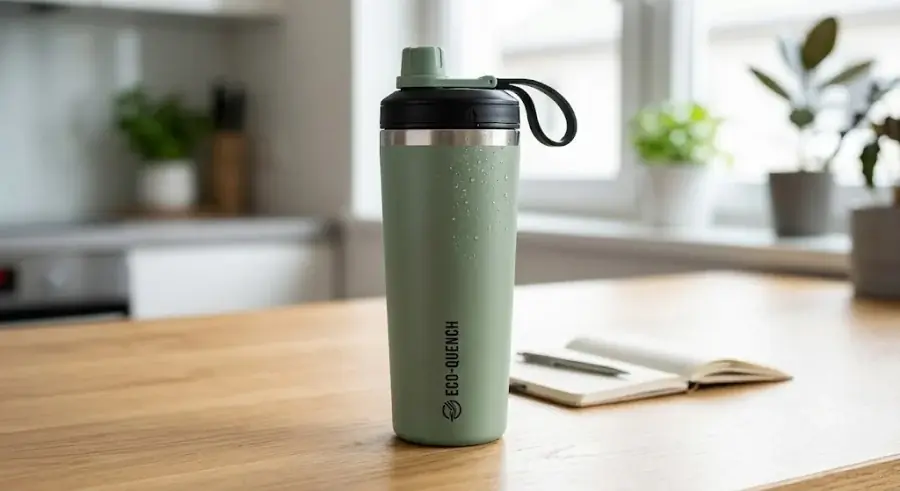
Chapter 2: Beverage No. 1 — Carbonated Drinks
Carbonated beverages are among the drinks people should be especially cautious about putting into ordinary thermal flasks.
Soda, sparkling water, carbonated energy drinks, and other fizzy beverages contain dissolved carbon dioxide. When the container is opened, some of that gas escapes, creating the familiar bubbles and fizz.
When carbonated drinks are placed inside a tightly sealed container, however, the situation can become more complicated.
The gas may continue to escape from the liquid, particularly when the drink is shaken, warmed, or exposed to changing conditions. In a sealed container, this gas can increase internal pressure.
A thermal flask is often designed to maintain a tight seal. That feature is excellent for preventing leaks when carrying coffee or water. But when pressure builds inside a container that is not designed to hold carbonated beverages, opening the lid can become difficult or potentially hazardous.
Imagine carrying a flask filled with soda in your bag.
You arrive at work, reach for the container, and try to open it. Instead of turning smoothly, the lid feels unusually tight. You apply more force, and suddenly the pressure releases. The liquid may spray, spill, or escape unexpectedly.
In some circumstances, pressure can cause the lid to release suddenly.
This is one reason many thermal flask manufacturers specifically warn against storing carbonated drinks in their products unless the container is designed for that purpose.
The problem is not simply that the drink may lose its carbonation.