Always Sleep on Your Right Side? You May Want to Know What It Could Be Doing to Your Body
You may have slept on your right side for years without ever questioning the habit. It feels familiar, comfortable, and perhaps so natural that you barely notice which direction you turn when you climb into bed. Yet sleep position can influence more than comfort. It can affect how easily some people breathe, how reflux behaves during the night, where pressure builds in the body, and even how strongly certain heartbeats are felt when lying still.
That does not mean sleeping on your right side is dangerous. Nor does it mean everyone should immediately switch to the left. The real answer is more individual—and more interesting—than the dramatic claims often shared online.
For some people, side sleeping can help reduce airway obstruction. For others, the left and right sides may feel noticeably different because of heartburn, pregnancy, shoulder pain, or an existing medical condition. And for people who experience loud snoring, repeated nighttime gasping, or unusual heart palpitations, changing position may offer only part of the answer.
So what actually happens when you sleep on your right side night after night? Could it affect your breathing or digestion? Is the left side genuinely better for the heart? And when should a change in sleep position be treated as a health decision rather than simply a matter of preference?
To understand the answer, it helps to look at what happens inside the body after the lights go out.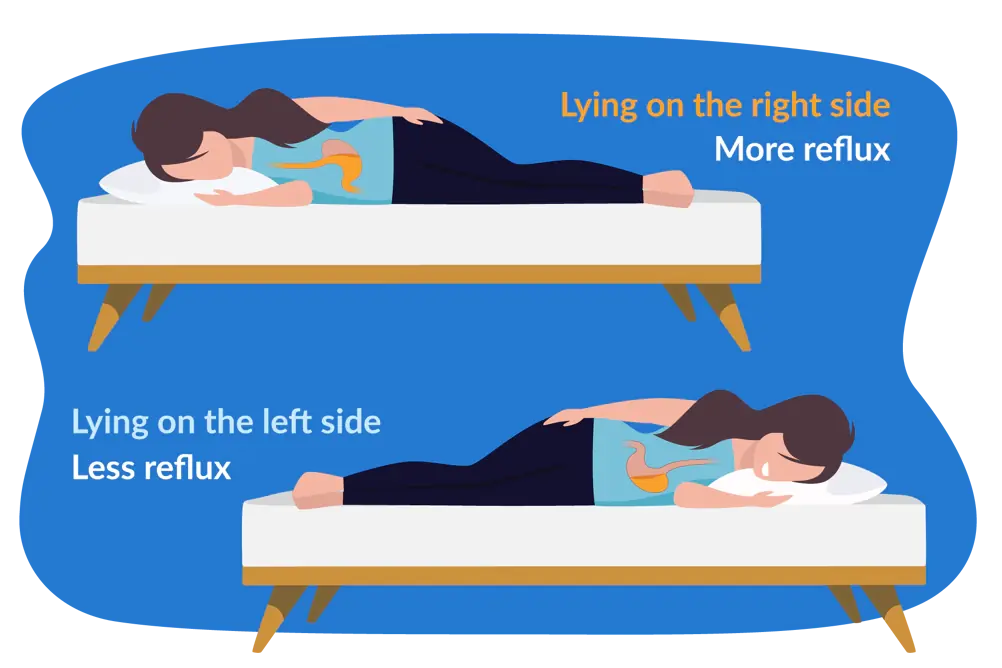
What the right-side position does to your body
When you lie on your right side, your body settles into a position in which the right shoulder and hip support much of your weight. Your head rests on a pillow, your neck turns slightly, and your arms and legs usually bend to some degree. Inside your body, the heart, lungs, stomach, intestines, and major blood vessels remain in their normal anatomical positions, but gravity changes how some of these structures relate to one another.
This is why sleeping position can matter. Gravity does not stop working when you fall asleep. It continues to influence the movement of stomach contents, the position of soft tissues in the throat, and the pressure placed on joints and muscles.
However, the effects are not identical for everyone. A healthy adult with no significant reflux, breathing disorder, or chronic pain may sleep comfortably on the right side for years without experiencing a problem. Someone with frequent nighttime heartburn may notice a very different result. A person with positional sleep apnea may breathe more comfortably on either side than on the back, while someone with a painful right shoulder may find the same position difficult.
The important question is therefore not whether the right side is universally good or bad. It is whether that position is affecting a particular person's symptoms.
Your breathing may change during the night
One of the most important ways sleep position can influence health is through breathing.
During sleep, the muscles throughout the body relax. This includes muscles that help keep the upper airway open. In some people, the tongue and other soft tissues can move backward when they lie flat on their backs. The airway becomes narrower, and airflow may become restricted.
When this happens repeatedly, a person may develop obstructive sleep apnea, a condition in which breathing stops or becomes shallow many times during the night.
Sleeping on either side can help some people because gravity is less likely to pull the tongue and soft tissues backward in the same way that it can when a person lies face-up. For people whose sleep apnea is strongly affected by position, avoiding back sleeping may reduce the number of breathing interruptions.
That does not mean the right side has a unique ability to prevent sleep apnea. The evidence generally concerns side sleeping compared with sleeping on the back. Both the left and right sides may help, depending on the individual.
The American Academy of Sleep Medicine has described positional therapy as a possible treatment option for selected patients whose breathing problems are substantially worse when they sleep on their backs. It is not suitable as a replacement for established treatment in every patient, and its effectiveness should be assessed rather than assumed.
This distinction is important because a person may feel that sleeping on their side has improved snoring while still experiencing episodes of obstructed breathing. Snoring is not a reliable way to determine whether sleep apnea has disappeared.
A proper diagnosis may require a sleep study, and treatment may involve continuous positive airway pressure, an oral appliance, positional therapy, or a combination of approaches. The right plan depends on the severity of the condition and the person's medical circumstances.
Why sleeping on your back can be different
When someone sleeps on their back, the tongue and soft tissues of the throat may shift toward the back of the airway. In people who are prone to obstruction, this can make breathing more difficult.
The effect is not universal. Some people sleep on their backs without snoring or experiencing any breathing problems. Others have significant positional sleep apnea, meaning their breathing interruptions become more frequent or severe in that position.
This explains why a simple change from back sleeping to side sleeping may help certain individuals. It also explains why one person's experience cannot be used as a universal rule.
For example, a person who snores loudly only when lying on their back may notice an improvement after turning onto their side. Another person may continue to snore regardless of position because their airway obstruction is caused by factors that are not corrected simply by turning over.
If a partner notices repeated pauses in breathing, choking sounds, gasping, or sudden awakenings, it is worth discussing these symptoms with a healthcare professional. Excessive daytime sleepiness, morning headaches, and difficulty concentrating can also occur in people with sleep apnea.
The goal should not be to guess which side is best. It should be to identify whether a breathing disorder is present and whether position is one of the factors contributing to it.
The surprising connection between right-side sleeping and acid reflux
One of the clearest differences between sleeping on the right and sleeping on the left involves the digestive system.
Acid reflux occurs when stomach contents move backward into the esophagus, the tube that carries food from the mouth to the stomach. This can create a burning sensation in the chest, a sour taste in the mouth, throat irritation, coughing, or discomfort after lying down.
Some people experience reflux occasionally, while others have recurring symptoms associated with gastroesophageal reflux disease, commonly known as GERD.
The relationship between sleep position and reflux has been studied because gravity and the anatomical position of the stomach can influence how easily stomach contents move toward the esophagus.
For people with nighttime reflux, sleeping on the left side is often more favorable than sleeping on the right. Research has found that left-side lying can reduce the time stomach acid remains in contact with the esophagus and may help acid clear more quickly.
A study published in the American Journal of Gastroenterology in 2022 monitored sleep position alongside esophageal pH and impedance in people referred for reflux testing. The researchers found shorter acid exposure and faster acid clearance in the left-side position than in the right-side or back-sleeping positions.
The finding helps explain why some people notice that heartburn becomes worse when they lie on their right side after dinner.
It does not mean that everyone who sleeps on the right will develop reflux. People without reflux disease may notice no difference at all. But for someone who regularly wakes with a burning sensation in the chest or throat, the side they choose may be worth discussing with a clinician.