Can the position make breathing feel easier?
Yes, for some people. But the effect depends on what is causing the breathing difficulty.
A person whose snoring and airway obstruction are worse when sleeping on the back may feel better when lying on either side. Another person may find that a certain side increases pressure on a painful area of the chest or makes coughing more uncomfortable.
The right-side position is therefore not inherently better for lung function. The more useful question is whether the position allows the person to breathe comfortably and sleep without repeated awakenings.
If someone regularly wakes up gasping, choking, or struggling to breathe, they should seek medical advice. A position change may help some symptoms, but it should not delay investigation of a possible sleep or respiratory disorder.
Why side sleeping can help people with obstructive sleep apnea
Obstructive sleep apnea is a condition in which the upper airway repeatedly becomes blocked or narrowed during sleep. These episodes can reduce or temporarily stop airflow, causing oxygen levels to fall and the brain to briefly wake the person so breathing can resume.
Many people do not remember these brief awakenings. Instead, they may notice that they feel tired despite spending enough time in bed.
Common warning signs include:
-
Loud, frequent snoring.
-
Repeated pauses in breathing noticed by another person.
-
Gasping, choking, or snorting during sleep.
-
Waking with a dry mouth or headache.
-
Frequent nighttime awakenings.
-
Excessive daytime sleepiness.
-
Difficulty concentrating or maintaining attention.
Not everyone with sleep apnea has all these symptoms, and snoring alone does not establish a diagnosis.
Why position matters
For some people, the airway becomes more vulnerable to obstruction when they sleep on their backs. In this position, gravity can encourage soft tissues to move toward the back of the throat.
Turning onto the side may reduce that effect.
The medical term for treatment that encourages a person to avoid sleeping on their back is positional therapy. It may involve simple behavioral changes, specialized devices, or other approaches designed to reduce time spent in the supine position.
Clinical guidance recognizes positional therapy as an option for selected people whose sleep apnea is clearly worse when lying on their backs. However, not all patients respond in the same way. Some continue to have significant breathing interruptions even when sleeping on their sides.
This is why a sleep study may be needed to determine whether position actually changes the severity of the condition.
Does the right side work better than the left?
There is no strong general rule that the right side is superior to the left for treating sleep apnea.
The main benefit studied is avoiding the back-sleeping position. Both sides may help keep the airway from narrowing in some individuals.
If a person has sleep apnea, they should not stop using a prescribed CPAP device simply because they have started sleeping on their side. CPAP remains a primary treatment for many adults with obstructive sleep apnea. Any change to treatment should be discussed with the clinician managing the condition.
A person may also need an oral appliance, weight-management support, or other treatment depending on the cause and severity of the disorder.
The important message is that sleeping on the side can be useful, but it is not a guaranteed cure.
What about pregnancy? Is the right side safe?
Pregnancy is one situation in which sleep position receives specific medical attention.
As pregnancy progresses, the uterus becomes larger and heavier. In the later stages, lying flat on the back can place pressure on major blood vessels, including the inferior vena cava, which returns blood from the lower body toward the heart.
This pressure may affect circulation and can make some pregnant people feel dizzy or uncomfortable. It may also influence blood flow to the uterus and baby.
For this reason, health guidance commonly recommends going to sleep on either side during late pregnancy rather than deliberately settling on the back.
Importantly, the advice is not that pregnant people must sleep exclusively on their left side.
The UK's National Health Service says that after 28 weeks, the safest position to go to sleep is on the side, either left or right. It also reassures pregnant people that if they wake up on their backs, they can simply turn onto their side and go back to sleep.
The American College of Obstetricians and Gynecologists also explains that side sleeping during the second and third trimesters may be preferable as the uterus grows. Pillows between the knees or under the abdomen may help support the body.
Why the advice is often misunderstood
Many people have heard that the left side is the only correct sleeping position during pregnancy. This can create unnecessary anxiety, especially when someone wakes up and realizes they have rolled onto the right side.
The guidance is more reassuring: either side is generally acceptable for going to sleep in late pregnancy. The important recommendation is to avoid deliberately settling onto the back after the relevant stage of pregnancy.
The right side should not be treated as automatically unsafe.
Pregnant people should follow advice from their maternity team, particularly if they have a high-risk pregnancy, medical complications, or specific instructions based on their circumstances.
Practical ways to get comfortable
A growing abdomen can make it difficult to find a comfortable position. Several simple adjustments may help:
-
Place a pillow between the knees to reduce pressure on the hips.
-
Use a small pillow under the abdomen for additional support.
-
Try a full-length body pillow if ordinary pillows move during the night.
-
Keep the knees slightly bent rather than twisting the lower back.
-
Change sides when needed if one shoulder or hip becomes uncomfortable.
The goal is not to remain perfectly still all night. People naturally change position during sleep. The aim is to begin sleep in a recommended position and make the bed comfortable enough to support rest.
If pregnancy-related pain, breathlessness, or sleep disruption becomes persistent, the maternity care team can offer individualized advice.
Can sleeping on your right side cause shoulder or hip pain?
The answer is yes, it can contribute to discomfort in some people, particularly when they remain on the same side for long periods or already have a painful shoulder or hip.
When you lie on your side, the shoulder and hip closest to the mattress carry much of the pressure. If the mattress is too firm, or the pillow does not support the head properly, pressure can build in these areas.
Some people wake with a sore shoulder, stiff neck, or aching hip. Others experience numbness or tingling because of the way an arm is positioned.
This does not necessarily mean the sleeping position has caused a serious injury. It may indicate that the body is not receiving adequate support.
The shoulder problem
The shoulder is a complex joint surrounded by muscles, tendons, ligaments, and other structures. If a person has rotator cuff problems, bursitis, arthritis, or a previous injury, lying directly on the painful shoulder may worsen discomfort.
A person who always sleeps on the right side may repeatedly place pressure on the right shoulder.
If the shoulder becomes painful, trying the opposite side or sleeping on the back may help. Some people find it useful to hug a pillow so the upper arm is supported rather than falling forward across the chest.
Persistent shoulder pain should be assessed, especially if it affects movement during the day or follows an injury.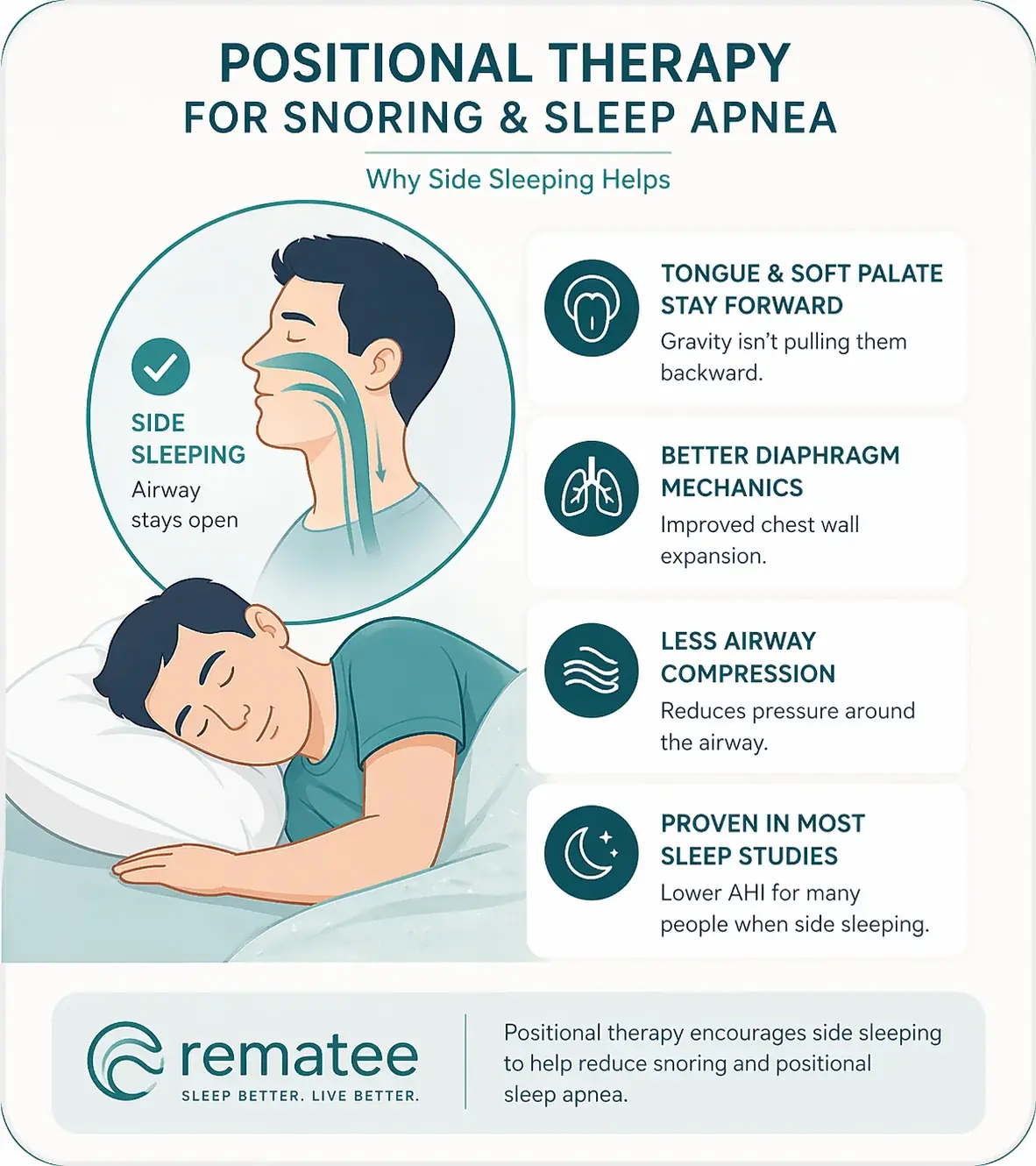
The hip problem
The hip closest to the mattress can also experience pressure. People with hip bursitis, arthritis, or other musculoskeletal conditions may notice pain when they lie directly on the affected side.