Have you ever looked in the mirror and noticed that your tongue has developed a yellow coating?
For many people, the first reaction is concern. A healthy tongue is often pink, so a noticeable yellow, cream-colored, or yellowish coating can look unusual. The good news is that a yellow tongue is usually not a sign of a serious disease by itself. In many cases, it is related to harmless changes in the mouth, hygiene, diet, or temporary buildup on the surface of the tongue.
However, persistent discoloration can sometimes occur alongside other health problems. That is why it is useful to understand the possible causes rather than immediately assuming the worst.
Here are 5 common or important possibilities to consider when your tongue looks yellow, along with what you can do and when it may be time to see a healthcare professional.
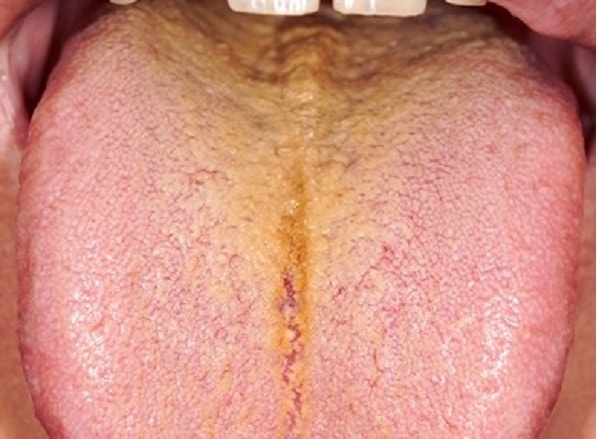
1. Poor Oral Hygiene and Buildup on the Tongue
One of the most common explanations for a yellow tongue is simply buildup on the surface of the tongue.
Your tongue contains thousands of tiny structures called papillae. Food particles, bacteria, dead cells, and other substances can become trapped between them.
When this material accumulates, the tongue may develop a white, cream, yellow, or even slightly brown coating.
This can be more noticeable when you:
-
Do not brush your tongue regularly
-
Have a dry mouth
-
Drink insufficient fluids
-
Consume certain foods or beverages
-
Smoke or use tobacco
-
Breathe through your mouth
-
Have a buildup of bacteria in the mouth
A yellow coating caused by surface buildup often improves with better oral hygiene.
What can you do?
Brush your teeth twice a day with fluoride toothpaste and gently clean your tongue with a toothbrush or tongue scraper.
Do not aggressively scrape the tongue.
The goal is to remove surface buildup—not to scrub the tissue until it becomes irritated.
Drinking enough water and maintaining regular dental care can also help.
2. Dry Mouth
Another common contributor is xerostomia, or dry mouth.
Saliva plays an important role in maintaining the mouth's natural environment. It helps wash away food particles and microorganisms and contributes to normal oral health.
When saliva production decreases, debris and bacteria can accumulate more easily on the tongue.
This may produce a thicker coating that appears yellowish.
Dry mouth can occur for many reasons, including:
-
Not drinking enough fluids
-
Mouth breathing
-
Anxiety or stress
-
Certain medications
-
Smoking
-
Dehydration
-
Some medical conditions
You may notice additional symptoms such as a sticky feeling in the mouth, frequent thirst, difficulty swallowing dry foods, or unpleasant breath.
If you regularly wake up with a very dry mouth, consider whether you are breathing through your mouth while sleeping or whether a medication could be contributing.
Persistent dry mouth is worth discussing with a healthcare professional or dentist because long-term reduced saliva can increase the risk of cavities and other oral problems.
3. Certain Foods, Drinks, and Tobacco Products
Sometimes the explanation is much simpler than people expect.
What you consume can temporarily change the appearance of your tongue.
Certain strongly colored foods, beverages, and substances can leave pigments or residue on the tongue.
Examples may include:
-
Coffee
-
Tea
-
Dark-colored foods
-
Certain spices
-
Tobacco products
Smoking and tobacco use can also contribute to changes in the appearance of the tongue and increase the risk of numerous oral health problems.
If you notice yellow discoloration after consuming a particular food or drink, try gently cleaning your tongue and drinking water.
If the color gradually disappears, the discoloration may have been related to surface staining rather than an underlying disease.
However, persistent changes should not automatically be attributed to food.
4. Oral Thrush or Other Mouth Conditions
A yellowish coating can sometimes occur with oral candidiasis, commonly known as oral thrush.
Oral thrush is a fungal infection involving an overgrowth of Candida in the mouth.
It more commonly produces creamy white patches, but the appearance can vary depending on the person and the surrounding material.
Other symptoms may include:
-
Soreness or burning
-
Redness
-
Altered taste
-
Difficulty eating
-
A cotton-like sensation in the mouth
-
Patches that do not simply disappear with normal brushing
Oral thrush is more likely in certain situations, including after some antibiotic treatments, with certain inhaled medications, or in people with particular medical conditions.
If you suspect thrush, it is better to have the mouth examined rather than trying to treat an unexplained coating yourself.
A healthcare professional or dentist can determine whether the discoloration is actually caused by a fungal infection or something else.
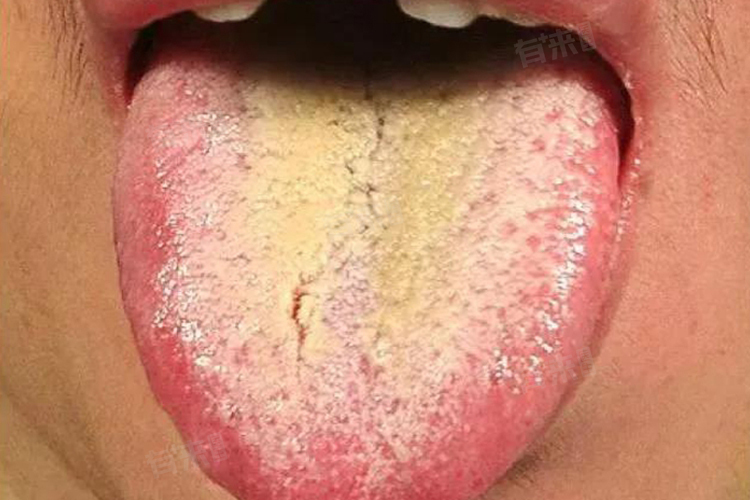
5. “Black Hairy Tongue” Can Sometimes Look Yellow at First
Despite its alarming name, black hairy tongue is generally a benign condition involving an abnormal elongation of the tongue's papillae.
The elongated papillae can trap bacteria, food particles, and pigments.
Although the condition is called "black hairy tongue," the coating can sometimes appear yellow, brown, greenish, or another color before becoming darker.
Several factors have been associated with this condition, including:
-
Poor oral hygiene
-
Smoking
-
Certain medications
-
Excessive coffee or tea consumption
-
Dry mouth
-
Changes in the normal microorganisms of the mouth
The tongue can develop a hairy or furry appearance.
It may look frightening, but the condition is often temporary and can improve with proper oral hygiene and removal of contributing factors.