They also need a comparison group or a reliable estimate of the background rate of the condition.
For example, if a medical condition normally occurs in a population, some cases will appear after vaccination by chance. The question is whether the observed number exceeds what would ordinarily be expected.
Researchers may also examine age, sex, medical history, dose number, product type, and the time between vaccination and the event.
A risk that is higher in one group may be much lower in another.
This is why statements such as "the vaccine causes thousands of cases" or "there is no risk at all" are not useful unless they are supported by accurate data and context.
Good risk communication should explain both the number of events and the size of the population in which they occurred.
What the 2026 Research Review Adds
A review published in JAMA in September 2026 examined COVID-19 vaccine effectiveness and safety for the 2026–2027 respiratory season.
The review considered studies published during the period from August 2025 through June 2026. It examined vaccine effectiveness, safety outcomes, and the continuing burden of COVID-19.
Its importance lies in the fact that vaccine safety is not a question that can be answered once and then forgotten. Viral variants change, vaccine formulations are updated, and the populations receiving vaccines also change over time.
A review of recent research helps bring together findings from multiple studies rather than relying on one isolated report.
The broader evidence continues to support the conclusion that COVID-19 vaccination can reduce the risk of severe disease, hospitalization, and death. At the same time, rare adverse events remain part of the safety picture and should continue to be monitored.
A research review does not mean that every vaccine has identical effectiveness or that every person receives the same level of benefit. It provides an overview of the available evidence and highlights where further research may be needed.
Why Protection Can Decrease Over Time
Vaccine protection is not necessarily permanent.
The immune response can change as time passes, and protection against infection may decrease. Changes in circulating variants can also make it easier for the virus to evade some of the immune recognition developed after earlier vaccination or infection.
This does not mean that previous vaccination has become completely useless.
Protection against severe disease can remain meaningful even when protection against infection has weakened. The level of protection may also differ depending on a person's age, immune status, medical history, and the time since their last dose.
This is one reason public-health authorities periodically review vaccination recommendations.
The CDC's October 2026 guidance emphasizes that protection decreases over time and highlights the importance of current-season vaccination for groups at higher risk.
The WHO takes a risk-based approach in its global recommendations, prioritizing people who face the greatest chance of severe disease.
These approaches are not necessarily contradictory. Countries may use different schedules because their populations, healthcare systems, available products, and public-health priorities differ.
Should People Be Afraid of Every Reported Side Effect?
No. But they should take credible safety information seriously.
Fear can arise when people see a long list of possible adverse events without learning how frequently they occur or whether a causal relationship has been established.
A list of medical conditions is not the same as a list of conditions that will happen to vaccinated people.
For example, a safety-monitoring program may track a condition because it is serious and scientifically important. Researchers may want to determine whether its rate changes after vaccination. That does not mean the vaccine has been proven to cause it.
On the other hand, a rare event should not be dismissed simply because it is uncommon.
The responsible approach is to explain what is known, what is still being studied, and what symptoms deserve medical attention.
People should also be wary of claims that promise certainty in either direction. No medical intervention is entirely free of risk, and no single study can answer every question about every population.
Questions to Ask Before Vaccination
People who are considering a COVID-19 vaccine can have a useful discussion with a healthcare professional by asking specific questions.
For example:
-
Which vaccine product is being offered?
-
Is it appropriate for my age and medical history?
-
Have I previously experienced a serious reaction to a vaccine?
-
Does my medical condition increase my risk of severe COVID-19?
-
Are there any relevant precautions involving my current medication?
-
What side effects should I expect?
-
Which symptoms would require urgent medical attention?
-
What is the current recommendation in my country?
These questions are particularly important for people with complex medical histories, previous severe allergic reactions, immune-system disorders, or a history of myocarditis.
A healthcare professional can help distinguish between a true contraindication, a precaution, and a concern that may not prevent vaccination.
The goal is not to pressure someone into a decision. It is to make sure that the decision is based on accurate information and the person's individual circumstances.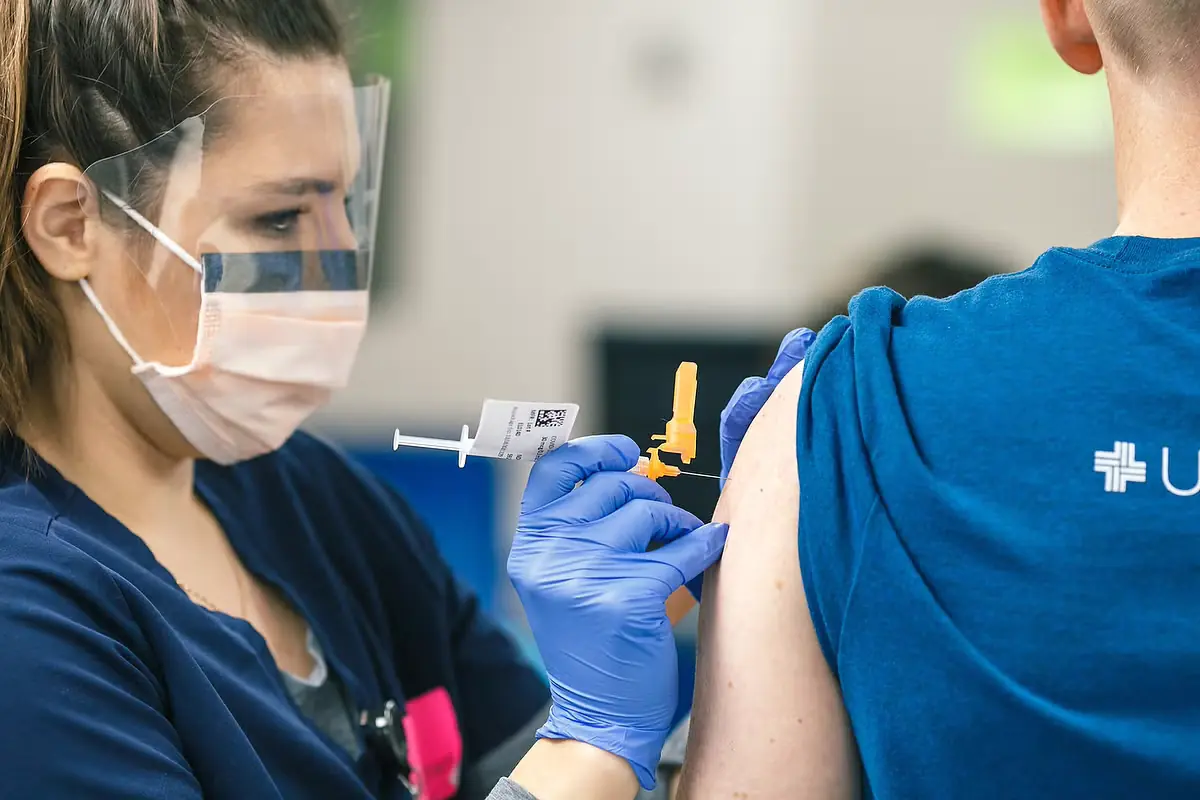
The Bigger Lesson: Vaccine Safety Requires Both Transparency and Context
COVID-19 vaccination became one of the most closely watched medical interventions in modern history.
The scale of its use created an enormous amount of safety information. Researchers identified common short-term reactions, investigated rare serious events, and continued monitoring after vaccines became available.
That experience also demonstrated how difficult it can be to communicate medical risk.
Some people encountered exaggerated claims that treated every health problem after vaccination as proof of harm. Others heard overly broad reassurances that made it seem as though serious reactions could never happen.
Neither approach helps people make informed decisions.
A useful explanation must acknowledge that common side effects are real, that rare serious events have been identified, and that the relationship between a medical event and vaccination must be investigated carefully.
It must also explain that COVID-19 infection itself can cause serious illness, particularly among people at higher risk.
The balance of benefits and risks is therefore individual. It can vary according to age, health conditions, immune status, vaccine history, product type, and the level of COVID-19 circulating in a community.
Final Takeaway: What Research Really Tells Us
The evidence available by November 2026 supports several important conclusions.
First, most COVID-19 vaccine reactions are mild or moderate. Soreness at the injection site, fatigue, headache, muscle aches, chills, and short-lived fever are among the most commonly reported symptoms. They usually improve within a few days.
Second, rare but serious adverse events have been identified. These include anaphylaxis and myocarditis or pericarditis, while other events such as TTS and Guillain-Barré syndrome have been associated with particular vaccine products or platforms.
Third, a medical condition occurring after vaccination is not automatically caused by the vaccine. Establishing causation requires careful clinical and population-level investigation.
Fourth, vaccine safety monitoring continues after authorization. Systems that collect reports and analyze healthcare data help researchers identify possible problems and determine whether further action is needed.
Finally, the benefits and risks of vaccination are not identical for everyone. Older adults, pregnant people, and individuals with certain underlying conditions may face a higher risk of severe COVID-19 and should discuss current recommendations with their healthcare professionals.
The most accurate conclusion is neither that COVID-19 vaccines are completely risk-free nor that every reported health problem is caused by them. Research supports a more careful understanding: common reactions are generally temporary, serious vaccine-related events are rare but important, and continued monitoring is essential.
For anyone making a decision about vaccination, reliable medical advice and current local recommendations are far more useful than alarming headlines or absolute claims circulating online.