After a brief wash, you can use a soft foot file sparingly on thickened areas, provided it does not cause pain or irritation. Stop if the skin becomes tender, red, or damaged.
Do not use a foot file directly over open cracks.
Avoid trying to remove all the thickened skin in one session. The objective is to reduce excessive buildup gradually while preserving enough protective tissue.
Moisturizing should remain the foundation of your routine.
When the skin becomes more hydrated and flexible, rough areas may become easier to manage without aggressive mechanical removal.
If the callus is unusually thick, painful, or repeatedly cracks despite home care, a podiatrist or other qualified healthcare professional can assess the area and recommend safer treatment.
The same principle applies to home remedies that involve acidic liquids, strong exfoliating chemicals, or prolonged soaking.
A method that softens the outer skin may also irritate or damage it, especially when the skin barrier is already compromised.
Healthy foot care should not hurt.
If a treatment produces burning, bleeding, increasing redness, or significant pain, stop using it and seek advice if symptoms persist.
Gentle treatment may seem slower, but protecting the skin is more important than achieving an immediate cosmetic result.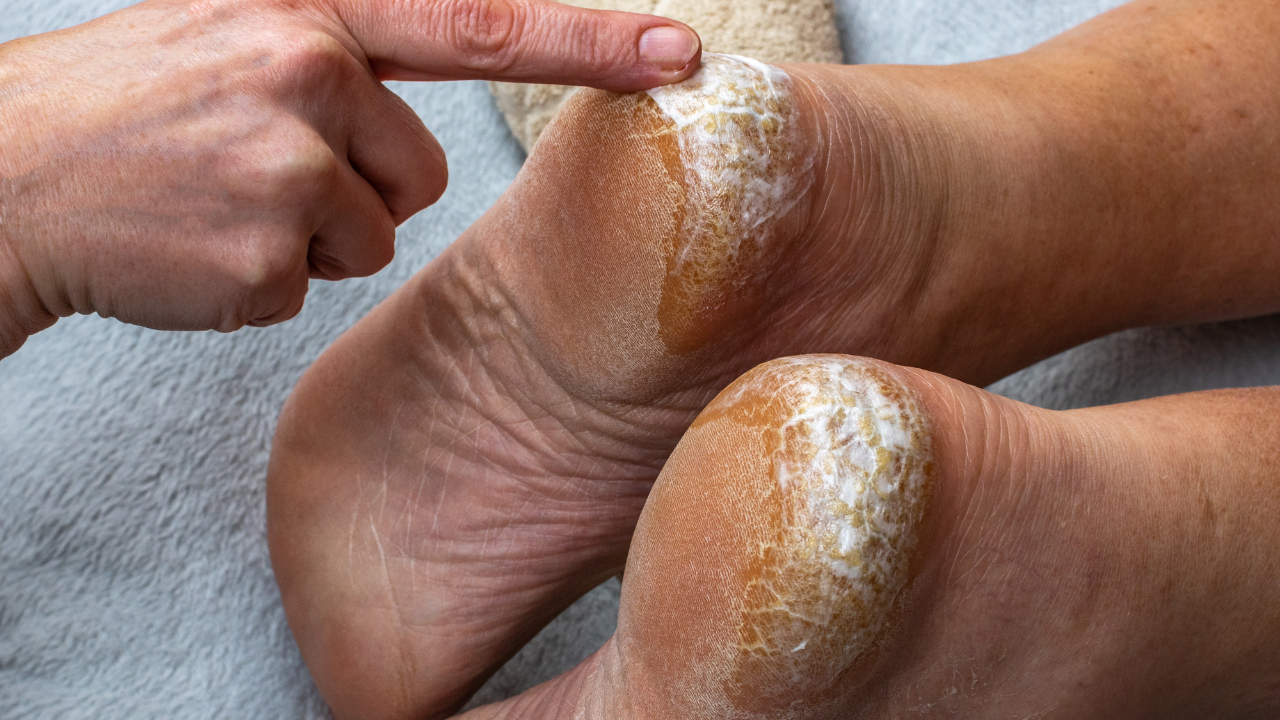
Chapter 5: The Shoes You Wear May Be Contributing to the Problem
Moisturizers can help, but they may not solve cracked heels if the underlying mechanical cause remains.
Footwear is an important factor that is often overlooked.
When you walk, the heel bears repeated pressure. Shoes that fit poorly, lack adequate cushioning, or allow the heel to move excessively may increase friction and stress on the skin.
Open-backed shoes, including some sandals and slippers, can allow the heel pad to spread outward with each step.
As the heel expands under body weight, the surrounding skin experiences additional tension. If the skin is already thick and dry, it may split more easily.
Walking barefoot on hard surfaces can contribute to the same problem for some people.
This does not mean that everyone must avoid sandals or never walk barefoot. The effect depends on the person's feet, activity level, environment, and existing skin condition.
However, if your heels repeatedly crack, consider whether your footwear provides enough support and keeps the heel securely in place.
Choose shoes that fit comfortably and do not cause rubbing. Supportive footwear with an appropriate heel counter may help reduce excessive movement and pressure.
Avoid shoes that are so tight that they create new areas of friction.
If you stand for long periods at work, comfortable footwear with suitable cushioning may also help reduce repetitive stress.
People with foot deformities, significant calluses, or persistent heel pain may benefit from an assessment by a podiatrist.
Footwear is only one part of the picture, but it can make a meaningful difference when pressure and friction contribute to the problem.
You can also reduce unnecessary stress by avoiding prolonged standing when possible and allowing your feet to rest during the day.
If your heels improve with moisturizing but repeatedly crack again after several days of walking in the same shoes, that pattern may suggest that pressure or friction needs attention.
The most effective routine addresses both the skin and the conditions that cause it to split.
Chapter 6: Could Your Cracked Heels Be a Sign of an Underlying Condition?
Most cases of dry, cracked heels are related to ordinary factors such as thickened skin, friction, footwear, and inadequate moisturization.
However, persistent or severe heel fissures can sometimes be associated with an underlying condition.
One possibility is eczema.
Eczema can cause dry, itchy, inflamed, or cracked skin. Depending on the type, it may affect the feet and can be aggravated by irritants, certain footwear materials, sweating, or environmental conditions.
Psoriasis is another possibility. Some forms of psoriasis cause thickened, scaly skin on the soles of the feet. The affected areas may become painful and develop deep cracks.
Fungal infections can also affect the feet. Athlete's foot commonly causes itching, scaling, peeling, or cracking, particularly between the toes, although some forms can produce dry, thickened skin across the soles.
The treatment for a fungal infection differs from ordinary dry-skin care, so persistent scaling or itching may warrant an assessment.
Diabetes deserves particular attention.
High blood glucose over time can damage nerves and blood vessels, potentially reducing sensation and impairing circulation. This can make foot injuries more difficult to notice and slower to heal.
A person with reduced sensation may not realize that a crack has deepened or that a small wound has become infected.
Diabetes can also be associated with dry skin, which may contribute to fissures.
If you have diabetes, inspect your feet regularly and seek professional advice about cracks, wounds, redness, swelling, or other new changes. Avoid cutting calluses or using strong chemical treatments without guidance.
People with poor circulation or reduced immune function should also take persistent foot wounds seriously.
Other medical conditions, including some thyroid disorders, may contribute to dry skin, although cracked heels alone cannot establish a diagnosis.
The important distinction is whether the problem improves with appropriate care.
If your heels remain severely cracked despite consistent moisturization, or if the surrounding skin becomes inflamed, itchy, swollen, or painful, a healthcare professional can help identify the cause.