Dry your hands using a clean paper towel or an appropriate hand dryer.
If soap and water are unavailable, an alcohol-based hand sanitizer containing at least 60 percent alcohol can be useful in many situations. However, sanitizer does not replace handwashing when hands are visibly dirty or contaminated with certain substances.
It is also important to avoid touching your face with unwashed hands. The eyes, nose, and mouth provide potential entry points for many microorganisms.
People who frequently travel, work outdoors, or visit busy public facilities may find it useful to carry a small personal hygiene kit. This might include tissues, hand sanitizer, and a few disposable wipes.
However, personal wipes should not automatically be flushed down the toilet. Even products marketed as flushable can contribute to plumbing problems. Follow the product instructions and the facility's disposal guidance.
These habits are practical, inexpensive, and useful in many environments beyond public restrooms.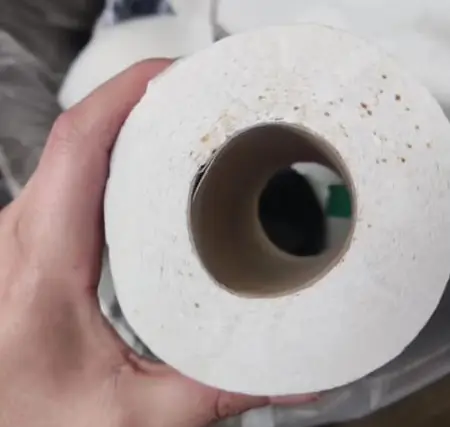
Chapter 7: Why You Should Never Spread Unverified Warnings
Images showing unusual objects or stains in public restrooms often circulate online with alarming captions. Some claim that a particular mark proves the presence of a dangerous substance. Others suggest that an ordinary restroom object is part of a hidden scheme.
Such posts can attract attention because they combine a familiar environment with an unexpected detail.
However, a photograph rarely provides enough information to establish what happened.
In this case, the image shows reddish marks on toilet paper. It does not identify the substance, explain how the marks appeared, reveal who placed them there, or demonstrate that anyone became ill after contact.
Those distinctions matter.
Sharing an unverified warning as established fact can create unnecessary fear. It can also distract people from practical hygiene advice that is supported by evidence.
A responsible warning should focus on what can actually be established: visibly stained toilet paper should not be used, unknown substances should not be handled unnecessarily, and suspicious contamination should be reported to facility staff.
People should also be careful when reading claims that promise to reveal a secret danger in every public restroom. Sensational language does not make a claim medically accurate.
When a post mentions a specific infection or health risk, look for information from recognized public health organizations or qualified medical professionals. Reliable health guidance explains the circumstances in which transmission can occur rather than simply relying on frightening images.
Being cautious is sensible. Believing every alarming caption is not.
Chapter 8: What If You Accidentally Used the Stained Paper?
This is a question many people may ask after seeing an image like this.
Suppose you used toilet paper and only afterward noticed a reddish mark. What should you do?
The first step is to remain calm. The appearance of a stain does not tell you what it contains, and contact with an unknown mark does not automatically mean that you have acquired an infection.
If the paper touched intact external skin, wash the area gently with clean water. Avoid scrubbing aggressively or applying harsh chemicals, disinfectants, or household cleaning products to sensitive skin.
If the substance may have contacted an open wound, damaged skin, the eyes, or the mouth, the situation deserves more careful assessment.
For an eye exposure, rinse the eye with clean running water or sterile saline. For an open wound, wash it with soap and water. Do not use bleach or other household disinfectants on the body.
If you have a credible reason to believe that fresh blood or another potentially infectious material entered your body through an open wound or mucous membrane, contact a healthcare professional or urgent medical service promptly. Some post-exposure interventions are time-sensitive, so it is better not to delay professional advice.
A clinician can ask about the substance, the type of contact, the condition of your skin, and any other relevant details. Based on that information, they can determine whether testing or preventive treatment is appropriate.
Do not begin medication or request emergency testing solely because a social media image frightened you. Medical decisions should be based on the actual exposure, not speculation.
Chapter 9: A Few Things to Check Before Using a Public Restroom
A quick visual check can help you identify obvious problems before using shared facilities.
Look at the toilet paper first. It should be dry, reasonably clean, and free from unusual stains or unpleasant odors. If the paper looks dirty or damaged, use another dispenser or ask staff for a replacement.