For many people, the discovery is enough to make them immediately close the lid and step away. It is unpleasant, unexpected, and often raises several questions. Where did these creatures come from? How long have they been there? Are they dangerous? And why does it sometimes seem as though they appeared overnight?
In most household situations, the explanation is surprisingly straightforward. Those tiny white creatures are probably maggots, the larval stage of flies. They develop when adult flies find suitable organic material, lay eggs, and leave the emerging larvae with a readily available food source.
Although maggots are commonly associated with dirty garbage, their presence does not necessarily mean that an entire kitchen is unhygienic. Even a relatively clean household can experience the problem, particularly during warm weather, when food waste decomposes quickly and flies become more active.
The important thing is understanding what attracts them and how to eliminate the conditions that allow them to develop.
Simply throwing away the visible larvae may not be enough. If food residue remains inside the bin, adult flies may continue returning, and the problem can happen again.
Here is what you should know about these unexpected visitors, why they appear, how to clean an infested trash can properly, and which everyday habits can help prevent them from coming back.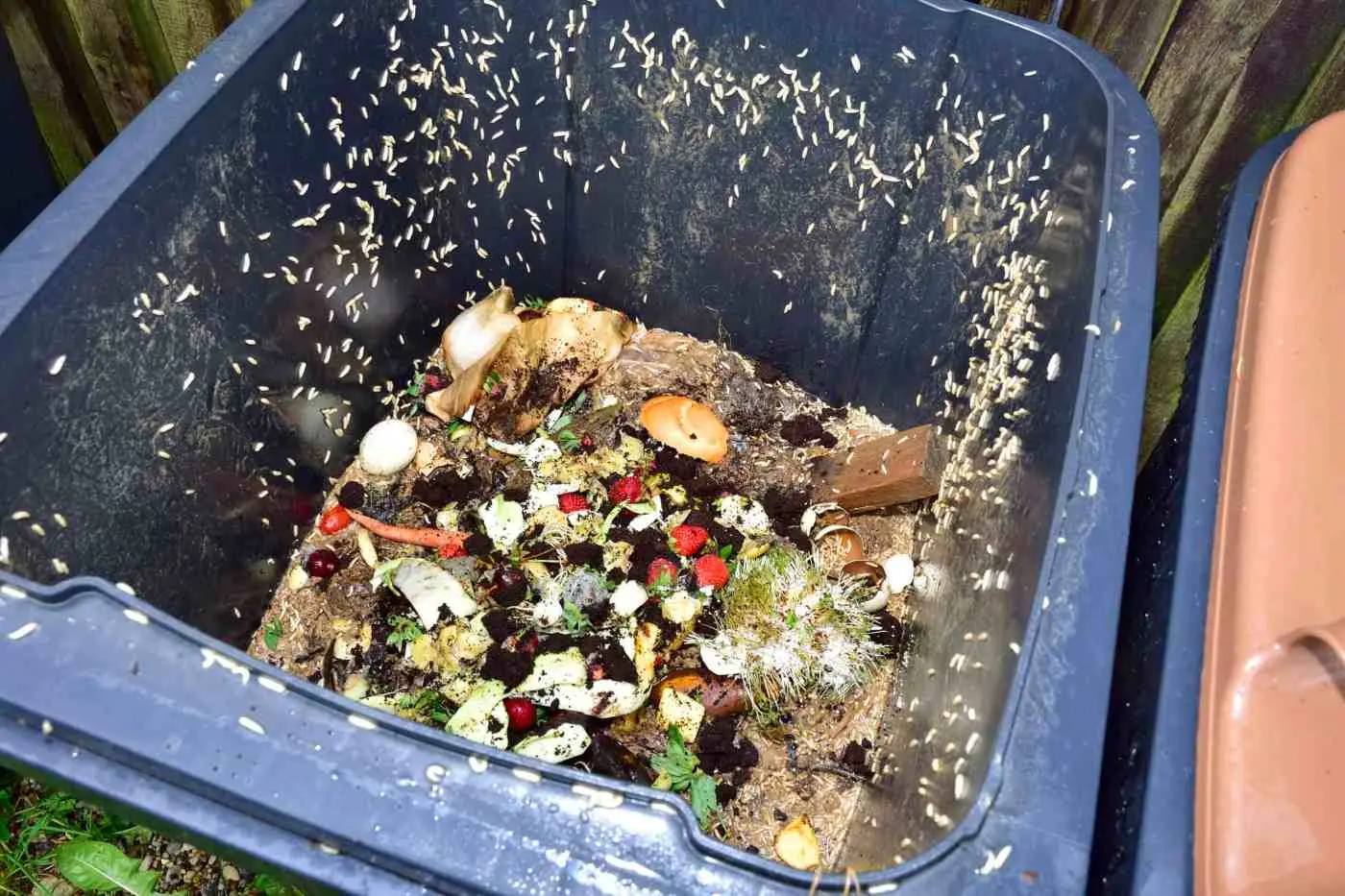
CHAPTER 1: WHAT ARE THOSE TINY WHITE CREATURES, AND WHY DO THEY APPEAR IN YOUR TRASH?
They Are Usually Maggots, the Larval Stage of Flies
When people discover small, pale creatures moving through household garbage, they often describe them as tiny white worms. In most cases, these are maggots.
Maggots are the immature, legless larvae of certain flies. They have soft, elongated bodies, usually tapering toward one end, and may appear white, cream-colored, or pale yellow.
Unlike adult flies, maggots do not have wings. They move by contracting their bodies and crawling through the material around them.
Their main purpose during this stage of development is to feed and grow. Decaying organic matter provides an environment where many fly larvae can find the nutrients they need.
This explains why maggots are commonly discovered in garbage containing:
-
Leftover meat, fish, or seafood
-
Spoiled fruits and vegetables
-
Food scraps and kitchen waste
-
Pet food
-
Greasy food packaging
-
Dirty paper towels and napkins
-
Other decomposing organic materials
The larvae are not randomly appearing inside the trash can. Adult flies have usually found something attractive in or around the garbage and laid their eggs there.
How Do Flies Turn Your Garbage Into a Breeding Site?
The process begins when an adult female fly searches for a suitable place to lay her eggs.
Flies use environmental signals, including odors released by decomposing organic material, to locate potential food sources and breeding sites.
A garbage bin containing old food scraps can provide exactly what they need.
Depending on the fly species, eggs may be deposited directly on exposed food waste, around damp organic material, or in places where food residue has accumulated.
After the eggs hatch, the larvae begin feeding on the material surrounding them.
They continue growing through several developmental stages before eventually leaving the feeding area to enter the pupal stage. During this stage, they transform into adult flies.
The entire process varies according to the species and environmental conditions. Some common flies can complete their life cycle relatively quickly in favorable temperatures.
This is why a household trash can can become an attractive breeding location without anyone realizing what is happening.
Why Do They Seem to Appear Overnight?
One of the most surprising aspects of a maggot infestation is how suddenly it can become visible.
You may empty the garbage in the evening, replace the bag, and see nothing unusual. The following morning, however, you open the lid and discover numerous small larvae moving around the bottom of the container.
It may seem as though they appeared out of nowhere.
In reality, the eggs were probably deposited earlier, and the larvae became noticeable only after hatching.
Fly eggs can be very small and difficult to notice, especially when they are deposited among food scraps, damp paper, or other organic waste.
Once the eggs hatch, the larvae begin feeding and moving. Their increasing size and activity make them much easier to see.
Warm conditions can accelerate development, which makes the problem particularly noticeable during summer.
Why Your Kitchen Trash Can Is So Attractive to Flies
Think about the different things that end up in an ordinary household garbage bin.
There may be fruit peels, vegetable scraps, leftover meat, used napkins, food packaging, sauces, and containers with small amounts of residue.
Some of these materials retain moisture. Others release odors as they begin to decompose.
The inside of a trash can also provides shelter from direct sunlight and disturbance.
Together, these conditions can make the container an appealing place for flies to investigate.
Importantly, a trash can does not have to be visibly filthy to attract insects. A small amount of leaked meat juice, spoiled food, or sticky liquid underneath a garbage bag may be enough to create an attractive environment.