Chapter 1: The Woman Behind the Palace Doors
In the summer of 1937, the air above Nanking carried the unmistakable tension of approaching war.
China was entering one of the darkest periods in its modern history. Japanese military expansion had already devastated large parts of the country, and the confrontation between Chinese and Japanese forces was moving toward a catastrophic escalation. In government offices, military headquarters, and private residences, officials studied maps that seemed to change every hour. Every railway line, river crossing, and coastal city had become a matter of national survival.
Inside this atmosphere of uncertainty stood a woman whose influence reached far beyond the traditional boundaries of political life.
Her name was Soong Mei-ling.
Known internationally as Madame Chiang Kai-shek, she was the wife of China's most powerful Nationalist leader, but describing her simply as a political spouse would overlook the extraordinary position she occupied. She was an interpreter, adviser, organizer, public speaker, and diplomatic intermediary. She understood the language of Western politics because she had spent much of her youth in the United States. She understood Chinese political society because she had been raised within one of the country's most influential families.
And she understood something that many military commanders failed to appreciate: China could not survive the coming struggle through weapons alone.
Born into the prominent Soong family, Mei-ling grew up surrounded by education, religion, international connections, and political ambition. Her father, Charlie Soong, had built a successful business and maintained strong connections with Christian institutions. Her sisters would eventually become influential figures in their own right, creating a family whose members stood on different sides of some of the most important political developments in modern China.
As a young girl, Mei-ling was sent to the United States for education. She attended Wesleyan College in Georgia before transferring to Wellesley College in Massachusetts, where she graduated in 1917 with a degree in English literature.
Those American years shaped her in ways that would become increasingly important.
She learned to communicate confidently with Western audiences, developed an understanding of American customs, and acquired the ability to move between two very different cultural worlds. Her English was fluent, her manners polished, and her knowledge of American society unusually sophisticated for a Chinese political figure of her generation.
When she returned to China, she was not content to remain an observer of public affairs.
In 1927, she married Chiang Kai-shek, the Nationalist military leader who was consolidating power over much of China. The marriage united two influential families and gave Mei-ling direct access to the center of national politics.
But the relationship also placed her inside a dangerous world.
China was divided by competing political movements, military factions, regional rivalries, and ideological conflicts. Chiang's government faced opposition from Communist forces, surviving warlords, and growing foreign pressure. Political alliances could change quickly, and the consequences of a single decision could affect millions of people.
Mei-ling became one of Chiang's closest advisers and his most important English-speaking representative. Because her husband was not comfortable conducting complex diplomatic conversations in English, she frequently helped communicate his positions to foreign officials.
She also became involved in public campaigns, aviation development, social organizations, and humanitarian activities.
By 1935, she had taken a leading role in the promotion of the New Life Movement, a campaign intended to reshape Chinese society through discipline, personal conduct, and national renewal. She also became closely involved with the Chinese Aeronautical Affairs Commission, helping promote the development of China's air capabilities.
These responsibilities were not ceremonial.
They required political judgment, organization, and the ability to persuade people who did not always agree with one another.
Then came 1937.
The conflict between China and Japan escalated dramatically following the Marco Polo Bridge Incident in July. Japanese forces moved toward major Chinese cities, and the Nationalist government faced the enormous challenge of defending a country with limited industrial resources and increasingly vulnerable military positions.
Nanking, the capital, became a city waiting for disaster.
Mei-ling's public responsibilities expanded as the crisis intensified. She supported relief organizations, helped coordinate international appeals, and worked to present China's struggle to audiences beyond its borders.
There is no reliable historical evidence establishing the dramatic breast-cancer diagnosis and secret operations sometimes attributed to her in stories circulating online. Her documented life, however, contains more than enough genuine hardship and political danger to explain why her story remains compelling.
She was entering a period in which the fate of her country, her marriage, and her own future would become inseparable.
And the greatest test of her influence was still ahead.
By the end of 1937, Nanking would become the scene of one of the most devastating atrocities of the war. The city that had represented the Nationalist government's political ambitions would become a symbol of suffering that the world could no longer ignore.
For Mei-ling, the question was no longer simply how to protect a government.
It was how to make the world listen while an entire nation was being torn apart.
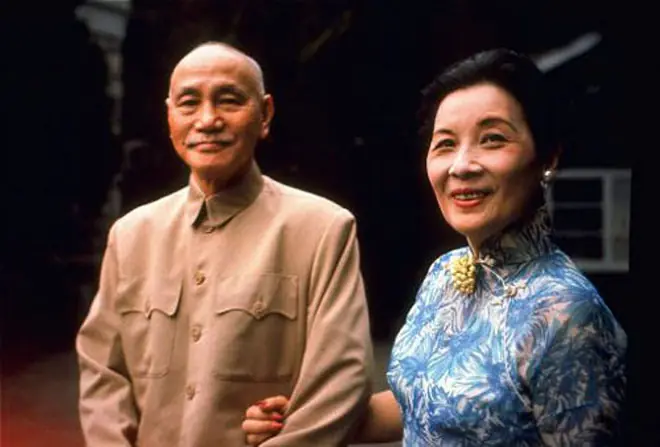
Chapter 2: The Voice That Reached Washington
By the beginning of the 1940s, Soong Mei-ling had become one of China's most recognizable international representatives.
The war against Japan had transformed her responsibilities. What had once been a combination of political advising and public diplomacy had become a mission with enormous consequences.
China needed weapons, aircraft, ammunition, medical supplies, financial assistance, and international recognition. Its government understood that military resistance would become increasingly difficult without sustained foreign support.
But obtaining that support was far from simple.
In Washington, American officials had their own strategic priorities. Europe was approaching a major crisis, and the United States was deeply divided over how directly it should become involved in overseas conflicts. Many Americans were reluctant to enter another war after the terrible losses of the First World War.
China therefore needed someone who could explain its position in a language that American politicians and ordinary citizens could understand.
Mei-ling was exceptionally well suited to that task.
She possessed something rare among political figures of her generation: a deep understanding of both Chinese national concerns and American public culture.