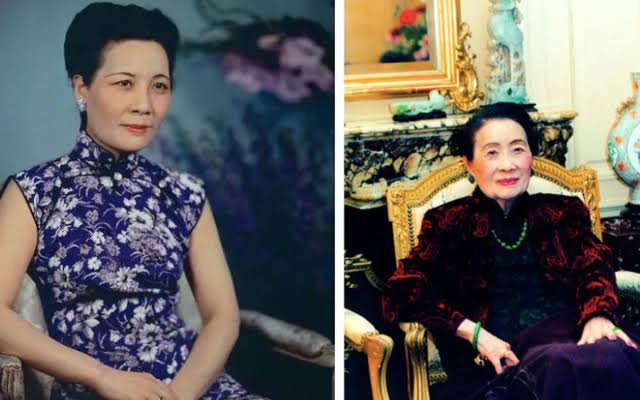
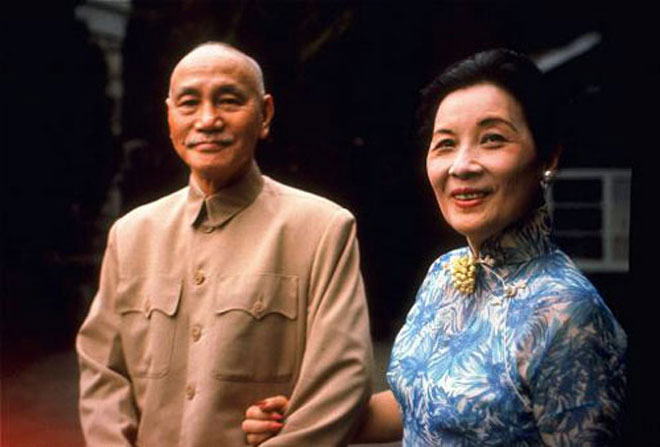
Soong Mei-ling remains one of the most recognizable women in 20th-century Chinese history. As the wife of Chiang Kai-shek, she lived through some of the most turbulent and transformative periods of modern China, spending much of her life in the public eye.
Yet beyond her political and historical significance, another aspect of her life has continued to fascinate people for decades: she lived to the age of 106, passing away in 2003.
Her longevity has naturally led to questions about how she maintained her health for so many years. What did she eat? How did she structure her days? Did she follow particular routines that helped her remain active into old age?
Stories about Soong Mei-ling often highlight a lifestyle built around discipline, moderation, regularity, and simple food choices. Among the foods frequently associated with her diet are vegetables such as celery and spinach, along with fruits including lychees, pineapples, and kiwis.
While no single food can explain an extraordinarily long life—and surviving cancer cannot be attributed to diet alone—her reported habits offer an interesting window into an approach to everyday living that emphasizes consistency rather than excess.
A Life Defined by Discipline and Routine
One of the most striking themes associated with Soong Mei-ling’s lifestyle was her commitment to a structured daily routine.
According to the account, she placed considerable importance on getting enough rest. She reportedly went to bed at around 11 p.m. and woke at approximately 9 a.m., giving herself a substantial period for nighttime sleep.
In a modern world where many people routinely sacrifice sleep for work, entertainment, or social obligations, this emphasis on rest stands out.
Sleep is not merely a period when the body becomes inactive. It is an important part of physical and mental recovery. Consistently inadequate sleep can affect mood, concentration, metabolism, immune function, and cardiovascular health.
Of course, Soong Mei-ling's personal sleep schedule should not be interpreted as a universal prescription. People differ in their sleep needs, and older adults may have different patterns from younger adults.
The broader lesson is more practical:
Treating rest as an essential part of daily life may be more valuable than constantly trying to squeeze more activity into every hour.
Making Time for Intellectual and Creative Activities
Her routine was not centered solely on food and physical health.
She reportedly spent time reading and painting, allowing herself opportunities for intellectual and creative engagement. However, these activities were described as being limited to relatively short periods rather than occupying the entire day.
Reading can provide mental stimulation, while creative activities such as painting require concentration, observation, memory, and fine motor coordination.
For an individual who lived well into her later years, maintaining these kinds of activities may have contributed to a lifestyle that remained mentally engaging.
Again, it would be inappropriate to claim that painting or reading directly caused longevity. Human lifespan is influenced by genetics, medical care, environment, socioeconomic circumstances, lifestyle, and chance.
Nevertheless, maintaining interests beyond work and daily responsibilities can contribute to a richer and more balanced life.
The Importance of Moderation in Her Diet
Another recurring theme in descriptions of Soong Mei-ling's lifestyle is moderation.
Rather than emphasizing elaborate or excessive meals, the account describes a diet centered on fruits, vegetables, and relatively simple foods.
Among the fruits associated with her dietary habits were:
-
Lychees
-
Pineapples
-
Kiwis
These fruits provide different vitamins, minerals, water, and plant compounds.
However, the important point is not that these particular fruits should be considered secret longevity foods.
There is no single fruit capable of guaranteeing a longer life.
Instead, fruits can be valuable components of a balanced dietary pattern because they provide a variety of nutrients while adding natural sweetness and dietary fiber.
The same principle applies to vegetables.
Why Celery Was Considered an Important Part of Her Diet
Among the vegetables mentioned in connection with Soong Mei-ling's diet, celery occupies a particularly interesting place.
Celery is sometimes overlooked because it is inexpensive, readily available, and relatively mild in flavor. Yet it contains water, dietary fiber, vitamin K, folate, potassium, and various plant compounds.
In Traditional Chinese Medicine, celery has historically been associated with several traditional functions, including helping to clear what traditional theory describes as “heat” and supporting certain aspects of digestion and fluid balance.
These traditional concepts belong to a different medical framework from modern biomedical science and should not automatically be interpreted as scientifically established mechanisms.
Still, celery's nutritional profile makes it a useful vegetable to include in a varied diet.
Celery and Cardiovascular Health
Celery is also frequently discussed in relation to cardiovascular health, particularly because it contains potassium and naturally occurring plant compounds.
Potassium is an essential mineral involved in nerve function, muscle contraction, and fluid balance. Adequate potassium intake from foods is generally associated with healthier blood pressure patterns, particularly when combined with an overall dietary pattern that is lower in sodium.
But it is important to keep the distinction clear:
Eating celery does not prevent or cure high blood pressure or cardiovascular disease by itself.
Blood pressure is influenced by numerous factors, including genetics, body weight, sodium intake, physical activity, alcohol consumption, sleep, stress, medications, and underlying medical conditions.
Celery can be part of a heart-conscious diet, but it should not replace medical treatment when treatment is needed.
Don't Ignore the Celery Leaves
Another interesting detail in the account is the emphasis on celery leaves.
Many people automatically discard the leaves and use only the stalks. However, the leaves are edible and can contribute flavor and nutrients to soups, salads, stir-fries, and other dishes.