It is a reminder to approach the family with sensitivity.
4. Never Compare One Baby With Another
Avoid phrases suggesting that the surviving baby makes up for the loss.
Each child has their own identity.
A family can be deeply grateful that one baby survived while still grieving the sibling who did not.
Both feelings deserve recognition.
5. Remember That the Symbol Is About Love as Well as Loss
The purple butterfly does not exist only to communicate sadness.
It also represents the relationship between siblings.
It recognizes that a baby who lived for a short time was still part of a family.
For Millie and Lewis, that was the most important message.
Skye deserved to be remembered.
And Callie deserved to grow up knowing that her sister had been part of their story.
Chapter 7: Understanding the Medical Condition That Took Skye's Life
The story of the purple butterfly is closely connected to another important subject: anencephaly.
Understanding the condition helps explain why Millie and Lewis knew that Skye's life would be extremely short.
What Is Anencephaly?
Anencephaly is a severe birth defect involving the development of the brain, skull and neural tube.
The neural tube is an important structure that forms early in pregnancy and develops into the brain and spinal cord.
When the upper part of the neural tube does not close properly, major portions of the brain and skull may fail to develop.
The resulting condition is extremely serious.
Babies born with anencephaly generally die before birth or shortly after delivery.
There is no curative treatment.
Medical teams focus on appropriate care, comfort and supporting the family.
Why Is Early Diagnosis Important?
Anencephaly can sometimes be identified during pregnancy through ultrasound examinations.
The diagnosis may lead to further specialist assessments and discussions with medical professionals.
For expectant parents, receiving this information can be devastating.
They may need time to understand the diagnosis, ask questions and consider the options available to them.
They may also need emotional support from specialist maternity staff.
In Millie and Lewis's situation, the diagnosis came during the early stages of pregnancy.
This meant they had months to prepare for a birth that would involve both welcoming a baby and saying goodbye.
Why Did Skye's Story Become So Important?
The medical condition explains why Skye could not survive.
But it does not explain the entire emotional experience of the family.
For Millie, the most difficult part was not simply losing a baby.
It was also navigating the world as a mother of twins when only one daughter remained.
The experience in the NICU showed her that other people could unintentionally overlook the baby who had died.
That was something she wanted to change.
The butterfly became a way to ensure that Skye's story could be recognized without requiring Millie to explain the loss repeatedly.
Chapter 8: The Legacy of Skye – A Symbol That Continues to Help Other Families
Years have passed since Millie and Lewis welcomed their daughters in 2016.
Callie survived and was eventually able to leave the neonatal unit and go home with her parents.
Skye's life was short, but her memory became the inspiration for an initiative that has reached families far beyond the hospital where she was born.
The purple butterfly is now associated with a wider movement to improve bereavement awareness in maternity and neonatal care.
A Different Kind of Legacy
Most parents imagine their children growing up, going to school, making friends and developing their own interests.
Millie and Lewis had to face a very different reality.
They would not see Skye take her first steps.
They would not hear her first words.
They would not watch her celebrate birthdays alongside Callie.
But they found a way to ensure that her name continued to have meaning.
Every time a purple butterfly is placed beside a surviving newborn, it carries a message connected to Skye's memory.
It reminds staff and visitors that the family has experienced a loss.
It gives parents permission to acknowledge their baby.
And it helps prevent an innocent comment from becoming another painful memory.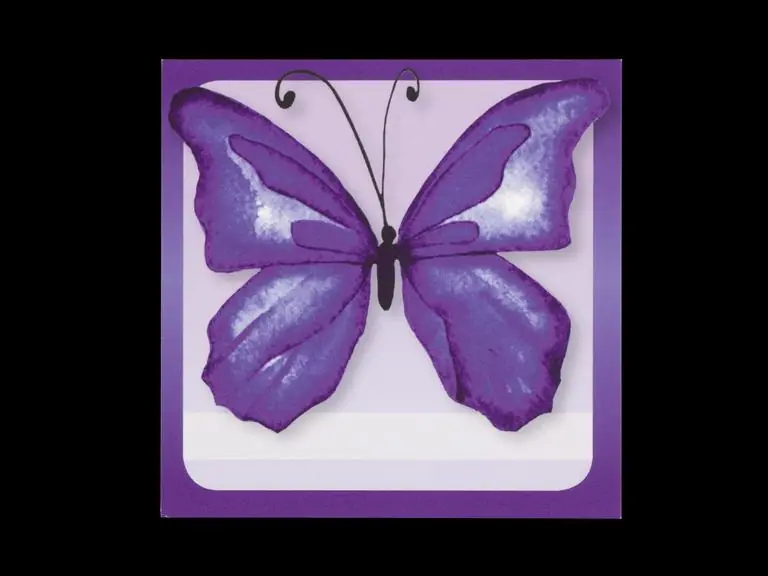
The Importance of Hospital Staff
The initiative also highlights the important role played by neonatal nurses, doctors and other healthcare professionals.
These professionals care for babies during some of the most difficult moments in family life.
They may treat newborns who are critically ill, support premature babies and help parents navigate unexpected medical complications.
They also need to understand the emotional needs of families.
A surviving twin may need medical care, but the parents may also need bereavement support.
These needs should not be treated as separate.
Healthcare professionals can help by:
-
Asking parents how they would like their lost baby to be acknowledged.
-
Using the baby's name when the family wishes.
-
Explaining the meaning of the butterfly to staff and visitors.
-
Offering appropriate bereavement resources.
-
Avoiding assumptions about how parents are feeling.
-
Recognizing that joy and grief may exist together.
The Butterfly Project has developed educational materials and training resources to help neonatal professionals understand these experiences.
This is important because the sticker is only one part of a much larger approach to compassionate care.
Why Small Changes Can Make a Big Difference
Hospitals are often busy environments.
Staff members work different shifts.
Visitors arrive and leave.
Families move between rooms, appointments and medical discussions.
Information can easily be missed.
A small visual symbol can provide an immediate reminder that a family has experienced something deeply personal.
It cannot explain every detail.
It cannot remove grief.
It cannot replace conversations with trained professionals.
But it can encourage people to pause before speaking.
Sometimes that pause is enough to prevent an unnecessary moment of pain.
The Butterfly Is Also a Reminder for the Wider Public
The story has lessons that extend beyond hospitals.
Many people experience losses that are not immediately visible.
A person may be grieving while continuing to work.
A parent may be caring for a surviving child while remembering another.
Someone may smile during a conversation while struggling with something deeply painful.
We cannot always know what another person has experienced.
That is why kindness matters.
Before making a joke about someone's family, asking a personal question or assuming that someone is fortunate, it is worth remembering that there may be a story we do not know.
Millie's experience demonstrated how a single innocent sentence could reopen a painful wound.
Her response was not to blame the other mother.
Instead, she created something that could help thousands of families avoid a similar experience.
That is perhaps the most remarkable part of the story.
The Real Meaning Behind the Purple Butterfly
So, if you see a purple butterfly sticker beside a newborn, remember what it represents.
It usually means that the baby was part of a multiple pregnancy, but one or more of the siblings did not survive.
The surviving newborn may be receiving care in a neonatal unit while the parents are also grieving a baby who is no longer there.
The butterfly is a quiet request for understanding.
It asks visitors to be thoughtful with their words.
It reminds healthcare professionals to acknowledge the family's loss.
And it recognizes that the baby who died remains part of the family's story.
Millie Smith and Lewis Cann created something meaningful from an experience that no parent should have to endure.
Their daughter Skye lived for only three hours.
Yet her memory has helped inspire a symbol now used in neonatal care across many countries.
Perhaps the most powerful part of this story is that the butterfly does not require anyone to say anything.
It does not demand attention.
It does not ask strangers to understand every detail.
It simply sits beside a newborn's incubator, quietly acknowledging a little life that will never be forgotten.
One butterfly. Two sisters. A lifetime of love. And a mother's promise that her daughter Skye would always have a place in this world.