Another important lesson concerned the time available for evacuation. In areas close to the earthquake's source, the first tsunami waves arrived quickly. That left some residents with very little time to receive an official warning, understand the danger, and reach higher ground.
For this reason, natural warning signs remain crucial. Strong or prolonged ground shaking near the coast should be treated seriously. A sudden and unusual retreat of the sea, or a loud roaring sound from the ocean, can also indicate that a tsunami may be approaching.
People should not wait on the beach to confirm what is happening. When natural warning signs appear, moving inland or to higher ground immediately can save lives.
The 2011 disaster showed that a tsunami is not simply a large wave. It is a powerful, moving body of water capable of transforming entire landscapes and overwhelming communities within minutes.
Chapter 3: The Human Cost of the Disaster
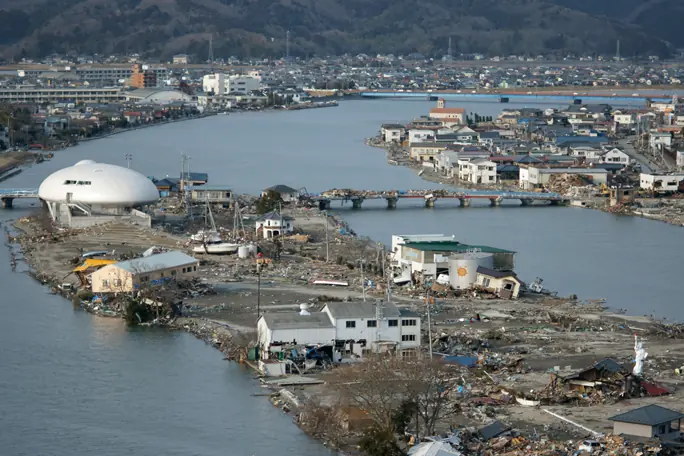
Behind the enormous statistics of the 2011 earthquake and tsunami were thousands of individual lives.
Families were separated during evacuations. People searched for relatives in temporary shelters, hospitals, and emergency centers. Survivors returned to neighborhoods that no longer looked familiar, sometimes finding that their homes and personal belongings had disappeared.
The scale of the loss was immense. According to figures updated by Japan's National Police Agency and reported by NOAA in March 2026, the disaster resulted in 15,901 confirmed deaths and 2,519 people missing and presumed dead.
The destruction of homes was equally severe. More than 123,000 houses were completely destroyed, while almost one million more sustained damage. Many survivors were forced to leave their communities and spend weeks or months in temporary accommodation.
For older residents, people with disabilities, and families with young children, displacement created additional challenges. Finding safe accommodation was only the beginning. Survivors also needed food, clean water, medical care, medication, transport, and reliable information.
The loss of local infrastructure made everyday life difficult. Damaged roads interrupted deliveries, while electricity and communication failures affected homes and businesses. Some communities were isolated by flooding and debris.
The emotional impact continued long after the water receded.
Survivors had to cope with grief, uncertainty, and the difficult task of rebuilding their lives. Some lost several family members. Others returned to find that their workplaces, schools, and familiar gathering places had been destroyed.
Children faced the loss of homes and routines, while adults had to make decisions about whether to rebuild in the same location or relocate to safer areas. Entire communities had to consider how they could preserve their identity while adapting to new risks.
The economic consequences were also extraordinary. NOAA estimates that the damage in Japan alone reached approximately $220 billion, making the disaster one of the costliest natural disasters in recorded history.
The destruction of businesses and infrastructure affected local employment, supply chains, and regional economies. Fishing communities faced particular difficulties because boats, ports, processing facilities, and coastal markets had been damaged.
The disaster also placed enormous pressure on healthcare services. Hospitals and clinics in affected areas had to deal with injuries, disrupted utilities, and shortages of supplies. Medical teams were required to care for people whose health conditions had become more difficult to manage because of displacement and interrupted treatment.
The long-term needs of survivors were not always visible in photographs of damaged buildings. Rebuilding a house could take years, but restoring a sense of security and normality could take much longer.
Memorials, community gatherings, and annual remembrance events have helped families and survivors honor those who died. They also provide opportunities to share experiences with younger generations who did not witness the disaster themselves.
Remembering the victims is not simply an act of looking backward. It is also a way to understand the consequences of natural hazards and recognize why preparation, public education, and effective emergency response matter.
The human cost of the Tōhoku disaster remains central to its legacy. It reminds the world that behind every damaged building and every official statistic are people whose lives were changed permanently.
Chapter 4: Fukushima and the Crisis Beyond the Coast
The tsunami created another emergency that extended far beyond the flooded communities.
At the Fukushima Daiichi nuclear power station, the earthquake caused the reactors to shut down automatically. However, shutting down a reactor does not immediately eliminate the need for cooling. Nuclear fuel continues producing heat after the fission process stops, so cooling systems must continue operating.
The tsunami flooded critical equipment and disabled the power supply and cooling systems at three reactors. Without sufficient cooling, temperatures inside the reactor cores rose, resulting in severe damage and meltdowns during the first days of the crisis.
+1
The nuclear accident added a complicated layer to an already devastating disaster.
Authorities had to manage the immediate consequences of flooding and structural damage while also addressing the risks associated with the damaged nuclear facilities. Residents in surrounding areas faced evacuation orders, and many had to leave their homes without knowing when they might be able to return.
The emergency required cooperation among government agencies, nuclear specialists, firefighters, engineers, and international organizations.
The situation also raised questions about how nuclear facilities should be protected against extreme natural hazards. Safety planning must account not only for the earthquake itself but also for the secondary events it can trigger, including tsunamis, flooding, power failures, and damage to essential support systems.