Practically everyone has seen the iconic images of the Easter Island heads. What you may not have known is that those Easter Island heads actually have hidden buried bodies. Archaeologists have uncovered the bodies associated with the heads and found interesting discoveries that further our knowledge of the Easter Island civilization and how they created the monoliths.
The Easter Island heads are known as Moai by the Rapa Nui people who carved the figures in the tropical South Pacific directly west of Chile. The Moai monoliths, carved from stone found on the island, are between 1,100 and 1,500 CE. A bit of an aside, but CE refers to the "Common Era" and sometimes replaces the use of AD in historical and archaeological communities.
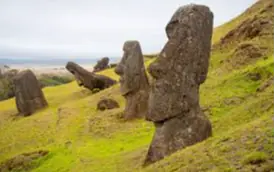
As with many things on Earth, time took its toll on the statues and buried them in sediment and rocks, hiding and preserving the torsos of the Easter Island heads. However, a team of archaeologists at UCLA developed the Easter Island Statue Project to better study and preserve the artifacts. Through this work, the team excavated several of the heads to reveal the underlying torso and body.
In total, the team documented and studied almost 1,000 statues on the small Pacific Island. The project spanned 9 years whereby the team determined to the best of their ability the meaning, function, and history of each individual statue.
After approvals, the archaeologists excavated two of the Easter Island heads to reveal their torso and truncated waist. The heads had been covered by successive mass transport deposits on the island that buried the statue's lower half. These events enveloped the statues and gradually buried them to their heads as the islands naturally weathered and eroded through the centuries.