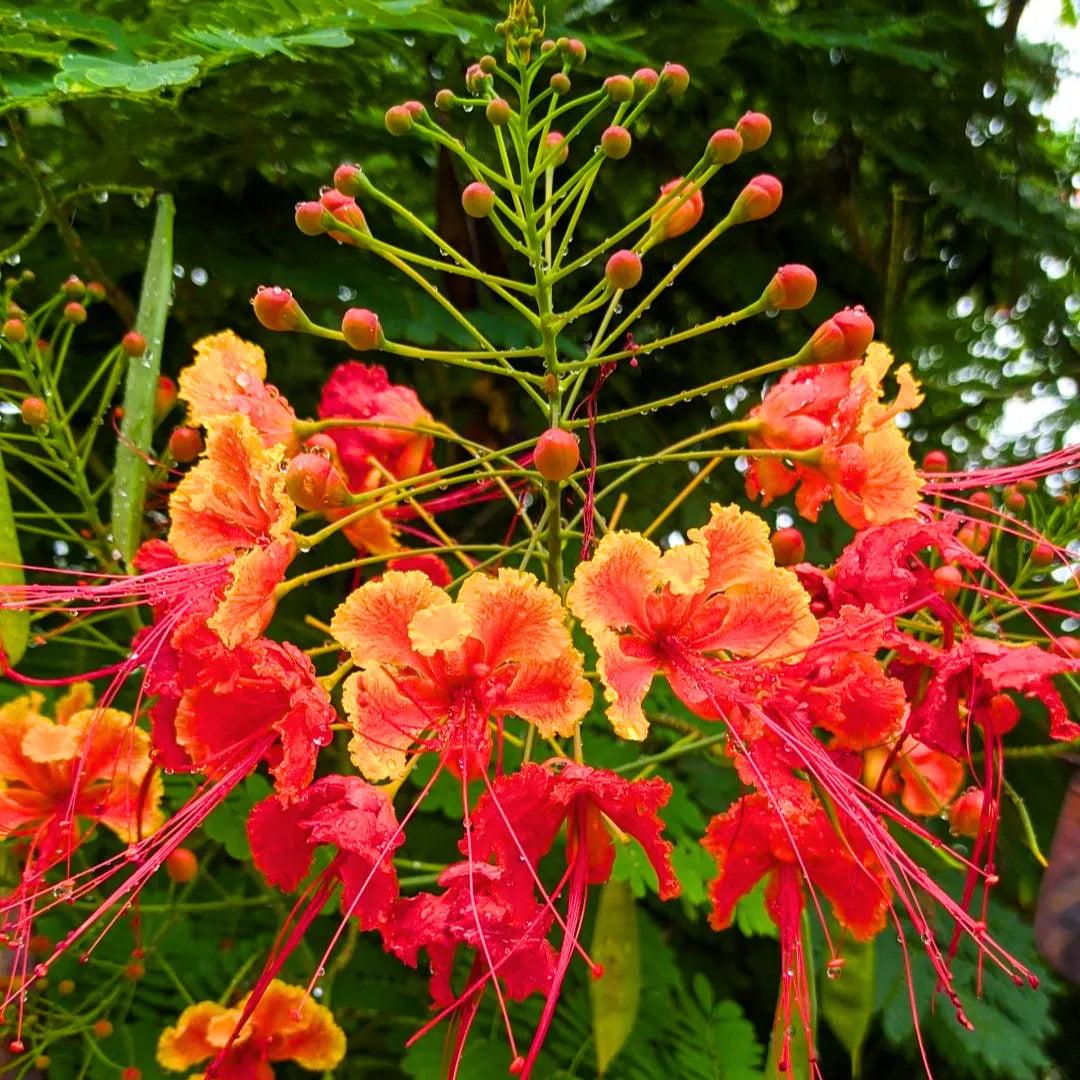
Caesalpinia pulcherrima, commonly known as the Peacock Flower, Barbados Pride, Red Bird of Paradise, or Dwarf Poinciana, is one of the most striking ornamental plants in tropical and subtropical regions. Its vibrant clusters of orange, red, or yellow blossoms make it a favorite in gardens, parks, and landscapes.
But beyond its beauty, this plant has been valued for centuries in traditional medicine systems throughout Asia, Africa, the Caribbean, and Central America. The Peacock Flower contains a variety of bioactive compounds with potential healing properties that modern science is only beginning to explore.
This article takes a deep look into the plant’s traditional uses, medicinal benefits, and applications—and why Caesalpinia pulcherrima is considered a botanical treasure.
1. A Brief Introduction to the Peacock Flower
The Peacock Flower belongs to the Fabaceae family and thrives in warm climates. Its feathery leaves and flame-like flowers give it a dramatic appearance, earning it names related to birds, sunsets, and fire.
Besides its ornamental value, nearly every part of the plant—flowers, seeds, roots, bark, and leaves—has been used in traditional remedies. Its rich phytochemical profile includes:
-
Flavonoids
-
Alkaloids
-
Terpenoids
-
Phenolic compounds
-
Tannins
These compounds contribute to the plant’s anti-inflammatory, antimicrobial, antioxidant, and analgesic activities.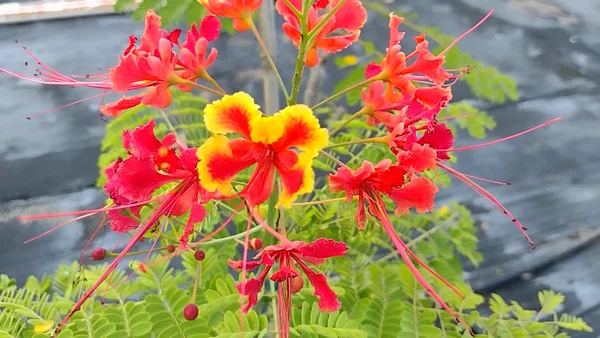
2. Traditional Medicinal Uses Across Cultures
a. In Ayurvedic Medicine
The Peacock Flower is used for:
-
Treating fever
-
Relieving menstrual discomfort
-
Reducing inflammation
-
Supporting digestive health
Its seeds and flowers have long been used as natural remedies for women’s reproductive health.
b. In Traditional Chinese Medicine
The plant is believed to have:
-
Cooling properties
-
Blood-stimulating effects
-
Detoxifying benefits
It is used for skin eruptions, coughs, and digestive issues.
c. In Caribbean and Central American folk medicine
It has been used for:
-
Respiratory infections
-
Constipation
-
Muscle pain
-
Fever and chills
In some cultures, it has also been considered a protective plant with spiritual significance.
3. Anti-inflammatory and Pain-Relief Properties
One of the most widely recognized benefits of Caesalpinia pulcherrima is its anti-inflammatory effect. Extracts from the leaves and flowers help reduce swelling and soothe irritation.
These properties make it useful for managing:
-
Joint pain
-
Muscle aches
-
Arthritis discomfort
-
Skin inflammations
The plant’s natural analgesic compounds may also help alleviate various types of pain without the side effects associated with synthetic medications.
4. Antimicrobial and Antiviral Effects
Several studies have shown that extracts from the Peacock Flower exhibit strong antimicrobial activity, helping the body fight:
-
Bacteria
-
Viruses
-
Fungi
Because of this, the plant has been traditionally used for:
-
Treating wounds
-
Managing respiratory infections
-
Soothing coughs and sore throats
-
Preventing skin infections
Its antimicrobial potential makes it a candidate for future development in herbal medicine.
5. Women’s Health Benefits
Many cultures use the Peacock Flower to support women’s reproductive health. Historically, the plant has been used to:
-
Regulate menstrual flow
-
Ease menstrual cramps
-
Relieve symptoms of PMS
-
Support postpartum recovery
In some regions, it was used as an emmenagogue to stimulate menstruation. For this reason, pregnant women should avoid consuming Peacock Flower preparations, as they may pose risks.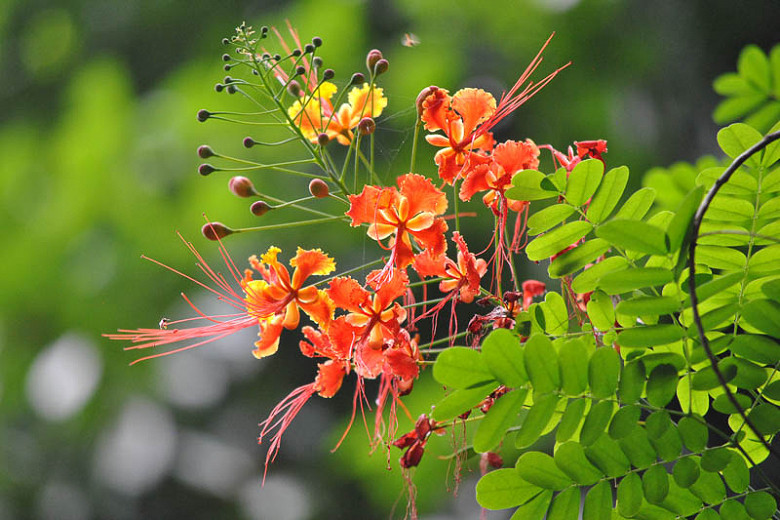
6. Digestive Support and Detoxification
The roots and flowers of Caesalpinia pulcherrima have been traditionally used to improve digestive function. The plant may help with:
-
Constipation
-
Bloating
-
Indigestion
-
Loss of appetite
Its mild laxative effect helps stimulate bowel movement and support general detoxification.
7. Antioxidant Properties That Protect the Body
Peacock Flower extracts contain powerful antioxidants that help protect tissues from oxidative stress. These antioxidants neutralize free radicals in the body, supporting:
-
Healthy aging
-
Immune function
-
Cellular repair
-
Protection against chronic disease
This protective effect is one reason why the plant has remained popular in herbal traditions for centuries.
8. Respiratory Health Support
In folk medicine, the Peacock Flower is frequently used to treat respiratory issues such as:
-
Cough
-
Bronchitis
-
Asthma-like symptoms
-
Congestion
Its soothing and expectorant qualities help clear mucus from the airways and ease breathing difficulties.
9. How to Use Caesalpinia pulcherrima Safely
Traditional preparations include:
1. Herbal Tea
Made from dried flowers or leaves to relieve cough, fever, or digestive troubles.
2. Poultice
Crushed leaves applied to wounds or inflamed areas to reduce swelling.
3. Tincture or Extract
Concentrated form used in small doses for more targeted herbal remedies.
Safety Notes
-
Pregnant women should avoid this plant.
-
Always use moderate amounts.
-
Consult an herbalist or healthcare professional before internal use.
While the plant offers many benefits, incorrect use may cause side effects.
10. Ornamental Beauty with Ecological Value
Beyond its medicinal qualities, the Peacock Flower is loved for its ecological benefits:
-
Attracts butterflies, bees, and hummingbirds
-
Provides shade and soil stabilization
-
Requires little water once established
It is often planted in tropical gardens for its vibrant visual appeal and resilience.
Conclusion: A Beautiful Plant with Powerful Healing Potential
Caesalpinia pulcherrima is far more than an ornamental shrub - it is a plant rich in history, healing tradition, and potential therapeutic value. From reducing inflammation and supporting digestion to boosting respiratory health and promoting emotional balance, the Peacock Flower has earned its place as a treasured natural remedy across cultures.
As modern science continues to explore its diverse bioactive compounds, the Peacock Flower may eventually take on an even greater role in herbal medicine and natural health practices.