Why silence from authorities should not be filled with rumours
Authorities may not release every detail immediately. They may need to notify relatives, verify identity, conduct examinations, interview witnesses, or protect an active investigation.
A lack of public information is frustrating, particularly for people who have followed a missing-person appeal. But silence does not prove a cover-up, and it does not confirm any particular theory.
It simply means that readers do not yet have enough verified information.
A responsible account should say what remains unknown and update the story only when reliable information becomes available.
Chapter 3: How Missing-Person Investigations Work Behind the Scenes
A public appeal may show photographs, a short description, and a request for information. What readers do not see is the detailed work that can take place behind the scenes.
Missing-person investigations are not all identical. The response depends on the circumstances, the person's vulnerability, the information available, and the level of risk assessed by investigators. A case involving a young person, someone with a serious medical condition, or evidence of immediate danger may require a different response from a case where an adult has voluntarily lost contact with relatives.
Even when a disappearance initially appears straightforward, investigators need to remain open to new information.
Establishing the last confirmed sighting
One of the first priorities is identifying the last confirmed sighting.
Investigators may speak with family members, friends, colleagues, neighbours, and people who were expected to see the missing person. They may ask about the person's clothing, belongings, plans, recent communications, and usual routines.
The word confirmed is important. A person may have heard that the missing individual was seen somewhere, but the information needs to be checked. A witness might have mistaken someone else for the missing person, or a photograph may have been taken on a different date.
Investigators may compare accounts with available CCTV footage, transport information, digital records, and other material.
The purpose is to build a reliable timeline, not to create a dramatic narrative.
Reviewing communications and digital information
Phones and online accounts can contain useful information, although access to those records is subject to applicable laws and investigative procedures.
Depending on the circumstances, investigators may consider phone activity, messages, account access, location-related data, or other digital traces.
A digital record must be interpreted carefully. A phone being active in a certain area does not always prove that its owner was physically holding it. A message may have been scheduled, sent from another device, or accessed by someone else.
Digital information becomes more meaningful when it can be compared with independent evidence.
For families, it may be helpful to preserve relevant messages, screenshots, emails, and details of recent contact. They should avoid deleting information or publicly altering material that might later be useful to investigators.
Speaking with friends and acquaintances
Investigators may seek information from people who know the missing person, including friends, colleagues, classmates, neighbours, and recent acquaintances.
They may ask about recent plans, changes in routine, conflicts, travel arrangements, or concerns that the person had expressed.
These conversations are not necessarily accusations. Someone may be asked for information because they were among the last people to have contact with the missing individual.
A person who is interviewed should not automatically be described as suspicious. Witnesses, relatives, people who discovered a scene, and potential suspects have different roles in an investigation.
This distinction is especially important when online discussions begin naming or accusing individuals without evidence.
Searching likely locations
Search planning usually considers the last confirmed sighting, known destinations, likely routes, and the circumstances of the disappearance.
Investigators may assess nearby homes, roads, parks, transport points, workplaces, hospitals, and other relevant locations. Search areas can expand as new information becomes available.
Terrain affects the approach. A built-up urban environment presents different challenges from a forest, farmland, mountain area, or riverbank.
A search team may divide an area into sections and record which locations have been examined. This helps prevent unnecessary duplication and allows investigators to identify places that still require attention.
The photograph in the screenshot appears to show people gathered in a rural area, but there is no confirmed evidence that it depicts an official search operation connected to the story. It should not be used to reconstruct the search route or identify a location.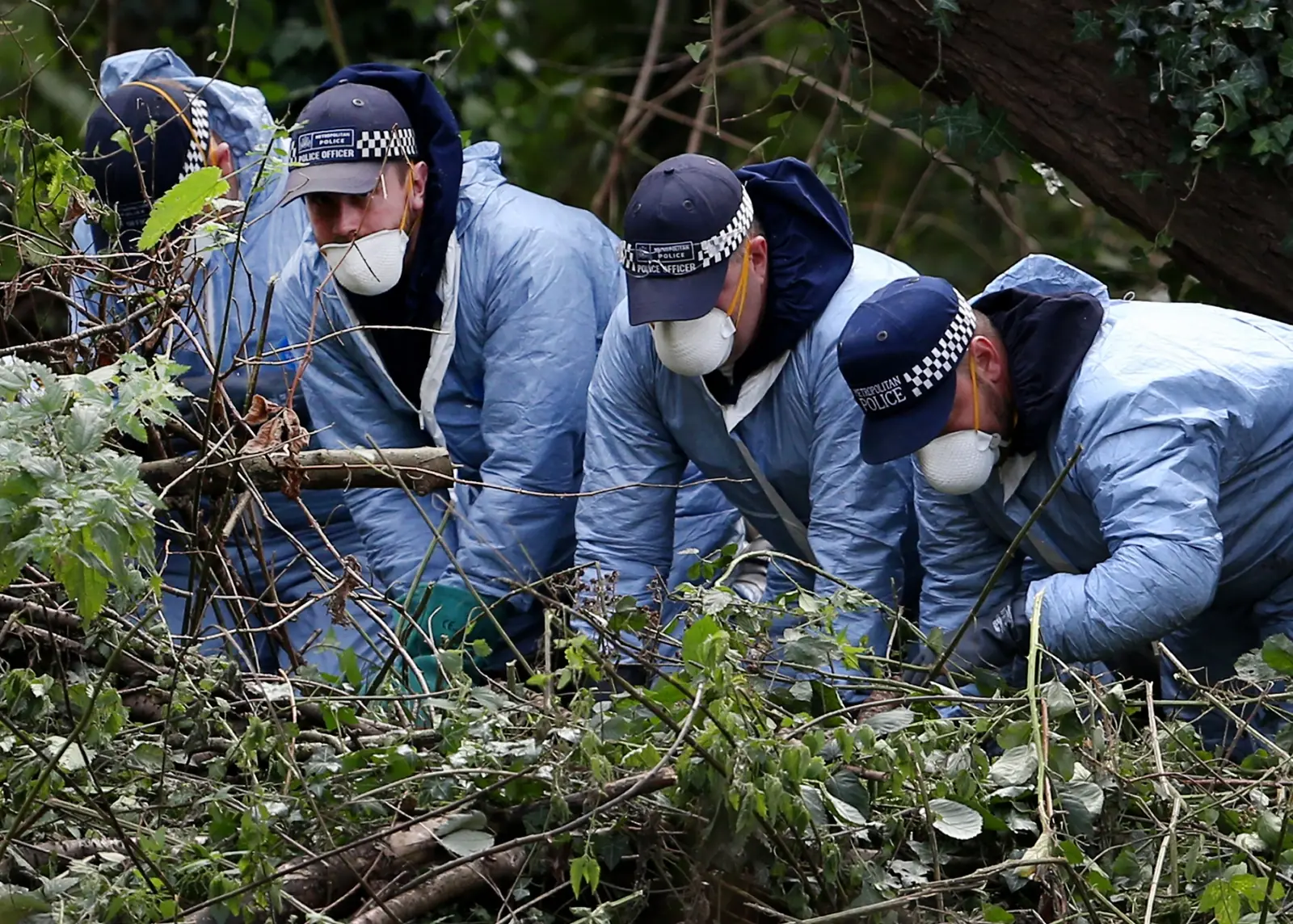
The contribution of trained search teams
In some cases, police may work with specialist search personnel, emergency services, trained volunteers, or other agencies.
The people involved may have different responsibilities. Some focus on searching designated areas, while others coordinate logistics, manage communications, or provide support to relatives.
Search teams need to consider safety as well as coverage. Remote environments can include unstable ground, thick vegetation, dangerous water, steep slopes, and changing weather.
Untrained volunteers who enter difficult terrain without coordination can put themselves at risk and complicate the operation.
For members of the public, helping may be as simple as sharing an official appeal accurately, checking a specific location when requested, or passing information to the appropriate authority.
Why evidence preservation matters
When a disappearance raises concerns about possible criminal activity, preserving evidence can become especially important.
A missing person's room, vehicle, personal belongings, or last known location may contain information that helps investigators understand what happened.
The Royal Canadian Mounted Police advises families that police may need to secure rooms or collect personal effects for examination. Items such as clothing, shoes, diaries, phones, and computers may be relevant depending on the case.
This does not mean that every missing-person report is treated as a crime scene. It means that investigators may need to preserve material before it is lost or changed.
Relatives should ask investigators before cleaning, moving, or discarding items that may be relevant.
Identification after a discovery
If a person is found but their identity cannot immediately be confirmed, investigators may need to use formal identification procedures.
Depending on the circumstances, this may involve fingerprints, dental records, DNA comparisons, medical information, or other reliable methods.
Family members may be asked to provide information or reference samples through the appropriate legal process. These procedures are sensitive and should be handled by authorized professionals.
A photograph or resemblance is not enough to establish identity in every case. Images can be misleading, and a person may have changed significantly since an earlier photograph was taken.
For that reason, an official confirmation is essential before a report names someone as the person who has been found.
Establishing the cause and circumstances of death
If authorities confirm that a missing person has died, there may be several separate questions to answer.
The cause of death refers to the medical reason a person died. The circumstances describe the events surrounding the death. The manner of death is a classification used by relevant medical or legal authorities, depending on the jurisdiction.
These determinations may require a post-mortem examination, toxicology testing, scene assessment, and review of other evidence.
A preliminary statement may not contain the final findings. Investigators may continue examining the case even after an initial identification has been confirmed.