It is therefore inaccurate to claim that a particular person caused a death or that a specific event occurred unless the information is supported by official findings or reliable reporting.
Why investigations can take time
Families often want answers immediately, but some enquiries cannot be completed quickly.
Forensic examinations may take time. Investigators may need to locate witnesses, obtain records, compare digital information, or wait for specialist reports.
Authorities may also need to coordinate with other agencies, particularly when a case crosses regional boundaries or involves a remote location.
A slow public update does not necessarily mean that investigators have stopped working. Equally, the fact that an investigation is described as ongoing does not prove that a particular theory is correct.
The responsible approach is to distinguish the progress that has been confirmed from the questions that remain open.
Chapter 4: The Impact on Families, Volunteers, and the Wider Community
A missing-person case affects more than the individual whose whereabouts are unknown. It can place relatives, friends, colleagues, and entire communities under intense emotional pressure.
When a search ends in tragedy, the emotional impact may be even more complicated. Relief that uncertainty has ended can exist alongside grief, shock, anger, and unanswered questions.
The uncertainty experienced by relatives
When someone disappears, family members may find themselves caught between hope and fear.
They may repeatedly check their phones, revisit conversations, contact acquaintances, and follow every new message about the search. Ordinary routines can become difficult to maintain.
A relative may wonder whether they missed an important call, misunderstood a plan, or could have done something differently. These thoughts are common during periods of uncertainty, but they do not mean the family is responsible for what happened.
Each disappearance has its own circumstances, and responsibility should never be assigned without evidence.
Why communication with authorities matters
Families need reliable information about what is happening and how they can help.
The Australian National Missing Persons Coordination Centre's guidance for families emphasizes working with the case officer, sharing relevant information, and establishing how updates will be communicated.
A consistent point of contact can help relatives understand what has been done, what information is still needed, and what they should avoid disturbing.
The amount of information that can be shared may depend on privacy requirements and the needs of the investigation. Authorities may not be able to disclose every detail, but clear communication can reduce confusion.
When a case receives widespread attention, families may also receive messages from strangers, media representatives, and people claiming to have information. They may need support in deciding which communications should be passed to investigators.
The emotional burden on volunteers
Volunteers often join searches because they want to help someone return safely.
They may walk long distances, distribute notices, contact local businesses, share appeals online, or assist with practical arrangements. Their efforts can provide valuable support to families and may help investigators receive information from a wider community.
However, searches can be physically demanding and emotionally difficult.
Volunteers may encounter distressing information or feel overwhelmed by the possibility that the missing person has been harmed. They may also experience frustration when a search produces no immediate result.
Coordinated support, clear instructions, rest periods, and appropriate supervision can help reduce these risks.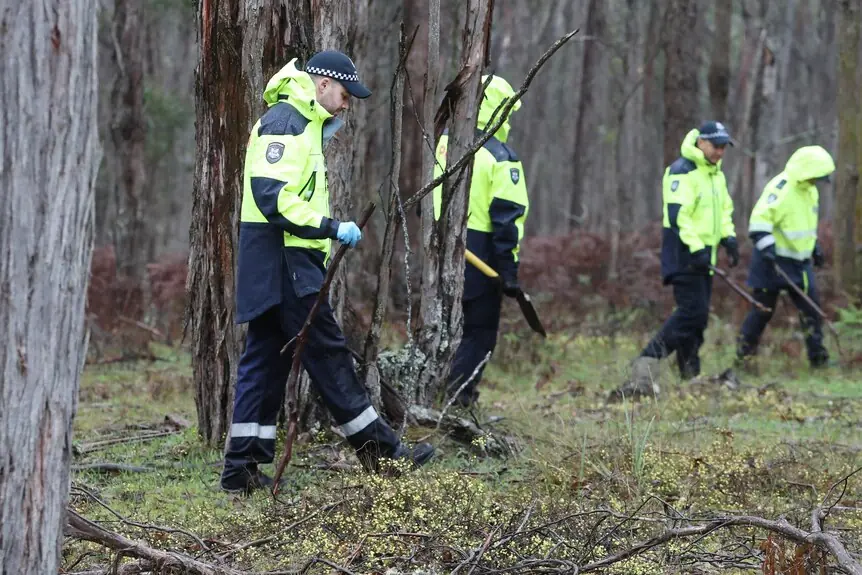
The effect of social media attention
Social media can spread a missing-person appeal rapidly.
A photograph and a short description can reach people who may have seen the missing individual or know something about their movements. Online sharing may also help authorities reach communities outside the original search area.
But social media can spread inaccurate information just as quickly.
An old photograph may be presented as recent. A location may be incorrectly identified. A person may be accused based on an unverified comment. An unrelated image may be attached to the story because it appears visually convincing.
Once a claim has been repeated many times, it can begin to look established even when its original source is unknown.
Readers should therefore check whether a post links to an official police appeal, whether the information has a date, and whether the source can be identified.
Why false details can harm real people
A missing-person story may involve relatives who are already experiencing extreme distress.
If an online report incorrectly identifies a person, location, or suspected individual, the consequences can extend beyond embarrassment. False claims can lead to harassment, threats, reputational damage, and interference with an investigation.
People who appear in a photograph may be unrelated to the case. A man described as being present at a discovery location may be a witness or someone who found the scene. Without confirmation, assigning a criminal role can be deeply unfair.
Responsible reporting protects both the accuracy of the story and the dignity of people affected by it.
The importance of privacy after a tragedy
When a person is found deceased, families may need time to receive official information and make arrangements.
Graphic photographs, private messages, and unverified claims about the person's final moments should not be circulated simply because they attract attention.
A person's dignity does not disappear because their story becomes viral.
The same principle applies to relatives. Their grief should not become an invitation for strangers to demand personal details, speculate about private relationships, or judge decisions made during a crisis.
How a community can help responsibly
People who want to help with a missing-person case can take practical steps without spreading speculation.
They can:
-
Share only official appeals or information confirmed by reliable sources.
-
Preserve the original wording and date of a public notice.
-
Send relevant information directly to the investigating authority.
-
Avoid publishing private addresses, phone numbers, or sensitive family details.
-
Avoid confronting or accusing people mentioned in online comments.
-
Follow instructions about search areas and restricted locations.
-
Correct inaccurate posts when reliable information becomes available.
These actions may seem less dramatic than joining an online investigation, but they can be far more useful.
What happens after a search ends?
If a missing person is found alive, authorities may confirm that the person has been located while protecting their privacy. An adult may have a right not to disclose their whereabouts to relatives, depending on local law and the circumstances.
If the person is found injured, medical care and safeguarding may become priorities.
If the person is found deceased, the focus may shift toward identification, notification of relatives, medical examination, and investigation of the circumstances.
A search ending does not necessarily mean every question has been answered. The family may still need information, and investigators may still be examining evidence.
The screenshot's description of a tragic outcome does not tell us which formal procedures were completed or what findings were reached. It is therefore important not to treat the brief text as a complete account of the case.
Chapter 5: What Readers Should Know Before Sharing a Viral Missing-Person Story
The story shown in the screenshot is emotionally powerful, but its missing details make verification essential.
A responsible reader should be able to distinguish between an official update, a journalist's report, a witness account, and a social media claim. These sources may contain different levels of reliability and should not be treated as equivalent.