Cremation is a subject that can bring up surprisingly strong emotions among Christians. Some people believe that burial is the only appropriate way to treat the body after death. Others choose cremation because of personal preference, family tradition, financial considerations, or practical circumstances.
But one question often remains:
Does the Bible actually say that cremation is a sin?
The answer is more nuanced than many modern discussions suggest.
The Bible does not contain a direct command that says, "You shall not cremate the dead." At the same time, Scripture contains numerous examples of burial and several passages involving the burning of human remains. Understanding those passages requires looking at their historical and cultural context rather than assuming that every reference to fire represents a biblical prohibition against cremation.
Let's take a closer look at what Scripture actually teaches about death, the body, burial, cremation, resurrection, and Christian hope.
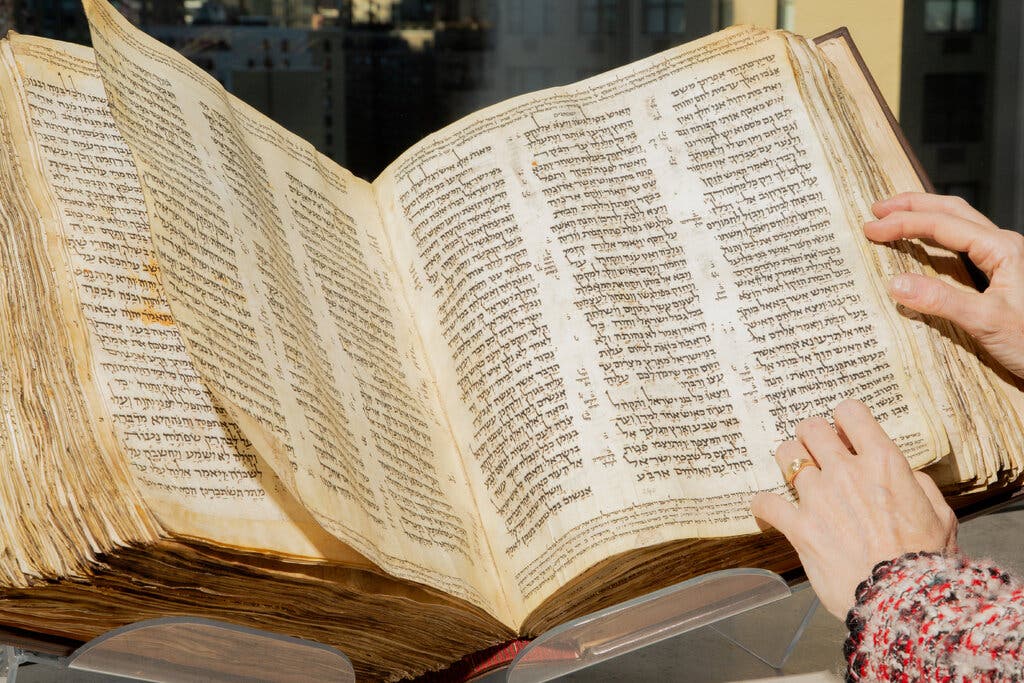
What Does the Bible Say About Cremation?
The first thing to understand is that the Bible does not explicitly identify cremation as a sin.
There is no verse that directly states:
"Cremation is forbidden."
Nor is there a biblical command requiring every deceased person to be buried in a particular way.
Instead, the Bible overwhelmingly describes burial as the customary practice among the people of ancient Israel and the early Christian world.
Many important biblical figures are described as being buried.
Abraham was buried.
Sarah was buried.
Isaac was buried.
Jacob was buried.
Joseph was buried.
Moses was buried.
David was buried.
Jesus was buried.
These examples demonstrate that burial was clearly an important cultural and religious practice.
But an important distinction needs to be made:
A practice being common in Scripture does not automatically mean every alternative practice is sinful.
Why Was Burial So Common in Biblical Times?
To understand the biblical references to burial, we need to remember the historical setting.
The societies described in the Bible lived thousands of years ago.
They did not have modern funeral homes, crematoriums, embalming technology, or contemporary burial systems.
Burial was a normal way of handling the dead.
People were often placed in:
-
Family tombs
-
Rock-cut graves
-
Caves
-
Underground burial places
The body was treated with a degree of dignity and respect.
Burial also had cultural significance.
Being buried with one's ancestors was often associated with belonging to one's family and community.
This helps explain why biblical writers frequently mention someone's burial.
The references tell us something about ancient culture, but they don't necessarily establish a universal rule for every Christian in every period of history.
The Burial of Jesus Is Especially Significant
For Christians, one of the most important examples of burial is the burial of Jesus.
After Jesus' crucifixion, His body was placed in a tomb.
His burial became an important part of the Christian understanding of the events surrounding His death and resurrection.
The traditional Christian confession itself emphasizes that Jesus:
"was crucified, died, and was buried."
The burial of Jesus is therefore deeply meaningful within Christianity.
However, Christians should be careful about drawing a conclusion that Scripture never explicitly makes.
Jesus being buried does not necessarily mean that every Christian who chooses cremation is committing sin.
The biblical emphasis surrounding Jesus' death is ultimately connected to His death and resurrection—not simply the physical method used to handle His body.
Does the Bible Ever Mention Burning Human Remains?
Yes.
There are passages in the Old Testament that mention the burning of bodies or bones.
One of the most frequently discussed examples involves Saul and his sons.
After Saul and his sons died in battle, their bodies were recovered and later burned before their bones were buried.
This passage is sometimes used in discussions about whether cremation is forbidden.
But the context is important.
The passage does not present the burning of the bodies as a direct command against God.
Instead, the men who recovered the bodies were attempting to prevent further humiliation and provide them with a respectful burial.
This makes the passage difficult to interpret as a straightforward condemnation of cremation.
What About the Punishment of Burning?
Another source of confusion comes from passages where burning is associated with judgment or punishment.
There are biblical examples where fire represents:
-
Divine judgment
-
Destruction
-
Punishment
-
Warfare
-
Consequences of serious wrongdoing
Because of this symbolism, some people conclude that cremation must therefore be associated with judgment.
But this interpretation goes too far.
The fact that fire sometimes represents judgment does not mean every use of fire involving the dead is automatically sinful.
The Bible uses many symbols in different contexts.
Water, for example, can represent cleansing and life, but it can also represent destruction.
Fire can represent judgment, but it can also represent purification, God's presence, or ordinary human activity.
Context matters.
Does Cremation Prevent Resurrection?
This is one of the most common concerns among Christians.
Some people ask:
"If the body is cremated and reduced to ashes, how can God resurrect it?"
From a Christian theological perspective, the answer is straightforward:
God's ability to resurrect the dead does not depend on preserving a person's physical remains.
The Christian doctrine of resurrection teaches that God has the power to raise the dead.
If God can create life, He is not limited by whether someone's body remains intact after death.
Consider what happens naturally to a buried body.
Over time, the physical body decomposes.
Bones eventually deteriorate.
Generations pass.
In many cases, virtually nothing recognizable remains.
Yet Christianity does not teach that decomposition prevents resurrection.
Therefore, cremation does not create a theological problem simply because the body has been reduced to ashes.
What Does the Bible Say About the Resurrection Body?
The Apostle Paul discusses resurrection at length in his first letter to the Corinthians.
He explains that the resurrection body is not simply the same earthly body restored in exactly the same physical condition.
Paul describes a transformation.
He contrasts:
-
Perishable and imperishable
-
Dishonor and glory
-
Weakness and power
-
Natural and spiritual
The larger theological point is that God transforms the believer.
This means Christian hope isn't based on preserving a corpse indefinitely.
It is based on God's power over death.
"Ashes to Ashes" and Christian Burial
Many people associate Christianity with the phrase:
"Ashes to ashes, dust to dust."
This language reflects the biblical understanding that human beings return to the earth after death.
One famous biblical passage describes humanity as returning to the ground from which it came.
The symbolism is powerful.
Human beings are mortal.
The body does not remain forever.
Death returns the physical body to the created order.
Whether this process happens gradually through burial and decomposition or more quickly through cremation does not change the fundamental Christian belief that the body is mortal and resurrection ultimately depends on God.
Is Burial More Biblical Than Cremation?
If by "more biblical" we mean more commonly described in Scripture, then yes.
Burial is clearly the dominant practice presented in the Bible.
But if the question is:
"Does that mean cremation is automatically sinful?"
The Bible does not clearly say that.
This distinction is important.
Christians can reasonably choose burial because it has deep biblical and historical significance.
But that doesn't necessarily justify declaring cremation sinful for everyone.
Why Some Christians Still Prefer Burial
Even though the Bible does not explicitly prohibit cremation, many Christians choose burial for theological or symbolic reasons.
For them, burial can represent:
Respect for the Body
The body is viewed as something created by God and worthy of respectful treatment.
Continuity With Christian Tradition
Burial has been practiced by Christians for centuries.
The Example of Jesus
Jesus was buried before His resurrection.
Symbolism of Waiting for Resurrection
A grave can symbolize the Christian expectation of resurrection.
Family Tradition
Some families consider burial an important cultural or religious practice.
These are meaningful reasons to choose burial.
But they are not necessarily the same thing as a biblical command.

Why Some Christians Choose Cremation
Christians may choose cremation for many reasons.
These can include:
-
Lower funeral costs
-
Limited cemetery space
-
Family preference
-
Cultural traditions
-
Environmental considerations
-
Practical circumstances
-
Personal wishes of the deceased
For some families, cremation may allow them to keep or scatter the ashes in a meaningful location.
Others may choose cremation but still hold a traditional Christian funeral service.
The method of handling the body doesn't necessarily determine the sincerity of someone's faith.
Does Cremation Show Disrespect for the Body?
This is ultimately a matter of intention and perspective.
A person can treat a body disrespectfully through many different practices.
Likewise, a person can approach cremation with tremendous dignity and reverence.
For many Christians who choose cremation, the decision isn't based on rejecting the body.
They may simply see cremation as a practical method of handling physical remains while continuing to believe in:
-
The dignity of human life
-
The resurrection
-
The hope of eternal life
-
God's sovereignty over death
The attitude surrounding the funeral may be more important than the physical process itself.
What Does Scripture Say About the Human Body?
The Bible presents the human body as significant.
Human beings are described as being created in the image of God.
The New Testament also emphasizes the importance of the body, particularly for Christians.
The body is not treated as meaningless.
Christianity does not teach that physical existence is simply something evil that must be escaped.
Instead, Christian theology includes the concept of bodily resurrection.
This is one reason Christians often emphasize treating the deceased with dignity.
But dignity does not necessarily require one particular method of disposition.
The Body and the Resurrection
One of Christianity's central beliefs is that death is not the final word.
The resurrection represents God's victory over death.
This means the Christian hope ultimately rests in God, not in a particular funeral procedure.
A buried body eventually returns to the earth.
A cremated body becomes ashes.
Neither condition limits God's power.
The resurrection is understood as a divine act.
That is why the argument that cremation prevents resurrection doesn't align with the central Christian understanding of God's power.
What About People Who Die at Sea?
Consider another situation.
Throughout history, many Christians have died at sea.
Some bodies were never recovered.
Others were buried at sea.
Still others were lost in disasters.
If physical preservation were required for resurrection, these situations would create a theological problem.
But Christianity does not teach that.
The hope of resurrection applies to those whose bodies are buried, lost, decomposed, burned, or otherwise physically unavailable.
God's knowledge and power are not limited by the location or condition of human remains.
What About Martyrs Who Were Burned?
Christian history includes martyrs whose bodies were destroyed by fire.
Some early Christians were executed by burning.
If cremation itself made resurrection impossible or salvation invalid, these believers would face a theological contradiction.
Christian teaching has never depended on the physical preservation of a person's body as a condition for resurrection.
The fate of the body does not determine the fate of the soul.
Cremation Is Not the Same as Rejecting Resurrection
This distinction is important.
A person could choose cremation while firmly believing:
"I believe that God will raise the dead."
There is no inherent contradiction in that belief.
The physical condition of the remains does not determine whether God can resurrect someone.
Therefore, choosing cremation does not necessarily communicate a rejection of Christian resurrection theology.
Of course, someone could choose cremation specifically because they reject Christian beliefs about the body or resurrection.
That would be a different theological question.
The motivation matters.
What If Someone Chooses Cremation Because They Don't Believe in God?
This raises a different issue.
Christianity evaluates a person's relationship with God, faith, and spiritual condition—not simply the method used after death.
Cremation itself isn't what determines salvation.
A Christian shouldn't reduce someone's eternal destiny to whether they were buried or cremated.
The Bible's teaching about salvation centers on faith, God's grace, repentance, and relationship with Christ—not funeral arrangements.
What Does "Dust to Dust" Really Mean?
The biblical image of returning to dust is deeply connected with human mortality.
Human beings come from the earth and eventually return to it.
This symbolism reminds us that:
-
Life is temporary
-
Human beings are mortal
-
The physical body does not last forever
-
Death is a reality
-
Humanity depends upon God
Both burial and cremation can be understood within this larger reality.
The important theological point is not necessarily the speed at which the body returns to the earth.
It is the recognition that physical death is not the final destination for those who place their hope in God.
Should Christians Feel Guilty About Choosing Cremation?
For Christians who are sincerely concerned about whether cremation is sinful, the most reasonable approach is to examine Scripture carefully rather than relying on fear-based claims.
Ask:
Does the Bible explicitly forbid cremation?
No.
Does the Bible frequently describe burial?
Yes.
Does the Bible teach respect for the dead?
Yes.
Does the Bible teach bodily resurrection?
Yes.
Does cremation prevent God from resurrecting the dead?
No.
These distinctions can help Christians make an informed decision without unnecessary fear.
What About the Family's Wishes?
Funeral decisions can become emotionally complicated.
One family member may strongly prefer burial.
Another may want cremation.
Someone may believe cremation is wrong.
Someone else may consider it perfectly acceptable.
In such situations, respectful communication matters.
The goal should not be to turn a funeral into a theological battle.
Instead, families can consider:
-
The wishes of the deceased
-
Religious convictions
-
Family traditions
-
Financial circumstances
-
Local customs
-
Practical considerations
-
The emotional needs of loved ones
The Importance of Intention
Christian ethics frequently considers the heart behind an action.
Two people can perform the same outward action for completely different reasons.
A person might choose cremation because they want a simple, respectful funeral.
Another might choose it because they reject every belief associated with Christianity.
The physical action is identical.
The intention is different.
This is why it can be misleading to declare that every person who chooses cremation is committing a particular sin.
The Bible doesn't make such a sweeping statement.
Is Cremation Mentioned in Early Christianity?
Burial became strongly associated with Christian practice during the early centuries of Christianity.
This was partly because Christians lived within cultures where burial was common and partly because the burial and resurrection of Jesus carried enormous theological significance.
Over time, Christian burial became a powerful tradition.
However, Christian attitudes toward cremation have changed across different periods and denominations.
Today, many Christian traditions permit cremation while continuing to emphasize the dignity of the body and hope of resurrection.
Others still strongly prefer burial.
This means Christians can reach different conclusions while remaining within broader Christian traditions.
Why Has Cremation Become More Common?
Modern societies have experienced major changes in funeral practices.
Cremation has become increasingly common because of:
-
Rising funeral expenses
-
Limited cemetery space
-
Urbanization
-
Changing family structures
-
Greater mobility
-
Personal preference
-
Environmental concerns
-
Cultural changes
As a result, many Christian families today face a question that previous generations encountered less frequently.
The important thing is to approach the decision thoughtfully rather than assuming that a modern funeral method automatically contradicts Scripture.
Can a Christian Have a Funeral Service With Cremation?
Yes, many Christians do.
A funeral or memorial service can still include:
-
Prayer
-
Scripture readings
-
Worship
-
Eulogies
-
Communion, depending on tradition
-
A message about resurrection
-
Remembrance of the deceased
-
Expressions of Christian hope
Cremation does not prevent a family from honoring God or remembering the person who died.
The service can focus on the same central themes:
Faith.
Love.
Hope.
Resurrection.
Eternal life.
What About Scattering Ashes?
This is another issue where Christian traditions differ.
Some families choose to keep ashes in an urn.
Others bury the ashes.
Some scatter them in a meaningful location.
Whether scattering ashes is appropriate can depend on denominational teachings, cultural traditions, local laws, and personal convictions.
If a person belongs to a particular church tradition, they may want to speak with their pastor, priest, or church leader before making a decision.
The important thing is to distinguish between:
What Scripture explicitly commands
and
What a particular Christian tradition prefers.
Those are not always the same thing.
The Bible's Bigger Message About Death
When discussions about cremation become heated, it's easy to lose sight of the larger biblical message.
The Bible spends far more time discussing:
-
Human mortality
-
God's sovereignty
-
Faith
-
Hope
-
Resurrection
-
Eternal life
-
Comfort in grief
-
The defeat of death
than it does discussing funeral methods.
For Christians, the central question isn't ultimately:
"Was the body buried or cremated?"
The deeper question is:
"Where is our hope in the face of death?"
Christianity answers that question by pointing toward God and the resurrection.
What Should Christians Remember?
If you're trying to decide between burial and cremation, consider these principles:
Respect the deceased
Honor their wishes when possible.
Consider Scripture carefully
Don't base major theological conclusions on isolated passages.
Understand your tradition
Different denominations may have different practices.
Consider your family's circumstances
Financial and practical realities can matter.
Don't let fear make the decision
Cremation does not limit God's power.
Focus on Christian hope
Death is not presented as the final victory.
So, Is Cremation a Sin?
Based strictly on what the Bible explicitly says, there is no direct biblical command stating that cremation is a sin.
Burial is clearly the predominant practice described in Scripture, and there are meaningful theological reasons why many Christians continue to prefer it.
But the Bible does not explicitly establish cremation as a forbidden practice.
The passages involving burning human remains must also be understood in their historical context rather than automatically equating them with modern cremation.
Most importantly, Christian belief in resurrection does not depend on preserving a person's physical body intact.
Whether a body is buried, cremated, lost at sea, or naturally decomposed, Christian theology teaches that God is not limited by the physical condition of human remains.
Final Thoughts
The question of cremation touches some of the deepest human concerns: death, dignity, faith, family, and the hope of what comes after this life.
It's understandable that Christians may have strong feelings about it.
Burial has deep roots in biblical history and Christian tradition. Jesus was buried, and Scripture contains many examples of people being buried with their ancestors.
At the same time, the Bible does not explicitly say that cremation is a sin.
The central Christian message is not that salvation depends upon preserving a body in the ground.
It is that death does not have the final word.
For Christians, the hope of resurrection rests in the power of God.
So whether a family chooses burial or cremation, the most important considerations are faith, respect, dignity, love, and the hope of resurrection.
A funeral marks the end of someone's earthly life—but Christianity teaches that death itself is not the end of the story.