There is one household item almost everyone uses regularly — yet almost no one thinks to clean properly.
It doesn’t sit on a table. It doesn’t collect visible dust. It works quietly in the background, so most people assume it’s clean by default. In reality, it can become one of the dirtiest and most bacteria-filled places in the home if neglected.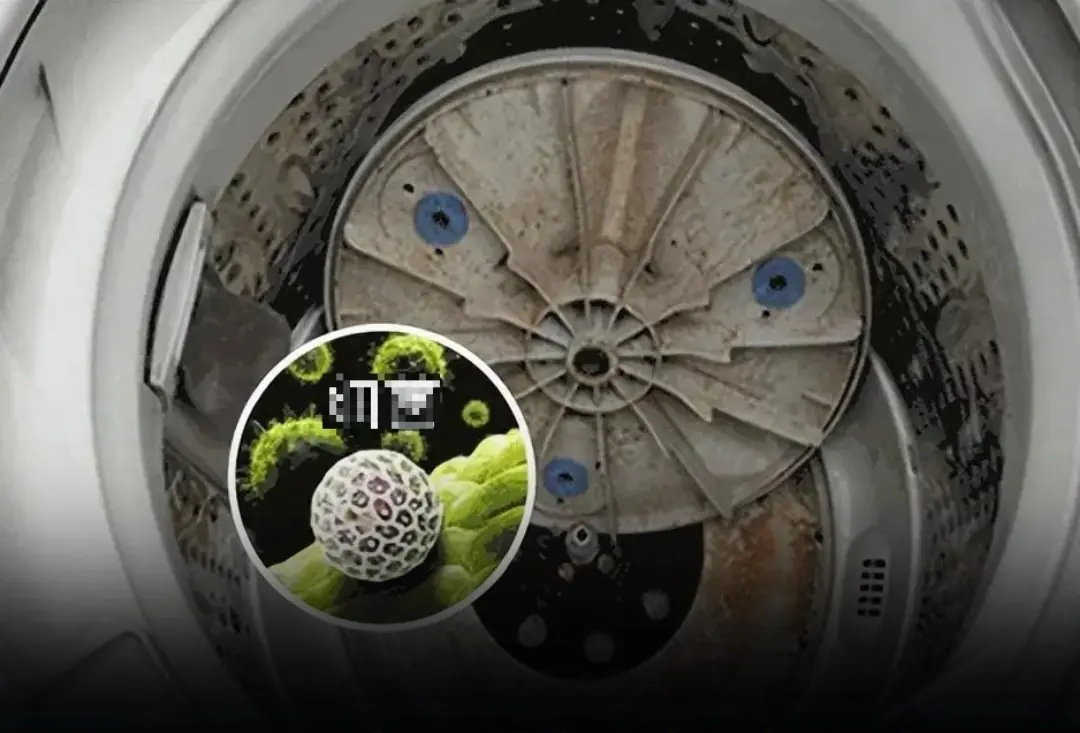
The washing machine is not self-cleaning.
Yes, it cleans clothes — but that does not mean it stays clean itself. Over time, detergent residue, fabric fibers, body oils, moisture, and dirt accumulate inside the drum, under the agitator, around seals, and deep within hidden crevices.
Moisture creates the perfect environment for bacteria and mold.
Washing machines are warm, dark, and damp — exactly the conditions microorganisms thrive in. If the machine is not cleaned periodically, bacteria, mold, and mildew can multiply rapidly without being seen.
The most dangerous part is what you can’t see.
Even if the drum looks fine at a glance, harmful microbes can be growing underneath removable parts, inside filters, and along rubber seals. By the time you smell something “off,” the problem is already well established.
A dirty washing machine doesn’t just smell bad — it contaminates your clothes.
Instead of cleaning fabrics, a contaminated machine can transfer bacteria back onto freshly washed laundry. This is especially concerning for underwear, towels, baby clothes, and bedding.
Skin irritation and infections can be linked to this overlooked issue.
Residue bacteria and mold can cause itching, rashes, allergic reactions, and worsen conditions like eczema. People with sensitive skin, weakened immune systems, or young children are at higher risk.
The buildup doesn’t happen overnight — that’s why it’s ignored.
Each wash leaves behind a tiny amount of residue. Over weeks and months, those small deposits accumulate, creating layers of grime that normal cycles cannot remove.
Detergent overuse actually makes the problem worse.
Excess detergent doesn’t rinse away completely. It sticks to internal surfaces and traps dirt and bacteria, accelerating contamination instead of improving cleanliness.
Front-loading machines are especially vulnerable.
Their rubber door seals trap moisture easily, making them a common breeding ground for mold if not dried and cleaned regularly.
Neglect also affects performance and lifespan.
A dirty machine works harder, drains less efficiently, and may develop clogs or mechanical issues sooner. What starts as a hygiene issue can turn into costly repairs.
Cleaning your washing machine is not complicated — but it must be consistent.
Regular maintenance cycles, proper ventilation, wiping seals, cleaning filters, and running hot cleaning washes can dramatically reduce bacterial buildup.
How often should it be cleaned?
At minimum, once a month for regular use — more often for large households or frequent washing.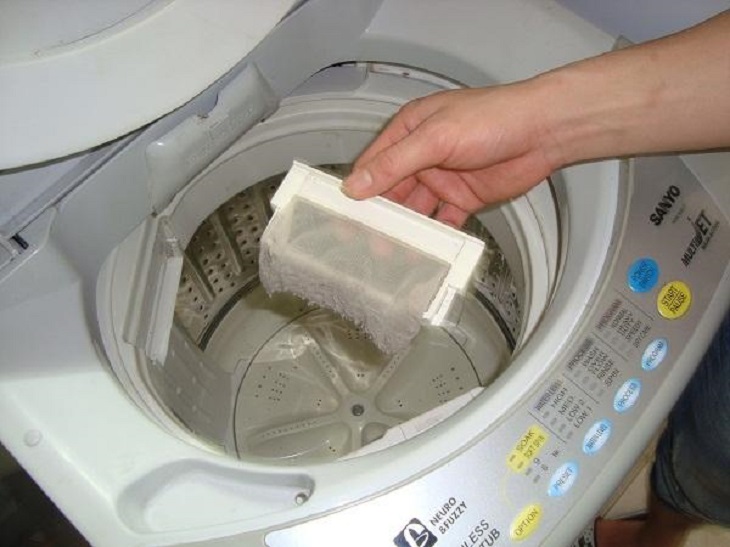
The biggest mistake is assuming “it cleans itself.”
It doesn’t. And the longer it’s ignored, the more harmful the buildup becomes.
Clean clothes should come from a clean machine.
Anything less defeats the purpose of washing.
This is one of those household habits that seems small — until it affects health.
Once you know what can grow inside a neglected washing machine, it’s impossible to unsee.:quality(75)/ket_trong_may_giat_2549dcbaa3.jpg)
Clean the machine that cleans your life.