-
Long periods of immobility.
-
Recent major surgery.
-
Hospitalization or prolonged bed rest.
-
Certain injuries.
-
Previous DVT or pulmonary embolism.
-
Some cancers and cancer treatments.
-
Pregnancy and the period after childbirth.
-
Certain hormone treatments.
-
Inherited or acquired clotting disorders.
Risk varies from person to person. Someone may develop a clot even without an obvious risk factor.
The danger of a pulmonary embolism
If a clot travels to the lungs, it can block blood flow through part of the pulmonary circulation.
Symptoms may include sudden shortness of breath, chest pain that may become worse when breathing deeply, coughing up blood, a rapid heartbeat, dizziness, or fainting.
These symptoms require emergency medical help.
A person with possible pulmonary embolism should not wait to see whether the symptoms improve. They should contact emergency services immediately.
Why home treatment is not enough
A suspected DVT cannot be safely ruled out by looking at the leg or testing whether it hurts.
Doctors may assess the person's symptoms and risk factors, examine the affected leg, and arrange tests such as a D-dimer blood test or an ultrasound scan, depending on the clinical situation.
If a clot is confirmed, treatment often involves anticoagulant medication to reduce the risk of the clot growing or new clots forming. The exact treatment depends on the patient's circumstances.
Do not massage a newly swollen, painful leg in an attempt to move fluid if a blood clot is possible. Seek medical assessment instead.
Chapter 6: What Swollen Feet May Reveal About Heart Health
The heart pumps blood around the body. When its pumping function becomes impaired, pressure can build up in the circulation and fluid may accumulate in the tissues.
Heart failure is one condition that can cause swelling in the feet and ankles.
The term does not mean that the heart has stopped working. It means that the heart is not pumping or filling as effectively as the body needs.
How heart-related swelling develops
When the heart cannot move blood forward efficiently, pressure may rise in the veins.
This can cause fluid to collect in the legs and ankles. In some people, fluid may also accumulate in the abdomen or lungs.
Swelling can affect both legs, although the pattern varies.
Some people notice that their shoes become tight or that their ankles look larger by the end of the day. Others experience a gradual increase in body weight because of fluid retention.
The combination of swelling and breathlessness
Swollen feet alone do not establish that a person has heart failure.
However, swelling accompanied by breathlessness, unusual fatigue, difficulty breathing when lying flat, or waking at night gasping for air deserves prompt medical attention.
These symptoms can occur when heart function is affecting the circulation and causing fluid to accumulate in or around the lungs.
Sudden or severe breathing difficulty, chest pain, fainting, or a feeling of impending collapse requires emergency assistance.
Unexplained weight gain
Rapid weight gain over a short period can sometimes reflect fluid accumulation rather than an increase in body fat.
People who have been diagnosed with heart failure may be advised by their care team to monitor their weight regularly and report increases that exceed their personal instructions.
A sudden increase in weight accompanied by worsening swelling or breathlessness should be discussed promptly with a healthcare professional.
Why early assessment matters
Heart-related swelling can have several possible explanations, and treatment depends on the underlying condition.
A clinician may assess symptoms, examine the heart and lungs, review medications, and arrange tests such as blood tests, an electrocardiogram, chest imaging, or an echocardiogram when appropriate.
The goal is to identify the cause and determine whether fluid is accumulating because of impaired heart function or another condition.
People should not attempt to treat suspected heart-related edema with unprescribed water tablets or drastic fluid restriction.
Chapter 7: Kidney and Liver Conditions That Can Cause Fluid Retention
The kidneys and liver play different but closely connected roles in maintaining the body's fluid balance.
The kidneys filter the blood, regulate water and electrolyte levels, and remove waste products. The liver produces important proteins and helps regulate many substances circulating in the blood.
When these organs are affected by certain diseases, fluid can accumulate in the legs and other parts of the body.
How kidney problems may lead to swollen feet
Healthy kidneys remove excess water and sodium from the bloodstream.
When kidney function is reduced, the body may retain more salt and water than it needs. This can contribute to swelling in the feet, ankles, and lower legs.
Some kidney conditions also cause the body to lose too much protein through the urine. When the level of certain proteins in the blood falls, fluid can move more easily from blood vessels into surrounding tissues.
In some cases, swelling may also appear around the eyes, particularly in the morning.
Other signs that may accompany kidney-related swelling
Depending on the condition, a person may notice:
-
Changes in how often they urinate.
-
Foamy urine.
-
Blood in the urine.
-
Unusual tiredness.
-
Reduced appetite.
-
Nausea.
-
Puffiness around the eyes.
-
Increased blood pressure.
These symptoms are not specific to kidney disease, and some people with kidney problems have few noticeable symptoms in the early stages.
That is why testing can be important.
How doctors assess kidney function
A clinician may order blood tests to measure substances such as creatinine and estimate kidney filtration. Urine tests can check for protein, blood, or other abnormalities.
Blood pressure, medical history, medications, and other symptoms also help guide the assessment.
Treatment depends on the cause. It may involve managing blood pressure, controlling diabetes, adjusting medications, treating a specific kidney condition, or addressing fluid and sodium balance under medical supervision.
How liver disease can cause swelling
The liver produces albumin, a protein that helps keep fluid within the bloodstream.
In advanced liver disease, reduced albumin production and changes in blood flow through the liver can contribute to fluid accumulation.
Swelling may appear in the legs and ankles. Fluid can also collect inside the abdomen, a condition known as ascites.
A person with liver disease may notice an increasingly enlarged abdomen, changes in appetite, jaundice, easy bruising, or unusual tiredness.
Not everyone experiences the same symptoms.
Why abdominal swelling matters
When swelling affects both the legs and abdomen, it may indicate a broader fluid-balance problem.
This can occur with advanced liver disease, heart conditions, kidney disorders, and other medical problems.
New abdominal swelling should be assessed, particularly when it occurs with leg edema, jaundice, pain, fever, or breathlessness.
Why self-prescribed diuretics can be risky
Diuretics, sometimes called water tablets, help the body remove excess salt and water through urine.
They are used for certain causes of edema, but they are not appropriate for every type of swelling.
Taking them without medical advice can cause dehydration, changes in sodium or potassium levels, low blood pressure, and kidney problems.
The right treatment depends on the cause of the swelling and the person's overall health.
Chapter 8: Infection, Inflammation, and Lymphatic Problems
Not all swollen feet are caused by ordinary fluid retention or circulation problems. Infection, inflammation, and damage to the lymphatic system can also change the appearance and size of the feet and legs.
These causes are important because they may require specific treatment rather than simple lifestyle adjustments.
Cellulitis: when swelling comes with redness and warmth
Cellulitis is a bacterial infection of the skin and the tissues beneath it.
It can occur when bacteria enter through a break in the skin, such as a cut, blister, insect bite, cracked skin, or wound.
The affected area may become red, warm, swollen, painful, and tender. The redness may spread, and the person may develop a fever or feel generally unwell.
Cellulitis can affect the foot or lower leg.
It should be assessed promptly because the infection may spread and can sometimes become serious. People with diabetes, circulation problems, or weakened immune systems may be at greater risk of complications.
Why a small wound can matter
A minor crack between the toes or a small blister may seem unimportant.
However, damaged skin can provide an entry point for bacteria. If swelling is accompanied by increasing redness, warmth, pain, or fever, the possibility of infection should be considered.
Keeping the feet clean and dry, looking after small wounds, and seeking care for signs of infection can help reduce complications.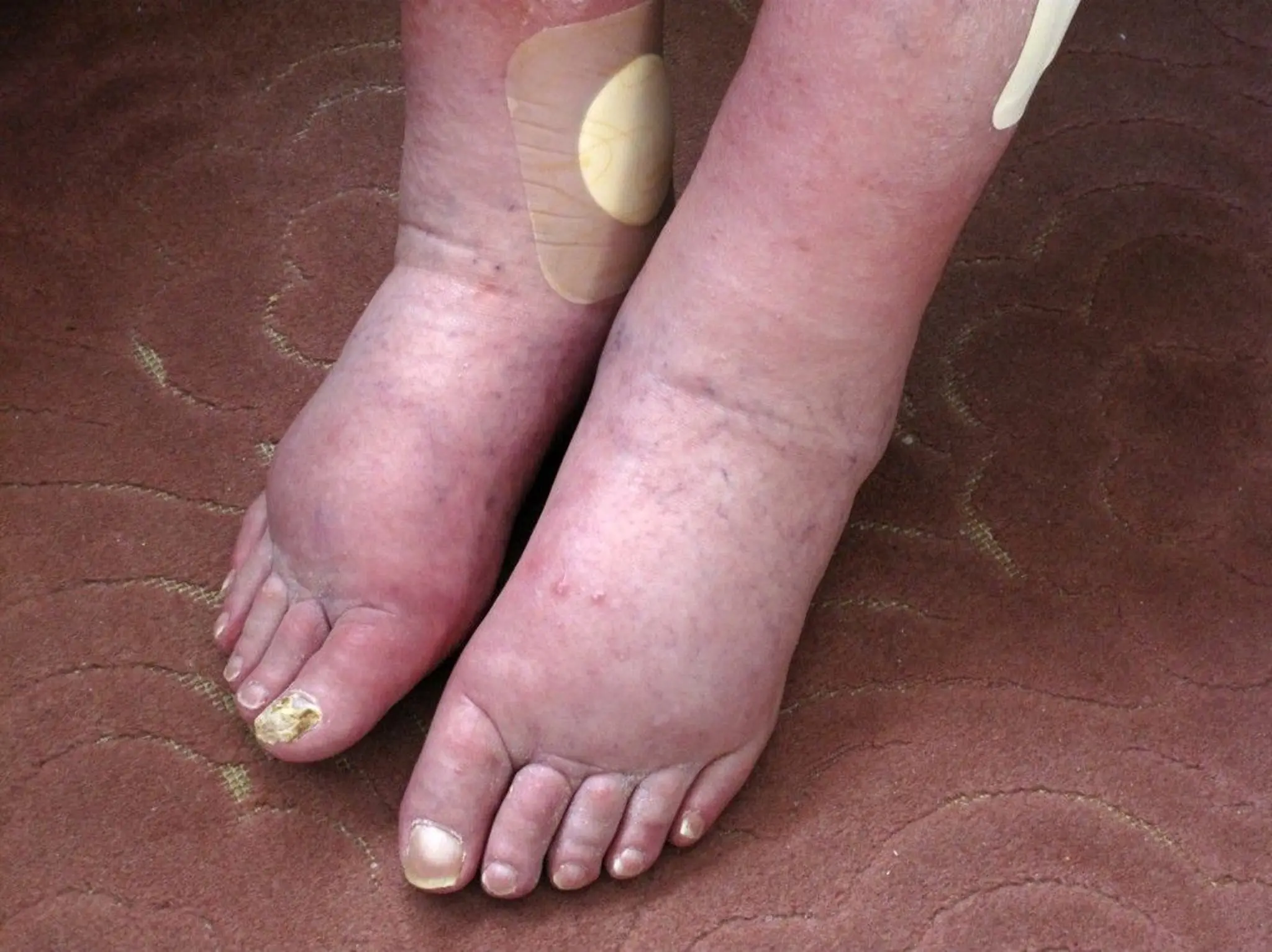
Lymphedema: when the drainage system is affected
The lymphatic system is a network of vessels and lymph nodes that helps return fluid from tissues to the bloodstream and supports immune function.
When this system is damaged or blocked, lymph fluid may accumulate in the tissues. The resulting swelling is called lymphedema.
It can affect one or more limbs and may involve the foot, ankle, or entire leg.
Possible causes include damage to lymph nodes during surgery, radiation treatment, certain infections, inherited conditions, or other disorders affecting lymphatic drainage.
How lymphedema may look and feel
Early swelling may be soft and may leave an indentation when pressed.
Over time, the affected area can become firmer. The skin may thicken, and the limb may feel heavy or tight. The foot may become more difficult to fit into ordinary shoes.
Lymphedema can also increase the risk of skin infections because the normal movement of lymph fluid is impaired.
Why treatment is different
Management may include specialist-guided compression, exercise, skin care, elevation, and a form of treatment called complete decongestive therapy.