Cuts, blisters, cracks, and wounds should be monitored. If the skin becomes red, hot, painful, or starts to discharge fluid, seek medical advice.
Keep a simple record of changes
A brief record can help a doctor understand the pattern.
Useful details include:
-
When the swelling began.
-
Whether one or both feet are affected.
-
Whether it is worse in the morning or evening.
-
Whether it improves after rest or elevation.
-
Whether pain, redness, warmth, or breathlessness occurs.
-
Any recent medication changes.
-
Any recent travel, surgery, injury, or illness.
If a clinician has advised weight monitoring, recording weight consistently may also help identify changes in fluid balance.
Do not stop prescribed medicines
If swelling appears after starting a medication, contact the prescribing clinician.
Do not stop blood-pressure medication, hormone treatment, diabetes medication, or another prescription without medical advice.
The clinician can determine whether the medication is a likely contributor and whether an alternative is appropriate.
Do not take water tablets without guidance
Diuretics can be helpful for certain medical conditions, but they can also cause harm when used incorrectly.
They may affect blood pressure, kidney function, and electrolyte levels.
A person should never use someone else's diuretics or take extra doses to make swelling disappear faster.
Be careful with compression socks
Compression garments can help certain forms of venous or lymphatic swelling, but they must be appropriate for the person's circulation and medical condition.
People with significant arterial disease, unexplained painful swelling, possible blood clots, or certain skin problems should seek medical advice before using them.
A clinician can recommend the correct pressure and fit if compression is suitable.
Chapter 12: Why Older Adults May Be More Likely to Experience Swollen Feet
Swelling in the feet and ankles becomes more common with age, but it should not be dismissed as an unavoidable part of getting older.
Several factors can contribute.
Older adults are more likely to have conditions that affect circulation, heart function, kidney function, and mobility. They may also take multiple medications, some of which can contribute to fluid retention.
Changes in circulation
As people age, the veins and their valves may become less effective at moving blood back toward the heart.
This can increase the likelihood of venous insufficiency and swelling around the ankles.
Some people also become less physically active because of joint pain, balance problems, or other limitations. Reduced movement can make it harder for the leg muscles to support circulation.
Multiple medications
An older adult may take medicines for blood pressure, heart disease, diabetes, arthritis, or other long-term conditions.
Some of these medicines can contribute to swelling. Others may affect kidney function or fluid balance.
A medication review can be useful when swelling appears or changes. The doctor or pharmacist can look at the full list of prescriptions and determine whether any may be contributing.
It is important not to assume that a medicine is responsible without checking for other possible causes.
Mobility and daily routines
A person who spends much of the day sitting may experience more swelling in the lower legs.
Small changes to daily routines can sometimes help, such as gentle movement, regular position changes, and comfortable footwear.
For people who have difficulty walking, a clinician or physiotherapist may suggest safe exercises that can be performed while seated.
Why early evaluation is valuable
Older adults may have more than one condition contributing to swelling.
For example, a person may have chronic venous insufficiency while also taking a medication that encourages fluid retention. Another person may have reduced mobility and an underlying heart condition.
The combination can make the swelling more pronounced.
A careful medical assessment helps identify the different factors rather than attributing everything to age.
Chapter 13: Common Mistakes People Make When Their Feet Swell
Because swollen feet are common, many people try to manage them without first understanding the cause.
Some approaches are harmless when swelling is mild and temporary. Others can delay important treatment or create additional risks.
Mistake 1: Assuming all swelling is caused by salt
Salt can contribute to fluid retention, but it is not the only possible cause.
A blood clot, infection, medication side effect, venous insufficiency, or heart, kidney, or liver condition may also produce swelling.
Reducing excessive salt intake may help in some cases, but it should not replace an assessment when swelling is sudden, persistent, painful, or unexplained.
Mistake 2: Waiting because there is no pain
Some forms of edema are painless.
A person may have swelling for weeks without significant discomfort. This does not necessarily mean the underlying cause is harmless.
Persistent swelling, particularly when it is new or worsening, should be discussed with a healthcare professional.
Mistake 3: Treating one swollen leg as ordinary tiredness
New swelling affecting only one leg deserves particular attention.
It may be related to an injury or infection, but a deep vein blood clot is another possibility.
If one leg suddenly becomes swollen, painful, warm, or red, seek urgent medical assessment.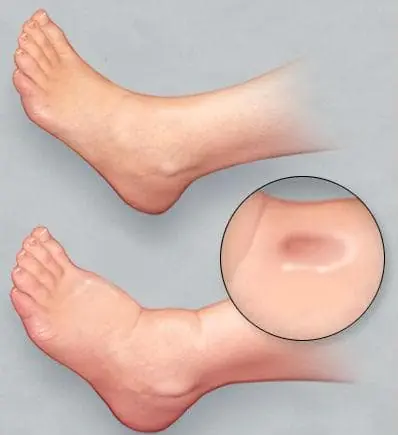
Mistake 4: Massaging a painful swollen leg
Massage may be discussed as part of certain treatment plans for some types of chronic swelling, but it is not an appropriate response to every swollen leg.
If a blood clot is possible, a person should not try to massage the area to move fluid.
New or unexplained painful swelling should be assessed first.
Mistake 5: Buying compression socks without advice
Compression stockings are available in different sizes and pressure levels.
A poorly fitted or inappropriate garment can cause discomfort or create problems in people with certain circulation conditions.
Professional advice is particularly important when swelling is unexplained, one-sided, painful, or associated with arterial disease.
Mistake 6: Taking someone else's medication
A friend or relative may have been prescribed a water tablet for heart failure or another condition.
That does not mean the same medication is safe for someone else.
Diuretics can alter fluid levels, blood pressure, and electrolytes. Taking them without medical supervision may be dangerous.
Mistake 7: Ignoring changes in breathing
Breathlessness is one of the most important symptoms to recognize when swelling is present.
A person who develops sudden difficulty breathing, chest pain, faintness, or coughing up blood needs emergency help.
These symptoms should never be treated as ordinary tiredness.
Chapter 14: The Most Important Message—Look at the Pattern, Not Just the Swelling
The image of swollen legs can be alarming, but the appearance alone does not tell the whole story.
Two people may have feet that look similarly swollen while having completely different underlying conditions.
One person may have temporary fluid retention after a long day of standing. Another may have chronic venous insufficiency. A third may need urgent assessment for a blood clot or a heart-related problem.
That is why the pattern matters.
Ask when the swelling began. Notice whether one or both legs are affected. Consider whether it improves after rest. Look for pain, warmth, redness, skin changes, breathlessness, or other new symptoms.
These details can help a healthcare professional decide what needs to be investigated.
When it may be temporary
Mild swelling that appears after prolonged standing, sitting, or travel and improves with movement or rest may be related to temporary fluid accumulation.
If there are no warning signs, changing position, walking gently, raising the legs, and avoiding excessive sodium may help.
If the swelling does not improve after a few days, keeps returning, or becomes worse, arrange a medical assessment.
When it may signal a medical condition
Repeated swelling can be associated with venous insufficiency, medication effects, kidney disease, heart failure, liver disease, or lymphatic problems.
These conditions require different approaches.
A doctor may need to review medications, examine circulation, request blood or urine tests, or arrange imaging.
Treating the cause is more important than simply reducing the visible puffiness.
When it is an emergency
Sudden swelling in one leg, particularly when painful or warm, needs urgent assessment because a blood clot is one possible explanation.
Swelling accompanied by chest pain, severe breathlessness, fainting, or coughing up blood requires emergency medical help.
A person should not wait for the swelling to become more obvious before seeking assistance.
A practical final checklist
If you notice swollen feet, remember these points:
-
Look at the timing. Did the swelling appear suddenly, or has it developed gradually?
-
Compare both legs. Is one foot or leg noticeably more swollen than the other?
-
Check for other symptoms. Pain, redness, warmth, fever, breathlessness, and chest discomfort change how urgently the problem should be assessed.
-
Review recent changes. Consider new medication, travel, surgery, injury, pregnancy, or a change in daily activity.
-
Do not self-diagnose. The appearance of the feet cannot identify the underlying condition.
-
Seek help when the pattern is unusual. Persistent, worsening, or unexplained swelling deserves medical advice.
-
Know the emergency signs. Chest pain, severe difficulty breathing, fainting, or coughing up blood require immediate emergency assistance.
Swollen feet are not always a sign of serious illness, and there is no reason to panic every time the ankles look puffy. But there is also no good reason to ignore a symptom that is new, persistent, or accompanied by other changes.
The most useful response is to pay attention, recognize warning signs, and seek the right level of care.
A pair of swollen feet cannot tell the whole story. But the changes around them may provide an important reason to look more closely at your health.