Although not every oral cyst can be prevented, maintaining good oral hygiene and reducing unnecessary irritation can support overall mouth health.
These habits do not guarantee that a ranula will never develop.
They are simply sensible measures that can help protect the tissues inside the mouth.
1. Brush Your Teeth Regularly
Brush your teeth twice daily using fluoride toothpaste.
Pay attention to the gumline and areas around the lower teeth, where food particles and plaque may accumulate.
A clean mouth helps reduce the risk of tooth decay and gum disease.
2. Clean Your Tongue Gently
The surface of the tongue can collect bacteria and debris.
Cleaning it gently with a soft toothbrush or tongue cleaner may help maintain oral hygiene.
However, avoid pressing hard against the underside of the tongue.
The tissue in this area is delicate, and unnecessary pressure may cause irritation.
3. Drink Enough Water
Adequate hydration supports normal saliva production.
Saliva helps lubricate the mouth, protect oral tissues, and support the early stages of digestion.
People who experience dry mouth may find that regular water intake improves comfort.
However, drinking more water does not guarantee that a ranula or salivary gland obstruction will disappear.
Persistent swelling still requires assessment.
4. Avoid Biting or Repeatedly Irritating the Mouth
Some mucoceles develop after repeated trauma, including accidental biting or sucking on the lips.
Try to avoid chewing the inside of the cheeks or repeatedly biting the tongue.
If a sharp tooth or poorly fitting dental appliance is causing irritation, ask a dentist to examine it.
Do not attempt to file or modify dental work yourself.
5. Be Careful With Very Hard or Sharp Foods
Hard foods, sharp-edged snacks, and improperly chewed food can sometimes injure oral tissues.
Take time to chew carefully, particularly if you already have an unexplained swelling.
If a particular food repeatedly causes pain, avoid it until the area has been assessed.
6. Avoid Smoking and Excessive Alcohol
Smoking is an important risk factor for several oral health problems, including oral cancer.
Reducing or stopping tobacco use is one of the most beneficial steps a person can take for long-term oral health.
Excessive alcohol consumption is also associated with increased oral cancer risk, particularly when combined with tobacco use.
These measures do not specifically prevent every ranula, but they support a healthier mouth and reduce important health risks.
7. Attend Regular Dental Checkups
Routine dental visits allow professionals to examine areas that people may not notice during everyday brushing.
A dentist can identify unusual changes in the tongue, gums, floor of the mouth, and surrounding tissues.
Regular examinations are particularly useful when someone has a history of oral cysts or repeated salivary gland problems.
An unexplained lump should not be left until the next routine appointment if it is growing, painful, or affecting normal mouth function.
MedlinePlus+2
Could a Lump Under the Tongue Be a Sign of Oral Cancer?
This is a question many people have when they discover an unusual swelling inside their mouth.
It is understandable to worry, especially when a lump appears suddenly or has an unusual color.
However, it is important to distinguish between a common benign condition and symptoms that deserve further investigation.
A typical ranula is a benign, mucus-filled lesion. It is not itself oral cancer.
Nevertheless, not every lump beneath the tongue is a ranula, and a persistent unexplained growth should not automatically be considered harmless.
Oral cancer can affect the tongue, floor of the mouth, gums, inner cheeks, and other tissues.
Warning signs may include:
-
A lump that does not disappear.
-
An ulcer that remains for more than three weeks.
-
Persistent red or white patches.
-
Unexplained bleeding.
-
Pain that does not improve.
-
Difficulty swallowing or speaking.
-
A lump in the neck.
-
Unexplained weight loss.
These symptoms do not necessarily mean someone has cancer. Many can occur with non-cancerous conditions.
However, early examination is important because identifying oral cancer at an earlier stage can improve treatment options.
People who smoke, use tobacco, or consume excessive amounts of alcohol should be particularly attentive to persistent oral changes.
The most sensible approach is to have an unexplained lump examined rather than attempting to diagnose it from its color or appearance.
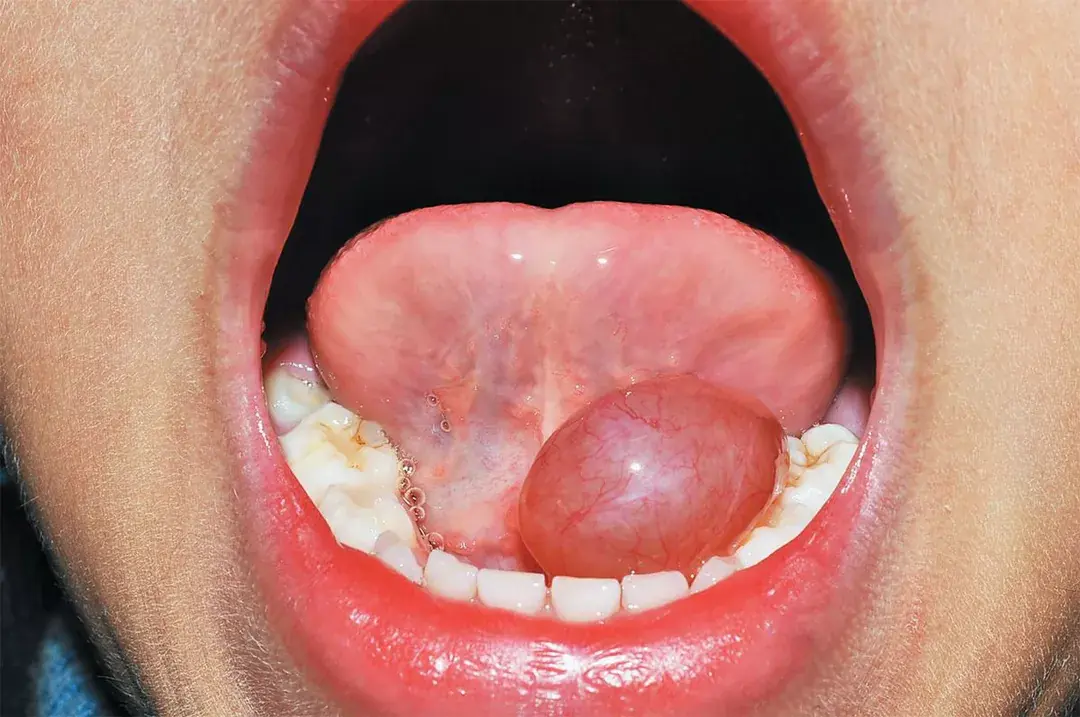
What You Should Never Do When You Discover a Lump Under Your Tongue
When people discover an unusual bump, their first instinct may be to touch it, press it, or try to make it disappear.
This is understandable, but certain actions can make the situation worse.
Do not puncture the lump. A fluid-filled cyst should never be opened using a needle, toothpick, or sharp object. This can damage tissue and introduce infection.
Do not squeeze it repeatedly. Constant pressure may irritate the area and make discomfort worse.
Do not apply strong chemicals or unverified home remedies. Products intended for skin conditions may be unsuitable for the delicate tissues inside the mouth.
Do not assume that painlessness means safety. Some oral conditions cause little discomfort during their early stages.
Do not postpone an examination if the swelling persists or grows. A professional diagnosis is more reliable than comparing photographs online.
If the swelling is associated with difficulty breathing or rapidly worsening swallowing problems, seek emergency medical assistance.
The Bottom Line: What Does a Soft Bluish Lump Under the Tongue Really Mean?
A soft, bluish swelling beneath the tongue can be associated with a ranula, a mucus-filled cyst that develops when saliva leaks from a damaged or obstructed salivary gland.
Many ranulas are benign and may cause little discomfort.
However, they can become larger, return after drainage, or interfere with speaking, eating, and swallowing.
Other conditions, including mucoceles, salivary gland stones, inflammation, vascular lesions, and different oral growths, can produce similar changes.
This is why the appearance of a lump cannot establish its diagnosis.
If you notice a new swelling beneath your tongue, pay attention to its size, duration, color, and any accompanying symptoms.
Arrange a dental or medical examination, particularly if it persists, grows, bleeds, or causes discomfort.
Seek urgent help if you develop difficulty breathing or swallowing.
Most importantly, do not panic simply because the swelling looks unusual.
A bluish lump does not automatically mean something dangerous is happening. But it is also not something that should be ignored indefinitely.
Sometimes a small change inside your mouth is simply a benign salivary gland problem. The important thing is knowing when to have it checked rather than guessing what it might be.