These Dark, Thick Patches on the Neck or Armpits May Be an Early Warning Sign of Diabetes
A dark patch appearing on the back of the neck or beneath the arm may seem like an ordinary skin problem. Many people assume it is dirt, friction, sweat, or a buildup of dead skin. They scrub harder, try whitening products, or change soaps — but the discoloration remains.
Sometimes, the reason is not on the surface at all.
The skin change shown in the photograph resembles a condition called acanthosis nigricans. It causes areas of skin to become darker, thicker, and often velvety, particularly in folds such as the neck, armpits, and groin. It is commonly associated with insulin resistance and can be a clue that someone may have prediabetes or type 2 diabetes.
That does not mean every dark patch is diabetes, and it certainly does not mean that a photograph can diagnose anyone. Acanthosis nigricans can have several causes, including hormonal conditions, certain medicines, inherited factors, and, very rarely, some cancers. But when a new, unusual patch appears and does not wash away, it deserves more attention than ordinary dirt.
The important question is not simply how to make the skin look lighter. It is why the skin has changed in the first place. Understanding that connection can help people recognize a possible metabolic warning sign, seek the right tests, and avoid wasting time on treatments that only target the appearance.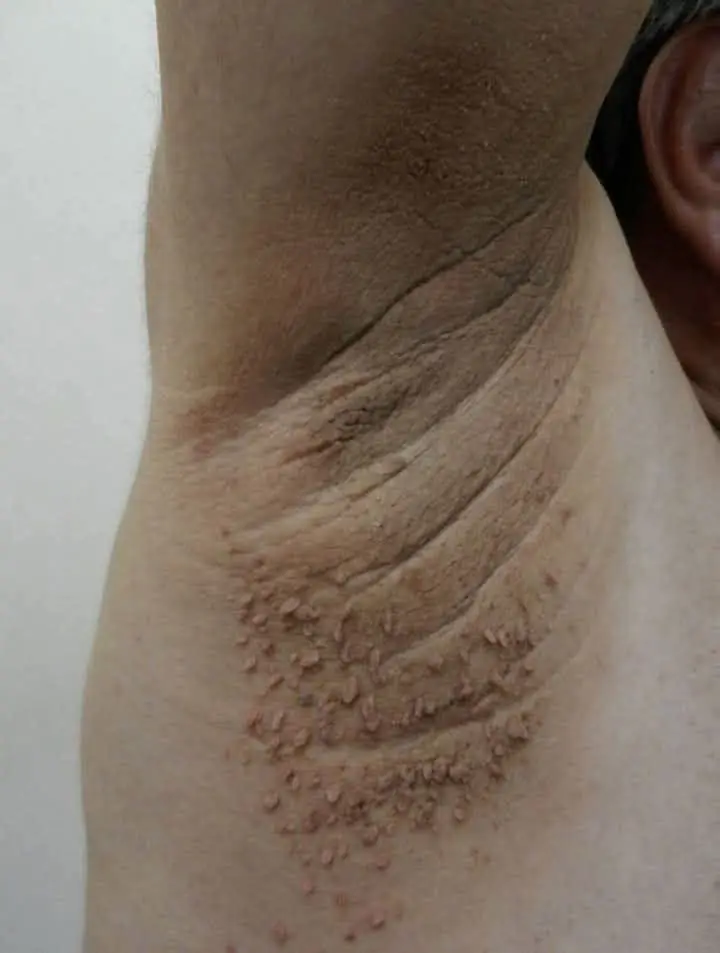
What Is the Skin Condition Shown in the Photograph?
The condition is known as acanthosis nigricans, often abbreviated as AN. It is characterized by areas of darker, thickened skin with a soft, velvety or slightly rough texture. The affected skin may look brown, gray-brown, or nearly black, depending on the person's natural skin tone and the severity of the change.
It most often appears in body folds, where skin touches or rubs against skin. Common locations include:
-
The back and sides of the neck
-
The armpits
-
The groin and inner thighs
-
Beneath the breasts
-
The elbows and knees
-
The knuckles and other joints
The photograph in the supplied post shows a close-up of an underarm area with multiple raised, textured, darker patches. That location is consistent with one of the common areas where acanthosis nigricans can develop. However, an image alone cannot confirm the diagnosis. Other skin conditions can also cause discoloration, thickening, or small growths.
One feature that makes acanthosis nigricans different from ordinary dirt is that the discoloration is part of a change in the skin itself. It is not simply something sitting on the surface. Vigorous scrubbing will not remove it and may irritate the area further.
Some people notice that the skin feels thicker or softer than the surrounding area. Others describe a velvety texture, as if the skin has developed very fine ridges. Small skin tags may also appear nearby or within the affected folds.
The patches often develop gradually. A person may first notice a slightly darker area, then find that it becomes more visible over time. In some cases, the change is discovered only when someone looks closely at the back of the neck or underarm in bright light.
Acanthosis nigricans itself is generally not contagious. It is not something that spreads from one person to another through touch, shared towels, or ordinary contact. The concern is that it can sometimes reflect an underlying health issue, particularly insulin resistance.
That is why the skin should be viewed as a possible signal rather than the entire problem.
Why Dark Skin Patches Can Be Connected to Diabetes
To understand the connection, it helps to understand insulin.
Insulin is a hormone produced by the pancreas. Its job is to help glucose move from the bloodstream into cells, where it can be used for energy or stored for later. After eating, blood glucose normally rises, and the body releases insulin to help manage that increase.
In insulin resistance, the body's cells do not respond to insulin as effectively as they should. The pancreas may compensate by producing more insulin to keep blood glucose within a normal or near-normal range.
Over time, this can contribute to elevated blood sugar and increase the risk of prediabetes and type 2 diabetes.
Insulin resistance is also associated with changes in the skin. Higher insulin levels can influence growth signals in skin cells, encouraging thickening and the development of the velvety patches characteristic of acanthosis nigricans.
This explains why the condition can sometimes appear before a person is diagnosed with diabetes. The skin change may be visible while blood glucose is still in a range that does not meet the criteria for diabetes.
In other words, the patch may be a clue that the body is having difficulty responding to insulin — not proof that diabetes is already present.
This distinction is important. Someone who notices dark, thickened skin should not assume they have diabetes, but they should consider discussing blood glucose testing with a healthcare professional, particularly if they have other risk factors.
The earlier insulin resistance and abnormal blood glucose are recognized, the more opportunity there may be to make changes that reduce the risk of progressing to type 2 diabetes.
Other Signs That May Appear Alongside the Dark Patches
Acanthosis nigricans often develops without pain or other obvious symptoms. Some people notice only a change in color and texture. Others discover the patches while showering, changing clothes, or looking closely at the back of the neck.
The appearance can vary from person to person. In some cases, the skin looks slightly darker than the surrounding area. In others, it becomes noticeably thick, ridged, or velvety. The edges may be irregular rather than sharply defined.
Several features may occur together:
Darkening of skin folds: The affected area may become brown, gray-brown, or darker than the surrounding skin. The change is often more noticeable in the neck, underarms, or groin.
Thickened texture: The skin may feel thicker, rougher, or more folded. This is not simply a layer of dirt that can be removed by washing.
A velvety surface: The affected skin can develop a soft, ridged texture that feels different from normal skin.
Small skin tags: Tiny, soft growths may appear in or around the affected folds. Skin tags are common and usually harmless, but their presence alongside darkened skin can be another reason to have the area assessed.
Mild itching or odor: Some people experience itching, irritation, or an unpleasant smell, especially where the skin folds remain warm and moist. These symptoms do not occur in everyone.
The condition may be symmetrical, appearing on both sides of the body, such as in both armpits or along both sides of the neck. It can also involve more than one area.
The important point is that acanthosis nigricans is identified by the combination of color and texture changes, not by darkness alone. A naturally darker area of skin, a simple tan, or pigmentation left after irritation is not automatically acanthosis nigricans.