Repeated friction can cause redness, soreness, small breaks in the skin, and irritation. It may also make a person more aware of the area without improving its appearance.
Gentle cleansing is enough for ordinary hygiene. If the discoloration persists, the right response is medical assessment rather than more aggressive washing.
Why Children and Teenagers Can Develop These Dark Patches
Acanthosis nigricans is not limited to adults. Children and teenagers can develop the same type of dark, thickened skin, particularly around the neck and underarms.
When it appears in a young person, parents may initially assume that the child has not washed properly. They may notice a darker band around the back of the neck and try stronger soaps or repeated scrubbing.
But if the skin is thickened and velvety, it may be acanthosis nigricans rather than dirt.
In children and teenagers, the condition can be associated with excess body weight and insulin resistance. It may also occur in young people who have a family history of type 2 diabetes or other metabolic risk factors.
Why early recognition matters
Type 2 diabetes is not limited to older adults. It can develop in children and teenagers, particularly when several risk factors are present.
Acanthosis nigricans may be one visible clue that a young person has insulin resistance. It does not diagnose diabetes, but it can help a healthcare professional decide whether screening is appropriate.
Parents should consider arranging a medical assessment if a child develops persistent dark, thickened patches around the neck, underarms, or groin. The doctor can review the child's growth pattern, family history, general health, and other risk factors.
It is important not to shame children about their weight or appearance. A skin change should be approached as a health question, not as evidence that a child has done something wrong.
What parents should avoid
Parents should not scrub the affected skin aggressively, apply adult-strength bleaching products, or use unprescribed treatments intended to remove pigmentation.
Children's skin can be sensitive, and harsh products may cause irritation. The underlying cause also needs to be considered.
If a clinician identifies insulin resistance or another metabolic issue, the family may receive advice about balanced meals, enjoyable physical activity, sleep routines, and follow-up testing.
A supportive household approach is usually more helpful than singling out one child or placing them on a restrictive diet without professional guidance.
Other Skin Changes That Can Be Associated With Diabetes
Acanthosis nigricans is not the only skin condition that can be associated with diabetes. Changes in blood glucose and circulation can affect the skin in several ways.
Some people with diabetes experience dry or itchy skin. Others develop fungal or bacterial infections more frequently. Certain people may notice slow healing of cuts or wounds, particularly when blood glucose has been poorly controlled.
These changes are not all specific to diabetes. Dry skin, for example, is extremely common and may be caused by weather, bathing habits, eczema, or other conditions. A skin infection can occur in people without diabetes too.
However, recurring or unusual skin problems may be worth discussing with a healthcare professional, especially when other risk factors for diabetes are present.
Dry and itchy skin
High blood glucose can contribute to fluid loss through increased urination. Dehydration and changes in circulation may contribute to dry or uncomfortable skin in some people.
Diabetes can also affect nerves and blood vessels, which may influence skin health. Itching can have many causes, so it should not be treated as a stand-alone sign of diabetes.
If itching is persistent, widespread, or accompanied by other symptoms, a medical assessment can help identify the cause.
Recurrent skin infections
People with diabetes may be more vulnerable to certain infections, particularly when blood glucose is poorly controlled.
Warm, moist skin folds can encourage fungal growth. Areas beneath the breasts, between the toes, and in the groin may be particularly prone to irritation and infection.
Repeated infections do not automatically mean a person has diabetes. But if infections keep returning, heal slowly, or occur alongside other symptoms, a clinician may consider checking blood glucose.
Slow-healing wounds
High blood glucose can affect blood vessels, immune function, and nerve health. These changes may make certain wounds more difficult to heal.
A small cut or blister that remains open, becomes increasingly red, or develops discharge should be assessed, particularly in someone with diabetes or reduced sensation in the feet.
People with diabetes should take foot care seriously and seek medical advice for wounds that do not improve.
Changes in the feet
Diabetes can affect the nerves in the feet, sometimes reducing the ability to feel pain, heat, or injury. Poor circulation may also interfere with healing.
A person may not notice a blister or small cut until it becomes more serious. Regular foot checks are therefore important for people who have been diagnosed with diabetes.
These complications are not what the photograph shows, but they illustrate why recognizing possible metabolic problems early can be valuable.
The Difference Between Acanthosis Nigricans and Ordinary Skin Darkening
Not every dark area in a skin fold is acanthosis nigricans. Several other conditions can cause pigmentation, irritation, or thickening.
Understanding the differences can help people avoid unnecessary worry, although a clinician is needed to make a reliable diagnosis.
Friction-related pigmentation
Skin folds can darken over time because of repeated friction. Tight clothing, rubbing between skin surfaces, and frequent irritation may contribute to pigmentation.
Unlike typical acanthosis nigricans, friction-related discoloration may not have the same velvety thickening. However, the appearance can overlap, and the two processes may occur together.
Reducing friction and avoiding irritating products may help, but persistent changes should be assessed.
Post-inflammatory hyperpigmentation
After an area of skin becomes inflamed, it may remain darker even after the original irritation has settled.
This can happen after eczema, shaving irritation, allergic reactions, insect bites, or other skin problems.
The discoloration is a result of the skin's response to inflammation. It may gradually fade, although this can take months or longer.
Fungal infections
Some fungal conditions develop in warm, moist folds and can cause discoloration, scaling, itching, or an unusual odor.
These infections require a different treatment approach from acanthosis nigricans. Applying bleaching creams or scrubbing the area will not treat the infection.
A clinician can examine the skin and recommend appropriate treatment if a fungal cause is suspected.
Skin tags
Skin tags are small, soft growths that commonly occur around the neck, underarms, and other folds. They are usually harmless.
They may appear alongside acanthosis nigricans, but skin tags alone do not establish a diagnosis of diabetes.
If a growth changes rapidly, bleeds, becomes painful, or has an unusual appearance, it should be checked rather than removed at home.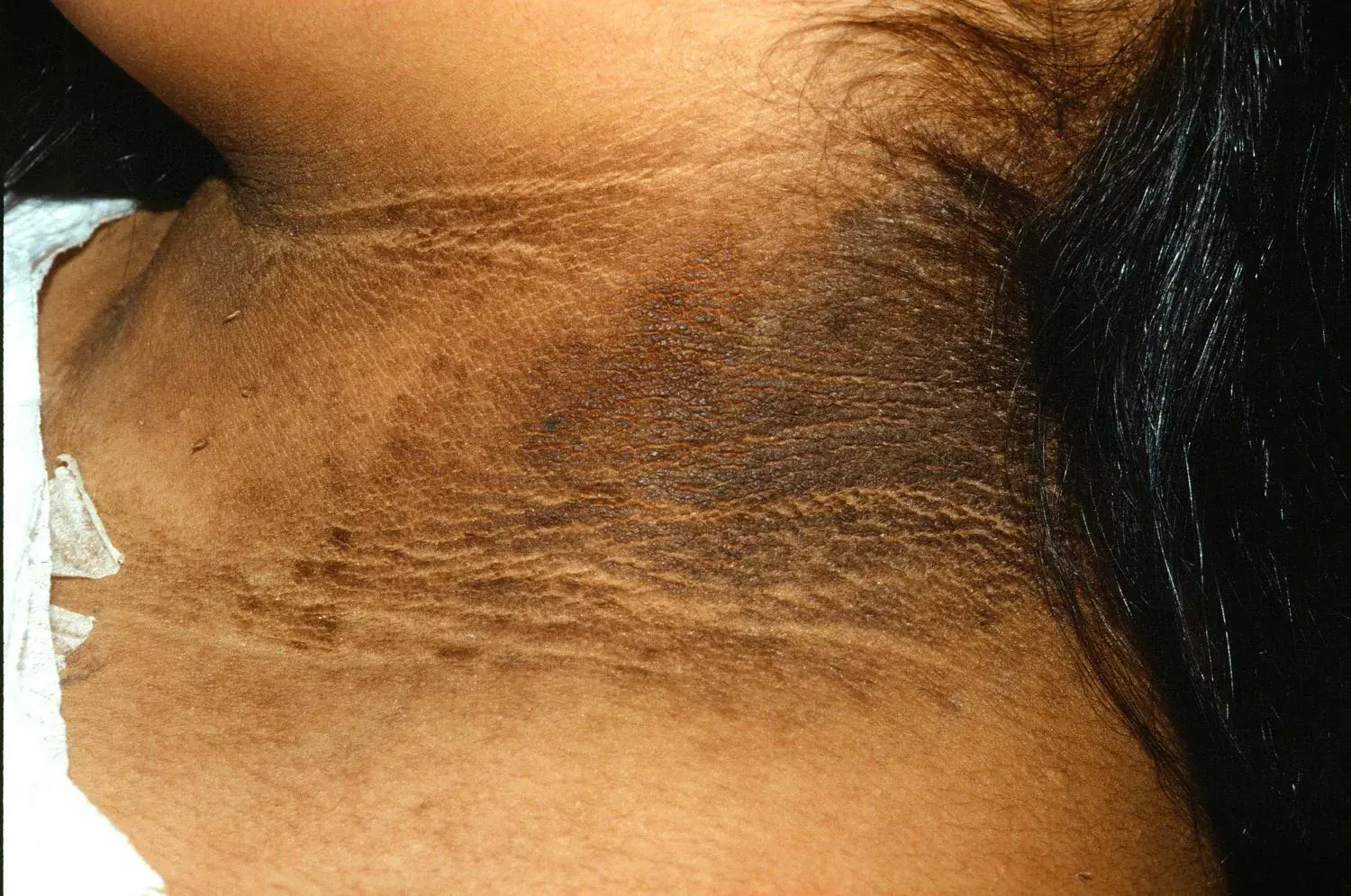
A Practical Checklist: When Should You Get a Dark Patch Checked?
A dark patch may not require emergency treatment, but certain features make a medical appointment sensible.
Consider arranging an assessment if: